Collections
The internet is one big “lowest-common-denominator battle for attention.” A chaotic maelstrom of consumption, performance, and sensational reaction. Understanding the relationship between information systems and society is the great challenge of our time.
The attention economy takes advantage of what philosopher Jennifer Nagel calls “our natural attraction to knowledge gain.” It is natural because this
we need the ability to make sense of the torrent of information that we encounter every day while accepting that it will never be fully coherent, nor
The information in your news feeds is curated for interest or surprise. As such, the news is not a record of the ordinary but the extraordinary—a refl
So what is software brain? The simplest definition I’ve come up with is that it’s when you see the whole world as a series of databases that can be co
Because both the activities of information processing and communication are inseparable components of the control function, a society's ability to mai
Software is an abstraction. It’s a layer of pure symbol laid over the physical world, and its power, its real and consequential power, is the ability
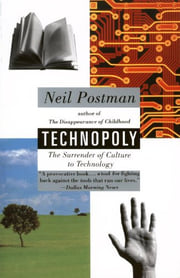
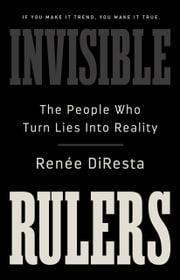

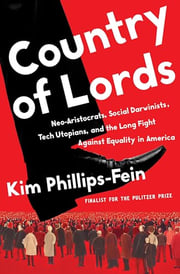
We need to tax the rich, yes, but the real political project is to take power away from capital. The real economic divide in this country is between the majority who earn a living from work and the minority who earn a living by owning assets.
The arguments for breaking up concentrations of property were at once pragmatic and political. For the new republic to remain free, land, wealth, and
My point, my very unoriginal point, is that you will do your own thinking and your own political outlook a great favor by seeing America as a power st
To win, we must redraw the lines of political conflict along divisions of class. In practice, this means that the people you might currently think of
Wolf’s concept of cognitive patience helps name a phenomenon central to the decline of meaningful discourse. We are not merely losing our capacity for
What we are seeing is not less exposure to text, but a fundamental shift in the nature of that exposure. The immersive arc of narrative is giving way
Widespread literacy, then, is not a natural baseline but a costly ecological accomplishment. It depends on sustained, large-scale societal investment
After writing, we will once again live in a world defined entirely by our direct sensory experience. Our direct sensory experience, though, won’t be o
Solzhenitsyn was right: nations matter. A nation is a story which a people tells about itself across time, and while it is dangerous to be too attache
Christopher Lasch, in The Revolt of the Elites, pinpointed the class nature of this dismissal of the nation. While most of us ordinary mortals continu
a nation is a group of people with a shared sense of self, forged through time. Quite how that ‘people’ is constituted or defined is as varied as the
Even once the initial shock of expanded literacy faded, it could still produce bizarre and destructive ideologies. Modern nationalism would have been
The immersive, turbulent, mediatized flow. It’s the social system technology is embedded in that matters.
The telegraph, radio, and TV formed a clear progression: they extended the central nervous system into the world through wires, each step bringing com
“People will pay for the convenience of not poring through internet sludge all day and having someone clarify what they need to know.” Exactly! No one
And so we find ourselves today connected to vast repositories of knowledge, and yet we have not learned to think. In fact, the opposite is true: that
For Marx, technological development underlay the development of modes of production and, therefore, historical forms of society; for McLuhan, media de
Despite the claims of some later Marxist historians, the Luddite uprisings were not simply about ‘class’. Wages mattered, and so did injustice, but wh
This approach does not mean abandoning work as a source of meaning. It means recognizing that markets may no longer supply enough socially valued role
a globalised, screen-enabled, placeless identity that, for many people, seems to be replacing any older, national or regional cultural markers.

Individuals and communities preferentially attend to and learn from more successful or prestigious groups. This causes social norms and beliefs to dif
“It is a highly valued function of society to prevent changes in the rules of the many games it embraces... Deviancy, however, is the very essence of
Henrich argues that humans have evolved “brains to allow us to most effectively learn the ideas, beliefs, values, motivations, and practices we’ll nee
every culture, whether it knows it or not, is built around a sacred order.
the digital hivemind we have already built is simply (‘simply!’) a hugely complex, globalised neural net made of collective human experience, built up
I have argued that two things are happening as this Machine reaches its maturity. Firstly, an unprecedented technological network of power and control
Sometimes I lie awake at night, or I wander in the field behind my house, or I walk down the street in our local town and think I can see it all aroun
The Machine is, rather, a tendency within us, made concrete by power and circumstance, which coalesces in a huge agglomeration of power, control and a
Like an air control system mistaking a flock of birds for a fleet of bombers, software is unable to distinguish between its model of the world and rea
Culture is itself a code/space. The danger of this emphasis on the coproduction of physical and cultural space by computation is that it in turn occlu

Each of these ascetic paths, that of the raw and that of the cooked, incorporates two simple principles. First: drawing a line, and saying ‘no further
Within the parameters of modern science, subjective experience has come to seem entirely unreal—a private drama of sensations, thoughts, and beliefs t
We interact with these constructs of other people that make our own minds instead of interacting with the person as they really exist. We are machines
We are all engaged in two projects: living life, and telling stories about it. Our lives as lived are often chaotic, jumbled, aimless. They suggest no
Since then, researchers have expanded on this idea, discovering a virtually infinite number of internalized patterns that govern our thoughts, actions
The joy of making connections and seeing patterns
For Freire, education is fundamentally about freedom, which is “not an ideal located outside of man; nor is it an idea which becomes myth. It is rathe
Yet in truly effective thinking the prime necessity is to liquidate judgments, regain an innocent eye, disentangle feelings, be curious and open-heart
Criticism is not some inscrutable, mysterious process. It’s just a matter of: (1) noticing ourselves responding to a work of art, moment by moment, an
all serious intellectual work happens on the page, and we shouldn’t pretend otherwise. If you want to contribute to the world of ideas, if you want to
“Natural taste is not a theoretical knowledge,” Montesquieu continued, “it’s a quick and exquisite application of rules which we do not even know.”

Kant’s earlier work on reason had framed it as a solitary, individual activity. His definition of aesthetic judgment, however, was different. To judge

For Andreessen, technology and markets are inextricable from each other. The market is itself a kind of technology, a “discovery machine,” an “explora
Many of them believe not only in a hierarchy within humanity, with some people better than others, but that machines are or soon will be superior to p
By conflating approximation with simulation, the high priests of computational thinking replace the world with flawed models of itself; and in doing s

But to love is to be drawn out of our self-centered patterns toward some positive object that is other than oneself. Love thus has the same outward-pu
What strikes me most is the difference between people who’ve learned to construct what I call ‘containers for attention’ – bounded spaces and practice
What’s more, the capacity to pay attention is the result of several processes in the brain. These include sustained attention, the ability to stay eng
The attention economy takes advantage of what philosopher Jennifer Nagel calls “our natural attraction to knowledge gain.” It is natural because this
For all the people on these platforms, every interaction, every moment of passive consumption, is mediated by algorithmic recommendations. Even if som
But what we should be seeing is the network itself, in all of its complexity. The network is only the latest, but certainly the most advanced, civilis
Our thirst for data, like our thirst for oil, is historically imperialist and colonialist, and tightly tied to capitalist networks of exploitation. Th
In Humby’s original formulation, data resembled oil because ‘it’s valuable, but if unrefined it cannot really be used. It has to be changed into gas,
truth is not the default state. ignorance, error, self-selection bias and tribal narratives are the default state. We have atomized bespoke, choose-your-own-adventure realities now. Reality is up for grabs now. Who will get to define what's true?
For the most part, whether we believe something depends on whether and how we trust the source. Whether and how we trust the source often has more to
The temptation of the age of data, again, is to believe that any coherent narrative path that can be charted through the data has a claim to truth.
Conspiracies literalise the horror we feel lurking unspoken in the world.
The term ‘conspiracy theory’ has more to do with the relation of people to power, than that of people to truth.
Equal and independent people will satisfy their own desires with no obligation to others outside their narrow circle. The chance to be anything or any
“For only through the union can the wage-earner participate in the control of industry,” Lippmann wrote, “and only through the union can he obtain the
antagonistic groups begin to lose their mutual hostility and acquire trust when they have to work together, as long as they’re engaged in a specific p
The central question of democracy is the degree to which power in all its forms is shared equally among members of a political community.
This paradigm—Israel as the perpetual target of aggression, never its author—frames the Jewish establishment’s rendition of Israeli history.
It’s also our story about Israel’s present. The plot goes like this. We have finally achieved what every other people takes for granted: a state of ou

The problem with our communal story is not that it acknowledges the crimes we have suffered. The problem is that it ignores the crimes we commit.