building communities
the thread running through all of it: collective amnesia.
capitalism didn’t just push these things aside. it made us forget they were ever structural. joy held communities together. rest held creativity and judgment. non-rational knowing held meaning. enoughness held relationships to land and to each other. these didn’t disappear because they... See more
capitalism didn’t just push these things aside. it made us forget they were ever structural. joy held communities together. rest held creativity and judgment. non-rational knowing held meaning. enoughness held relationships to land and to each other. these didn’t disappear because they... See more
Keely • what does it mean to be a good host?
the three steps
Embrace a disputable, specific purpose
Host good controversy
Create a temporary alternate universe through the use of pop-up rules
FYI: a core ingredient of meaning is heat
Dialectic conversation is about an exchange of views and ideas which resolves itself in consensus. The goal is to align the participants under a mutually agreed resolution they can all support from that point forwards.
Essentially, there is one right answer.
Dialogic conversation, on the other hand, isn’t about reaching a consensus. It’s about an... See more
Essentially, there is one right answer.
Dialogic conversation, on the other hand, isn’t about reaching a consensus. It’s about an... See more
john v willshire • The Dialogic Brand
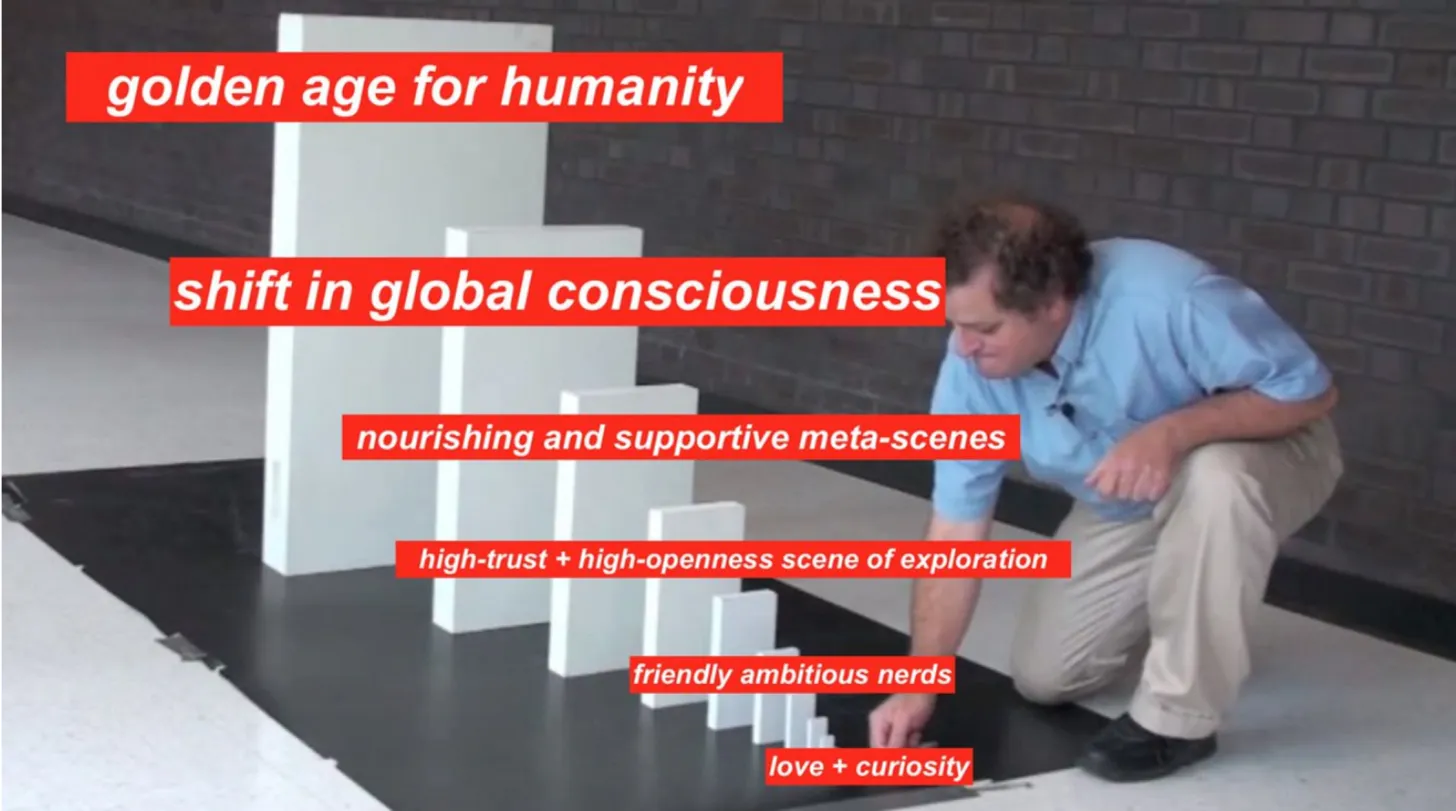
every single one requires unlearning first. earnestness becomes possible when you stop performing certainty. learning in public stops being cringe when not-knowing stops being failure. the permission you never knew you needed was always there — you just learned, very thoroughly, to stop looking for it.
unlearning is the root system underneath... See more
unlearning is the root system underneath... See more
Keely • what does it mean to be a good host?
4. Conversation allows us to think together.
Philosophy and literature encourage us to question everything and ask, in particular, the big “untimely questions.” If we enter them not with the aim to convert the other but to possibly be converted ourselves, conversations can unlock our best collective thinking and serve as the source code for... See more
Philosophy and literature encourage us to question everything and ask, in particular, the big “untimely questions.” If we enter them not with the aim to convert the other but to possibly be converted ourselves, conversations can unlock our best collective thinking and serve as the source code for... See more
Our online environments only appear infinite. The deepest, most nuanced knowledge still lives beyond any device. Everything we see through search, social media, or AI is limited to what has already been indexed, posted or trained. For example, Google may index hundreds of billions of web pages, yet that still accounts for <5% of the internet.... See more
Matt Klein • The Art of (Attention) War
the spoken word, community circles become rich wells of knowledge