Being human• 32
Sarah Wong
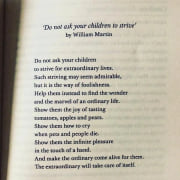
we should feel a sense of urgency around doing the things we want to do.
increase the intensity of our lives—by filling our available pockets of time with things that stimulate our curiosity, challenge us, and let us explor
Ambition does not have to be limited to a quest for power at the expense of yourself and others. It can also be a drive for a more just world, a healt
Community challenges• 18
Sarah Wong
City governmentscollaborate across silos and withpartners at local and regional levels.Many of these collaborations formaround specific projects or de
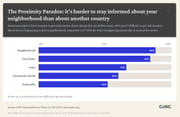
Disconnection Is a Place-Based Failure Strong social ties are most likely to form in place-based ecosystems populated by local institutions: houses of

Democracy• 43
Sarah Wong
the essential work of creating systems that genuinely work for everyone requires us to redistribute resources and grant power to those who have been d
In Open Democracy, she proposed replacing traditional electoral representation with “open” democratic architectures that rely on randomly selected cit
“deliberative system,” where democratic legitimacy arises not from any single forum but from the combined interaction of multiple sites of discussion—
. Deliberation Decisions made through: Reason-giving Discussion Collective problem-solving Key features: Not just voting or bargaining
participatory challenges• 11
Sarah Wong
The Benefits of Place-based Conversations Our experience of working with locally based communities is that the majority of them would really welcom
One of the first observations that emerged from these conversations was that people don’t think of their local places and neighbourhoods in terms of p
The truth is that there are very few opportunities for communities to come together to talk about how their place is working outside formal planning c
Her findings demonstrate that emotional and moral motivations, rather than material or informational advantages, often underpin participation for unde






Facilitation• 27
Sarah Wong
While it may be frustrating for a meeting planned to deal with a specific issue goes off track, time needs to be allowed to work though those every-da
Knowledge-sharing is power-sharing.
Beyond the collaboration itself, practical interventions such as ensuring access to a suitable community space and both residents and staff being able
understanding the underlying, often unspoken, interactions, behaviors, and emotions that influence team performance. It equips facilitators to manage
placemaking• 6
Sarah Wong
HOW WE THINK Data reveals patterns among populations that are already visible to platforms. Our job is to ask who isn't in the dataset, and to design
Worldbuilding is how we stretch the edges of what feels possible. We always start with a provocation — a spark, a shift, a signal of change. A questio


Collective Intelligence• 4
Sarah Wong
Collective intelligence is created when people work together, often with the help of technology, to mobilise a wider range of information, ideas and i
I wish that the systems were designed and run by the people using the systems.
At their heart are three key ideas – sortition (selecting decision makers by lottery), deliberation (collectively weighing evidence for shared decisio

particiaptory process• 57
Sarah Wong
Define the “what” and allow creativity around the “how.”
Facilitating a co-creation process is about articulating a vision, establishing the parameters, and guiding participants to a shared definition of wha
Build an invested community of collaborators.
We designed the co-creation process around anticipated human dynamics — such as past relationships or histories that may have caused reservations — se
Thought provoking questions• 14
Sarah Wong
When you think about the way that community has transformed from really embedded familial networks or village networks or religious networks, to thinn
Who's going to maintain the technology? Who's going to evolve it? Who gets paid or who has to pay for it? These questions led me down an exploration o
“We will never win against extractive capitalism if it’s a matter of power versus power,” Kelly writes. “The real power we the people possess – the ul
Are you designing for voice — or for durable rule systems? Are you building participation — or building institutions? Does your model scale beyond

state capacities• 5
Sarah Wong
ability to act without undue interference from other economic actors and interest groups. Both of these aspects require the ability to raise and deplo
Dynamic capabilities are specific abilities embedded in routines that enable organisations to adapt their resources, processes and skills in response
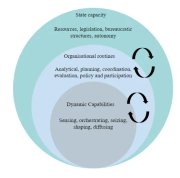
bolster governments’ ability to make the most of its available resources and achieve their desired goals.
Governance & Ownership models• 17
Sarah Wong
Development Management Scheme (DMS). This is commonlyused for new housing developments in Scotland, and is acommons-like governance structure which al
Crofting is a unique form of small-scale land-holding whichprovides the crofter with regulated rights, such as regulatedfair rents, tenure security an
Material and mineral rights generally come with land ownership.Some mineral rights are exempt from private ownership beingreserved to the Crown (see t
Water (riparian) rights in land recognise the different approachneeded to govern common flows over land, such as for streamsthat run across property b
Things fall apart• 70
Sarah Wong
In current economic data, the growing wealth and income of the FIRE sector are added to GDP as economic growth, even though they in fact take the form
In the 1950s, U.S. GDP was about equal to the value of assets. Today assets are valued at five times GDP. To keep those assets growing, more and more
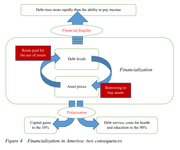
Decline of communities and local economies: globalization leads to the fragmentation and hollowing out of local economies, and the urban and rural com
Design Principles• 8
Sarah Wong
Negative experiences or perceptions of government services can decrease trust and turn people away from programs designed to help them.
Rituals on the other hand are intentional and done with focus.

Everything comes back to one question: Who is the platform accountable to? If the answer is investors, the platform will eventually warp toward extrac
Reimagined Community• 199
Sarah Wong
Smart contract and digital property deed — a smart contract linked to a digital property deed, that can automatically distribute value uplift between
Thick communities often look like communities within communities — not just a single activity, program, or group — inviting members into several acces
Can I get etymological for a second?? We get the word "sabbatical" from the word "sabbath," of course, but the professional sabbatical is actually roo