hmm
We've convinced an entire generation that if work feels hard, they must be doing it wrong.
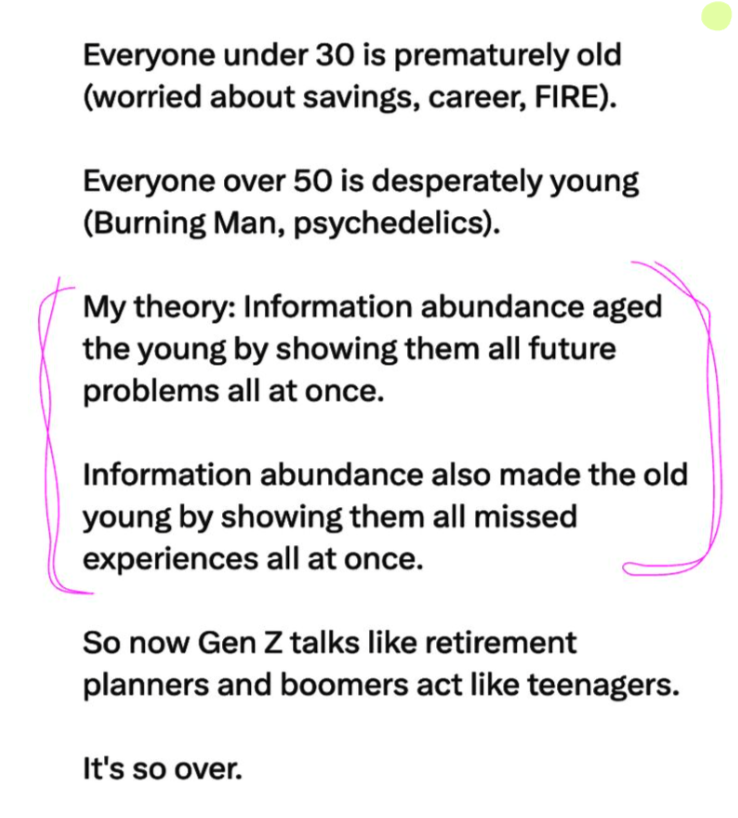
I didn’t want to lose anything. That was the main problem,” Sarah Manguso writes on the opening page of Ongoingness, her short book about learning to let herself forget things. She long fears being “lost in time,” until finally she realizes (as I’ve quoted once before), “the forgotten moments are the price of continued participation in life.” In... See more
“forgetting as a form of hedonic adaptation”
my belief that everyone’s most difficult trait is tied to their most winning one, e.g. a flighty person might also be fun and whimsical, or a neurotic person might be thoughtful and curious, therefore in order to love them wholly you must appreciate all manifestations of their core being. Dualism, basically, and I’m not the first to say it, but I... See more
#222: In what specific way are you annoying?
I walked home that night with a sense that I needed to slow my life down so that I don’t get to the end of it and wonder where everyone went when I wasn’t looking.
Luke Burgis • Everything Is Fast
A friend asked a Busy Guy to lead a project, and instead of saying yes or rejecting it, the Busy Guy said: “I can’t commit to that, but I can commit to thinking about it, and if I come up with something I’m excited about, I’ll do it.”
Such tact in that answer.
-DP
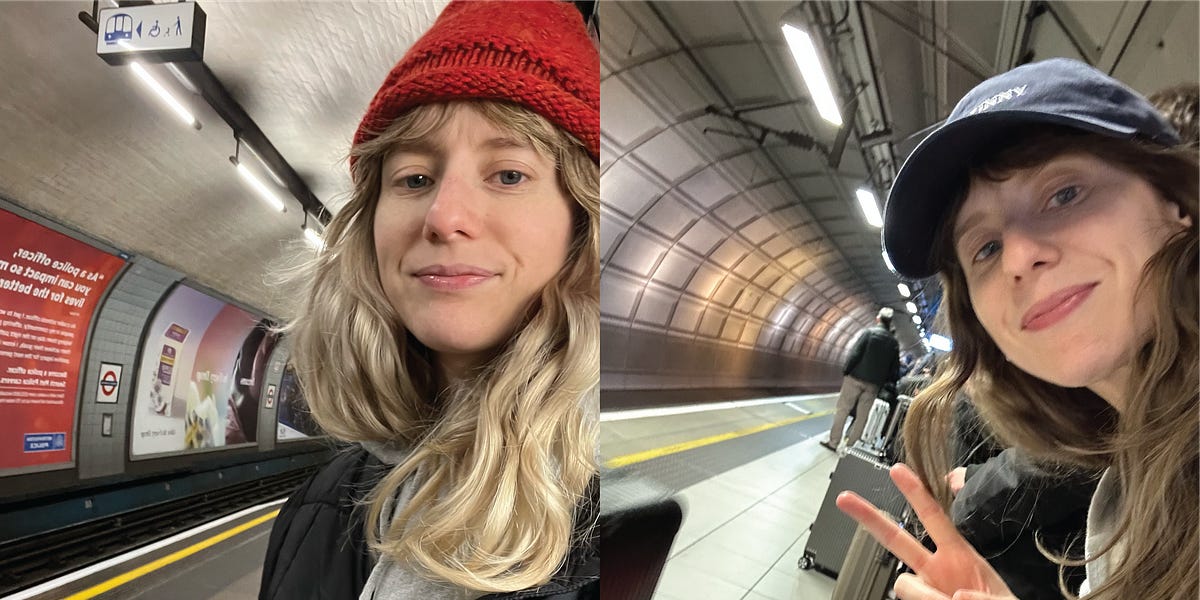
re: our incessant need to capture everything
Productivity software is a gigantic industry (lots to unpack there). And within the category, there seem to be two schools of thought: breadth of function of range of integration. i.e. "software that can do everything you need” or “software that can connect to all your other software” —— These two approaches are fueled by the same thing: “how can... See more
STR4TSTR4TS_v169
I’d recommend assuming there’s some area of your life where you are, without realizing it, frozen in time, and that locating it matters quite a bit. Look across the three theaters of your life: work, relationships, and self-relationship, and take note of the biggest issues you face. Know that you might be looking for something that doesn’t feel... See more