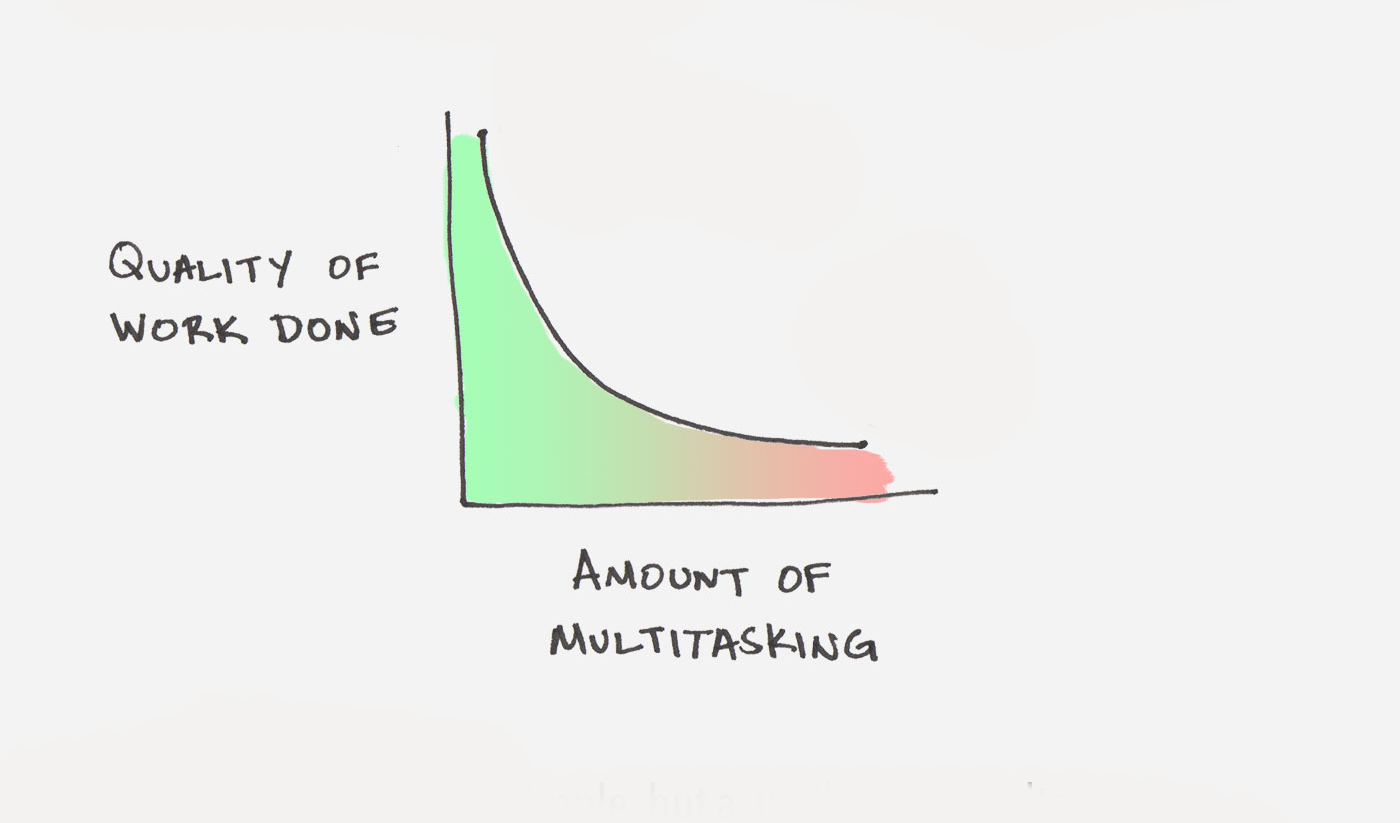
What is impossible, however, is concentrating on two tasks at once. Multitasking forces your brain to switch back and forth very quickly from one task to another.
This wouldn’t be a big deal if the human brain could transition seamlessly from one job to the next, but it can’t. Multitasking forces you to pay a mental price each time you interrupt one... See more
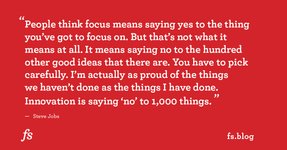
Making few bets forces you to make hard decisions. It’s extremely hard to measure the value of something against some abstract and absolute notion of value.
Proponents of diversification argue that it takes the edge off of making a mistake. That would be a good argument if people acted the same way independent of... See more
On this particular day in the gym, there was a coach visiting who had worked with thousands of athletes over his long career, including some nationally-ranked athletes and Olympians.
I introduced myself and we began talking about the process of improvement.
“What’s the difference between the best athletes and everyone else?” I asked. “What do the... See more
If you look around, you’ll notice the people and organizations moving the fastest are the focused ones. Not only do they focus on a few ideas, but within the scope of those ideas, they are able to focus on the key variables.
Identifying the variables that matter comes with focus. When you commit to living in a problem, you understand things about... See more
I have a suspicion that most adults (75%+) could pick any skill—excluding sports—and work their way into the top 10% in the world simply by working exclusively on it every day for two years.
But almost nobody displays that degree of focus, so we will never know.
Here is the message he ended with: “Study something you love in depth.”
“Here’s the only thing you need to remember from this talk: ‘Study something you love to death’—I mean ‘depth’! [laughter] ‘Study something you love in depth.’ I just gave you an hour, so tonight give me 45 minutes. Spend 45 minutes tonight studying something you love. Watch the... See more