vanya
@vanyastar
vanya
@vanyastar
Some of the details were exactly the same as the permanent position, others weren’t. For one, permanent employees had to have at least a BA, but there were no educational requirements for this position. A permanent job post meant a fixed monthly salary, but the contract job was hourly. Work hours were different, too. … I couldn’t figure out the
... See morethe factory - hiroko oyamada and labour
Yoshiko is offered a different position than she interviewed for, a contract position rather than permanent. This job is in ‘Staff Support’. When she questions what her role will involve, she is only told ‘support’. She joins what is casually called the ‘Shredder Squad’ ‘at the end of the corridor’ where her role will be to destroy documents using an industrial shredding machine for three to seven and a half hours a day. The name of this position gives a much more favourable (and vague) impression than the actual role itself. It is clear that she is being given an inferior position involving pretty mindless work.
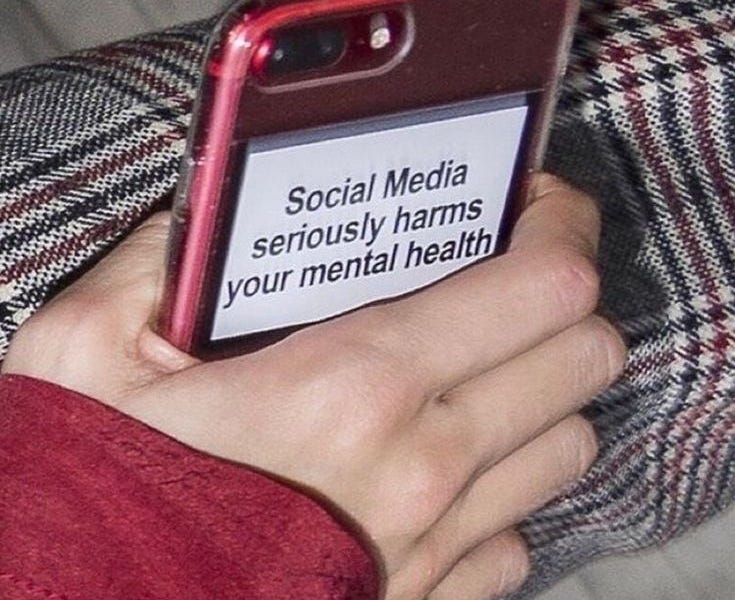
this spoke to how i’ve been feeling about social media and a longing to connect to people.
i would like to be in the position to delete all social media platforms and simply exist in ‘reality’ - whatever that really means - however i do believe there is joy in sharing experiences on the internet. i’m lucky enough to go through substack today and find writings about similar experiences to mine and to find comfort in this, and inspiration to write something in response.
could this also be found through books? absolutely, and i still have every intention to seek the same things through books and through conversations with others, but it is lovely how these moments and writings can be documented and returned to such as on this platform, allowing curiosity to grow, and something to potentially be created at the end of this delving into things.
but i suppose that is more about research and writing as opposed to the initially intended use of social media to keep in touch with friends and family. to be quite honest, places like instagram make me feel a sense of indebtedness to keep following people i’m not particularly really friends with. i need to show an interest in their lives because we had some arbitrary shared experience such as attending the same university, although we never really connected with each other in any other way than digitally, and also although what they are sharing is not even their actually lives, it’s simply a snippet of what they are choosing to post.
i reckon i could genuinely delete instagram. i would really like to. it would be very interesting to try doing this.
i don’t want to just delude myself though that moving over to substack and using sublime is not at all social media. it isn’t but there are still similar elements. if all of my friends began using substack then i would probably feel a similar sense of duty to keep up to date with whatever it was they were writing. although perhaps writing is different. i don’t know yet
Part of me felt undervalued, but they must have seen some promise in me. I mean, they were still offering me a job. In a way, this made things easier. … If I were being considered for the other position, the interview would end, then I'd say goodbye and head home. Goto would look over my application, and a few days later they would contact me if
... See moreYoshiko is offered a different position than she interviewed for, a contract position rather than permanent. This job is in ‘Staff Support’. When she questions what her role will involve, she is only told ‘support’. She joins what is casually called the ‘Shredder Squad’ ‘at the end of the corridor’ where her role will be to destroy documents using an industrial shredding machine for three to seven and a half hours a day. The name of this position gives a much more favourable (and vague) impression than the actual role itself. It is clear that she is being given an inferior position involving pretty mindless work.
Being a mother felt like becoming invisible, or perhaps semi-visible - noticeable enough to be scolded for failing to fold your pram on a bus (how, with a baby under your arm?), or for taking up too much space on the pave-ment. But in yourself, now, a slightly detested creature, loose around the middle and contributing to the overpopulation of the
... See moremotherhood and
‘We like to imagine that it's possible for life to be one eternal summer, and that we have uniquely failed to achieve that for ourselves, We dream of an equatorial habitat, forever close to the sun; an endless, unvarying high season. But life's not like that. Emotionally, we're prone to stifling summers and low, dark winters, to sudden drops in
... See morelife path and
No matter where you are in this city — the school, the department store, anywhere — you’re always walled in by mountains. But the factory had nothing around it. Or rather, it was as if it were surrounded by something other than the mountains. Something larger, something more distant.
p5, The Factory (2013) by Hiroko Oyamada, translated by David Boyd
nature and
We learn that the city in which our protagonist lives is ‘walled in by mountains’ - everywhere except the factory, which we can assume is by contrast in a flat area.
Ominously, the factory lies separate from the natural environment visible in the city. The people are residing in a place closer to nature, but working in an unnatural place that is surrounded not by earthly bodies but by the idea of ‘something larger’ and ‘more distant’. It is not a comforting presence, despite this idea perhaps also bringing to mind the idea of a God or higher power, one of the few things people might consider ‘larger’ and ‘more distant’ than nature itself.
communication and privacy