Psychedelic drugs are undergoing a surprising renaissance; they’re now being used to treat depression, addiction, and the existential fear of death faced by many people with cancer
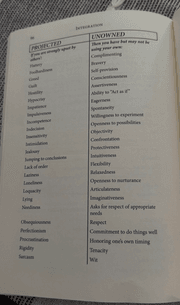
To act in a dynamically changing world, we need some way of limiting the scope of our reasoning and perception, some way of zeroing in on what is relevant without having to consider all that isn’t. This turns out to be a deep and difficult problem. The cognitive scientist John Vervaeke has gone so far as to argue that this capacity for “relevance... See more
We don’t yet have great ways for talking about this new spirit of collectivism. The relationship between individuals and society has always been framed as a necessary compromise: we are told we must sacrifice our personal goals for the sake of the many. But what if it’s not a zero-sum, either/or? Humans, at our best, are capable of embracing... See more
If the new American Dream is defined by “creative expression, online influence and extreme optionality” over linear moves up the corporate ladder, then LinkedIn is enough to make any Millennial or Gen Z jobseeker cringe.
But there’s one thing YouTube has not been able to provide creators: direct access to their audience. And that’s because YouTube has made it clear that they own the customer relationship, not the creator.
Allen is known in China to be more of a “humanistic philosopher-creator” as opposed to a business mercenary. At the start of WeChat's creation Allen’s mission statement for the company was to not perceive WeChat as a commercial product, but rather as an impressive “work of art”.
ISAACSON: What would you be doing now if you were a young person when it comes to something like AI?
GATES: There are certainly a lot of innovative things that the world needs, whether it’s in diseases or clean climate technologies. But the most profound technology is AI, because it’s going to have such an impact on all the scientific work we do and... See more