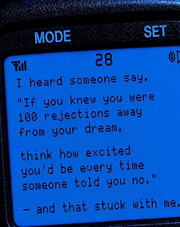
yes person for all things community, connection, & storytelling
In their view, U.S. foreign policy is largely the servant of corporate interests—the military-industrial complex, energy companies, and “major corporations, banks, investment firms, ... and policy-oriented intellectuals who do the bidding of those who own and manage the private empires that govern most aspects of our lives.”
I’m fascinated by the way that the cheerleaders themselves have narrativized this sort of self-objectification: in all the talk about locking eyes with a spectator and giving them that special moment , in the focus on the happiness you provide just by existing , in the focus on sanding down just enough individuality (even height differentiation) to... See more
My sense is that what’s at stake here is really rethinking the human as a site of interdependency. And I think, you know, when you walk into the coffee shop ... and you ask for the coffee, or you, indeed, even ask for assistance with the coffee, you’re basically posing the question, do we or do we not live in a world in which we assist each other?... See more
Here is my definition of imposter syndrome. Imposter syndrome is the persistent, unrealistic, fear-inducing, fucking ridiculous belief that you are supposed to magically eliminate all variables for failure before trying anything new in the presence of others.
So next time that feeling creeps in, try this HoJo (that’s what we insiders call the... See more
"I get a front row seat [with] some of the most successful, beautiful, incredible people in the world," Emma expressed. "And when you have that seat it becomes very, very clear that there is just absolutely no level of success that will make you in any way happy or content if you do not like who you are or enjoy what you're doing when no one's... See more
A big problem with bubbles is the reflexive association between wealth and wisdom, so a bunch of crazy ideas are taken seriously because a temporarily rich person said it.
We often confuse hope with optimism—the idea that everything will be okay—but optimism and defeatism hold the same space. Both outlooks, Rebecca says, “are a form of confidence in that you know what is going to happen and therefore nothing is required of you.”