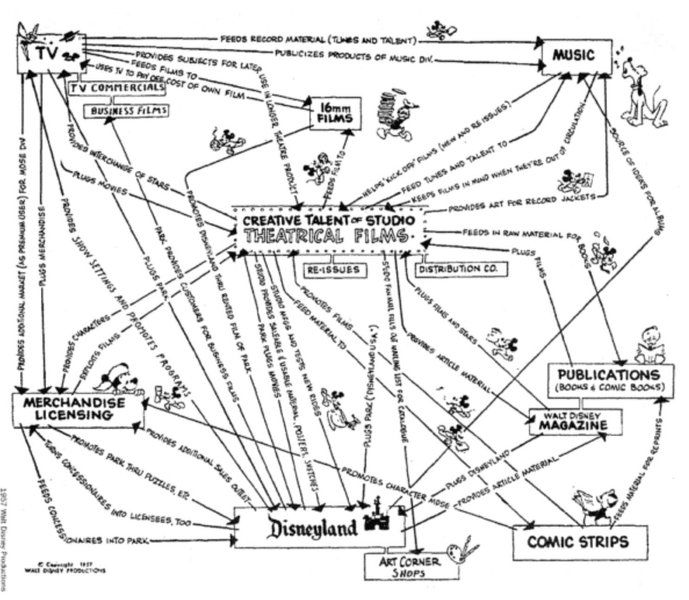
the flywheel for brand building
As founders, community leaders, and shapers of these new cultures, this is the most important question we have to ask. Because we’ve seen that we’re not only creating culture: we’re producing personality in people. In other words, we’re creating types of guys.
Toby Shorin • Life After Lifestyle
The newsroom is shorthand, not dogma. It describes a structural shift, not a single blueprint. Some brands are moving toward writers’ room models, borrowing from television and entertainment rather than journalism. These teams build serialized arcs, recurring formats, and narrative continuity across weeks or months. Instead of reacting to every... See more
Nikita Walia • If Every Brand Is a Media Brand, Every Brand Needs a Newsroom
The discipline of reality-recognition is the discipline of propriety, and sommeliers have perfected this discipline.
If you want to create value and sustain value in a world of consensus collapse, there are three strategies toward cultivating propriety: 1. build a discipline around knowing what’s real by blending your senses , 2. give matters their... See more
If you want to create value and sustain value in a world of consensus collapse, there are three strategies toward cultivating propriety: 1. build a discipline around knowing what’s real by blending your senses , 2. give matters their... See more
Matt Klein • Reality Somms: How to Cultivate A Discipline of Knowing What’s Real
Editorial maturity includes the decision not to publish. Newsrooms choose absence strategically. Brands must learn the same discipline. Participation in every cultural moment erodes authority. Selective presence can reinforce distinction.
The imperative, then, is not simply to build a newsroom. It is to build one with actual editorial judgment.
The imperative, then, is not simply to build a newsroom. It is to build one with actual editorial judgment.
Nikita Walia • If Every Brand Is a Media Brand, Every Brand Needs a Newsroom
the art of sacrifice and sommeliering
Protecting Brand Equity
This is the most important.
Saturation without discipline erodes authority, and publishing without restraint produces noise. Participating in trends without judgment collapses brand distinction.
A mature newsroom is defined as much by what it refuses to cover as what it amplifies.
Brands that confuse presence with relevance... See more
This is the most important.
Saturation without discipline erodes authority, and publishing without restraint produces noise. Participating in trends without judgment collapses brand distinction.
A mature newsroom is defined as much by what it refuses to cover as what it amplifies.
Brands that confuse presence with relevance... See more
Nikita Walia • If Every Brand Is a Media Brand, Every Brand Needs a Newsroom
3. Different Approaches, Different Advantages
If Sharp’s theories were truly universal as he posits, every company would pursue the Diageo approach to brand strategy. They don’t, because different relationships between what brands stand for and the innovation they undertake reveal distinctly different advantages to exploit.
Diageo brands stand for... See more
If Sharp’s theories were truly universal as he posits, every company would pursue the Diageo approach to brand strategy. They don’t, because different relationships between what brands stand for and the innovation they undertake reveal distinctly different advantages to exploit.
Diageo brands stand for... See more
Paul Worthington • Off Kilter 217: The Capstone to Advantage.
I keep asking people to get more specific about the culture they’d like to see. What do you think it would be good if there was more of? What do you wish people were spending more of their time on? Instead of building a culture-agnostic platform, can you find a way to support that? To encourage that?