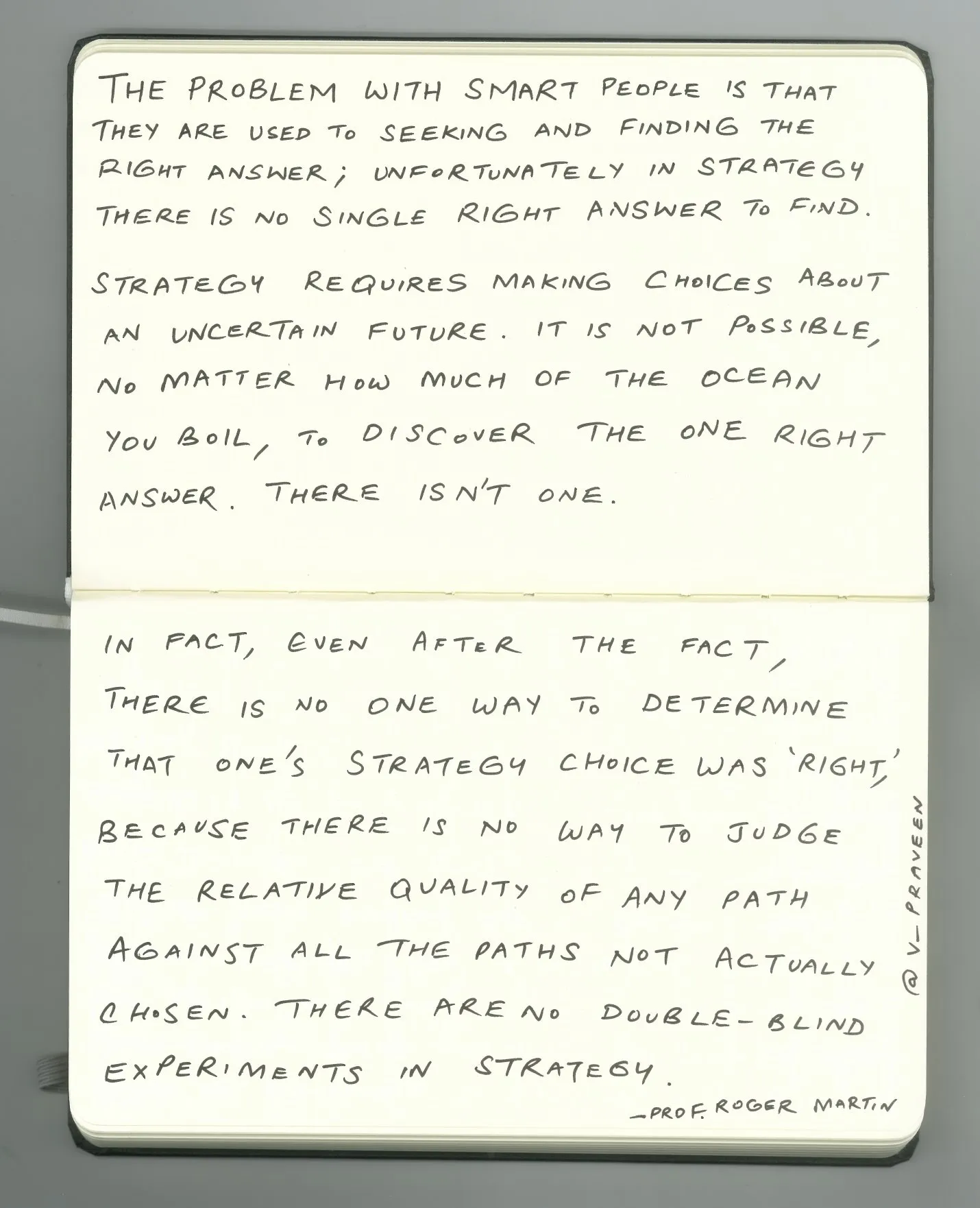
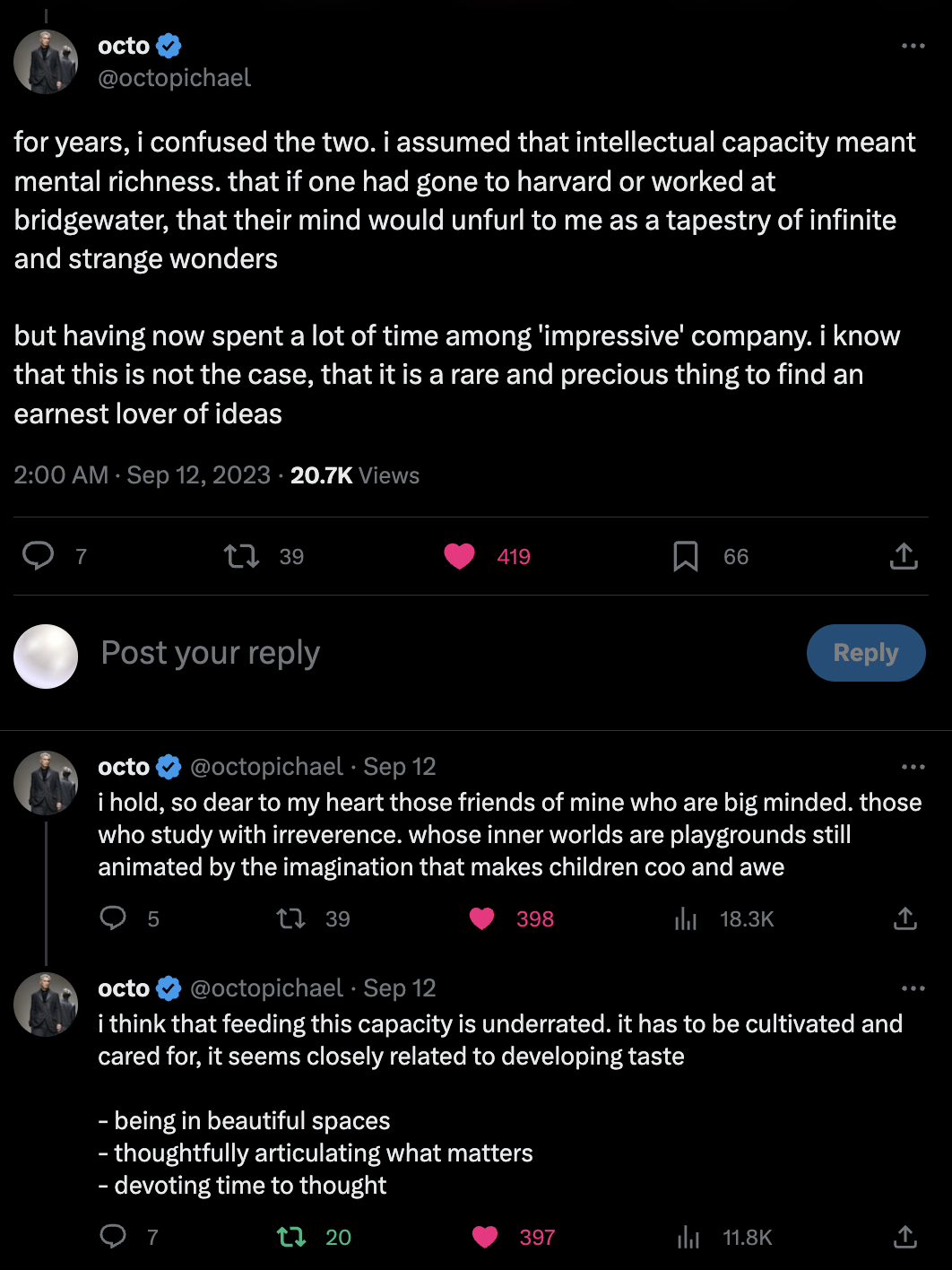
"I grew up implicitly thinking that intelligence was this, like really special human thing and kind of somewhat magical. And I now think that it's sort of a fundamental property of matter..." @sama
damn, this one’s a mind bender I’ll have to sit this for a while
Schools are good at teaching and measuring intelligence, so that’s what people tend to value and aspire to. But in almost any field, smarts is what gets rewarded long term.
You cannot measure empathy like you can SAT scores, so it’s not surprising that one is given more weight on resumes. But who is more likely to succeed in life – a person whose... See more
The project would attempt to invent an anti-gravity system from the ground up instead of reverse engineering it. This project began in 1955 with the establishment of the Research Institute for Advanced Studies (RIAS) at the Glenn L. Martin Company, which later became Martin-Marietta and ultimately merged with Lockheed in 1995 to form the modern... See more
Intelligent people simply aren’t willing to accept answers that they don’t understand — no matter how many other people try to convince them of it, or how many other people believe it, if they aren’t able to convince them selves of it, they won’t accept it.
I believe many young people struggle with the insecurity of being intelligent. They often feel the need to prove their intelligence by overthinking, excessively planning, and acquiring knowledge before taking action. However, this approach is a waste of time. The more you research, the more you realize how little you actually know. Instead, you... See more
Duke Rem: You often suggest (without stating it directly) that human intelligence is inherently social and contextual. How (and why) does this perspective challenge current AI methodologies?
Erik Larson: Human cognition is deeply embedded in social interactions, cultural norms, and the specific contexts in which we operate. We learn, reason, and... See more