friendship
I guess if we’re talking about joy, writing, and being a fully rendered person in the world, my main sources of liveliness are so human and obvious they might seem facile: 1) loving the people I love with full throttle abandon – my guy, our kids, my mom and dad, our gaggle of brothers, my army of girlfriends. So that’s advice, maybe: make as many... See more
Rachel DeWoskin Tells Us
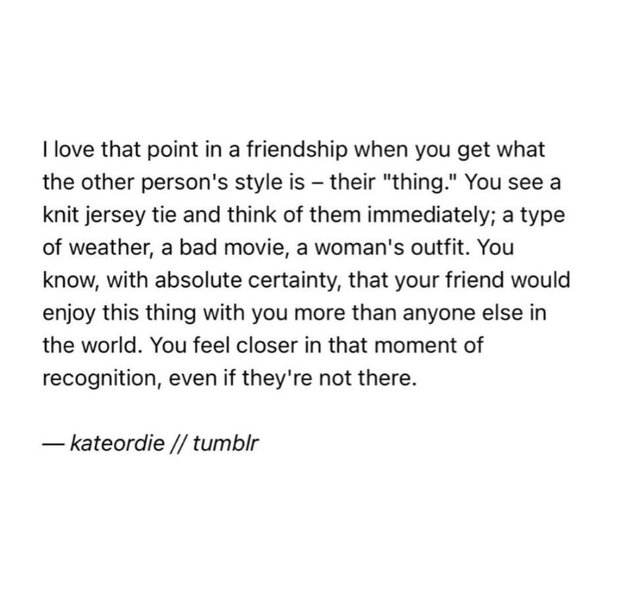
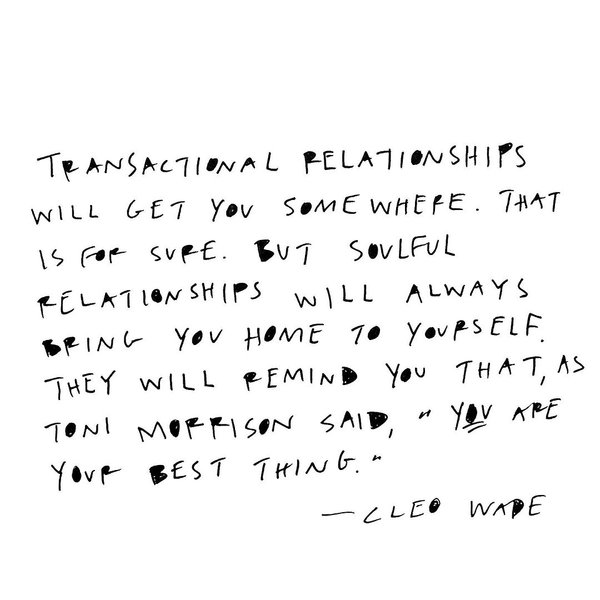
a handshake vs. a hug ❤️
instagram.comno good alone - by rayne fisher-quann - internet princess no good alone
rayne fisher-quanninternetprincess.substack.com
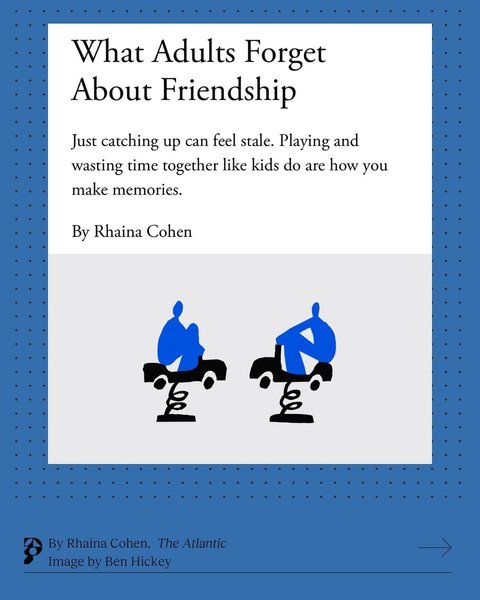
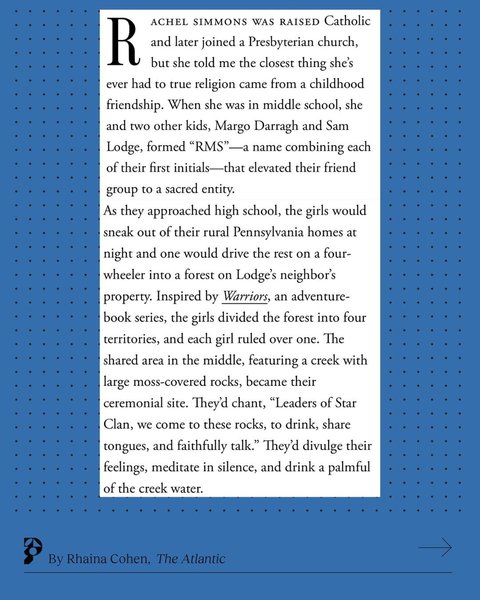



Wanna skip rocks? Why yes, yes I do.
Thanks @jenncolella for the read. 🫶🏽
“While grabbing dinner with a friend can be engaging, it’s a far cry from elaborate forest ceremonies.”
How did you play as a child? How do you play now?... See more
instagram.comHuman Interactions/Relationships & Connections
MargaretC and • 10 cards
I think something I’m increasingly learning in my 20s is that individual friendships are so much more nourishing and intensely peaceful than trying to fit into big groups — feel so at home when it’s 1:1
Nix 🕊twitter.com