Saved by Carly
writing with your eyeballs
But what I’ve started to think is that they have read quite a lot of Rachel Cusk, but they have not understood the true disposition of these novels. They are novels of perception, that is true. But what they most perceive, really, is a woman perceiving things. The novels are a mediation of a mediation. The thing perceived is at an inherent remove.... See more
Brandon • writing with your eyeballs
What I am trying to say is that the threat of erasure which informs so much of the melancholic urgency, the desperate thoroughness of the witness accounts that shape Sebald’s narrations in The Emigrants , is a strange fit for Cusk’s bourgeois exiles. They speak with the same cast of voice as Sebald’s refugees, but the circumstances of their... See more
Brandon • writing with your eyeballs
Sebald’s project was one of recuperation. That he was in essence trying to recuperate something which could only be recuperated through this particular patterning of fact and fiction, and that only in transcending the boundary between those two domains could he reach across that gap of history and calamity and restore some sense of wholeness to the... See more
Brandon • writing with your eyeballs
style is always an external manifestation of a disposition toward life. It seems unfair that what we so often focus on that external aspect without showing equal consideration to that vast inner terrain that gives shape to the external aspect.
Brandon • writing with your eyeballs
the novel offers philosophy, beautiful philosophy at times, rather than the truly, deeply, embodied personal.
This is a novel written with the eyeballs. About the witnessing of perception and the witnessing of insight. Visceral life—like the unkempt, sour, foul apartment of Faye’s downstairs neighbors—is kept at arm’s length, addressed only in the... See more
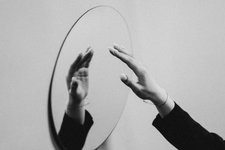
Brandon • writing with your eyeballs
For example, her use of the imperfect creates a background of ongoing vagueness against which certain sharp actions cut. Note the difference between Dale and the narrator in the passage: “His eyes were moving all over my image with a devouring expression. His face was somber and I watched it in the glass.” Dale’s eyes are moving . But the narrator... See more
Brandon • writing with your eyeballs
I now find first-person narrators so mediated that they even mediate their own experience of reality and consciousness back to themselves. You see it again and again, first-person fiction written as though it is third-person, external to the person narrating it.
Brandon • writing with your eyeballs
These are not novels of plot or event. These are novels as after-action-reports. Incidents from the far reaches of someone else’s memory. Novels as overheard gossip. In summarizing these novels, you feel less like you are relaying the structure of a set of external experiences and more like you are recapping someone’s to-do list. The books are very... See more
Brandon • writing with your eyeballs
Faye is less narrator than a mobile occasion for narrative. What I mean is that whenever she comes into contact with another person, they spontaneously erupt into narrative, as though it is leaving a point of high symbolic concentration (their own lives) to a point of low symbolic concentration (this deracinated female narrator about whom we know... See more