US Fed QE Needs to Restart Fast
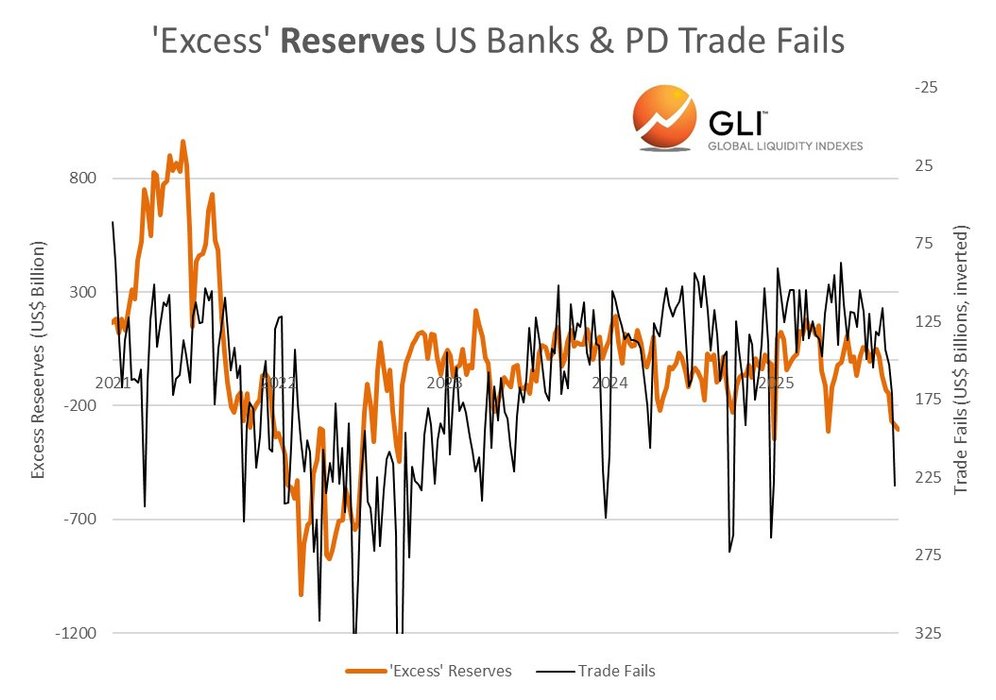
Whoops! Houston we have a problem....Fed #Liquidity shrinking too fast... https://t.co/c4C02u2oHU
Global liquidity levels have stabilized following the Q4 dip. Four factors are underpinning them: (1) Improving Central Bank liquidity, due to the PBoC and ECB. Fed liquidity remains a cause for concern. (2) Collateral values (bonds) which are picking up, in part helped by (3) the loss of momentum in the US dollar. And finally (4), bond market... See more
Global Liquidity Watch: Weekly Update
Looking ahead, the US is likely to see lower policy rates (circa 3%) and increased liquidity stimulus despite near-term inflation risks, as supply-side shocks from higher tariffs (taxes) slow growth and eventually curb price pressures. The Fed and Treasury are employing unconventional tools – including ‘Not-QE, QE’ (backdoor liquidity injections),... See more
Crescendo
The US is likely heading toward:
Investment Implications
- Lower rates (circa 3%) despite near-term inflation
- More liquidity injections (US$1.5 trillion in 2026)
- Continued unconventional policy tools (Treasury QE, stable coin-driven demand)
Investment Implications
- Risk-On: favor Bitcoin, equities, and growth assets
- Watch for Fed rate cuts and monitor US Treasury bill
Crescendo
The reverse repo facility has been flat lately, and there’s still $433 billion in it. The big draining of the reverse repo facility from over $2 trillion in May 2023 to the current low levels was the main reason why the Fed was able to keep performing quantitative tightening without causing further liquidity problems in the banking system.