Teach Me Daddy
Put another way, the liquidity of the private sector is determined by the size of its asset holdings divided by their average duration . Thus, any change in average duration must result in a change in ‘liquidity’. These actions are not limited to the US Federal Reserve, because the US Treasury is also a major debt issuer. If the Treasury changes... See more
Crescendo
The Treasury has two choices on how it pays the government’s bills. They can either issue debt (dollar liquidity negative) or spend money from its checking account at the Fed (dollar liquidity positive). Because the aggregate amount of debt cannot rise until the US Congress increases the debt ceiling, the Treasury can only spend funds from its... See more
Sasa
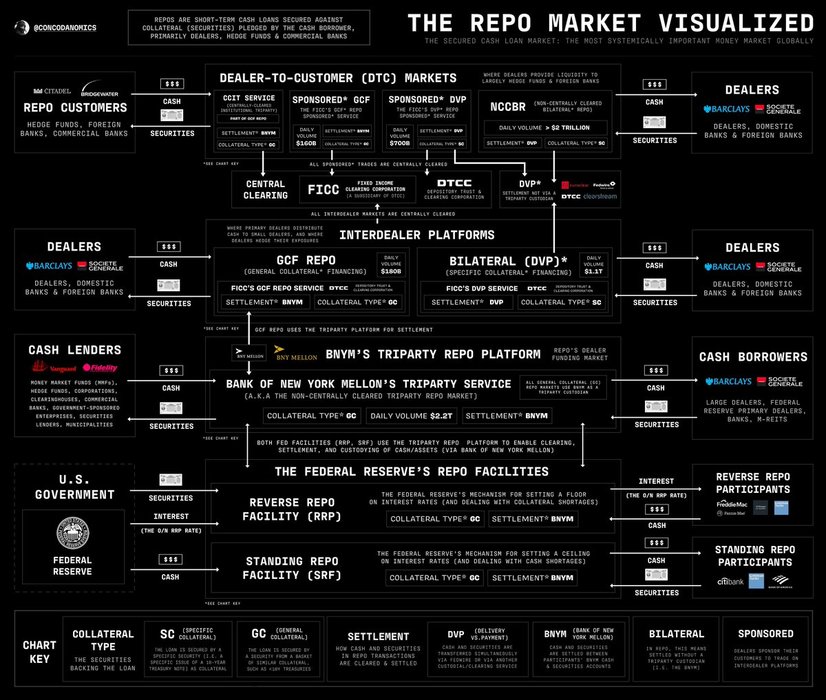
The reverse repo facility has been flat lately, and there’s still $433 billion in it. The big draining of the reverse repo facility from over $2 trillion in May 2023 to the current low levels was the main reason why the Fed was able to keep performing quantitative tightening without causing further liquidity problems in the banking system.
Lyn Alden • Deep Dive: Emerging Markets
Global Liquidity takes an international perspective, considering liquidity created by multiple monetary authorities, including central banks outside the US like China's PBoC. It also accounts for private sector credit provision through various channels, such as banks, repo markets, and shadow banks. Importantly, it embraces the concept of the... See more