Placemaking• 15
Brian Wiesner
Like the impressionists, we see a magical sense of ambiance in cities that never sleep; places where we don’t have to pick between living as morning l

Doing work in a coffee shop, drinking coffee on a terrace and walking around—often to many of the tourist sites or local hot spots—for an extended per
People choose places; places shape people; people go on to shape other people. We should be thoughtful about the kind of transformation we opt into.
Sprawl & Suburbia• 11
A collection of thoughts and ideas around Urban Sprawl
Brian Wiesner
This order created uncoordinated systems that worked, without staff, as if by magic. Such was Jacobs’s “Sidewalk Ballet.” With density, she argued, ca
One of the greatest lessons from Jacobs is that only someone from outside the industry is capable of smacking a hornet’s nest in a way that brings abo
There’s a famous—to urbanists—story about Amsterdam in the 1970s. Today, Amsterdam is the poster child, almost the byword, for a quiet, clean European
Again, I want to be very clear that these neighborhoods are not some hell on earth, and anyone from the rest of world would be smitten to have the cha
why do people travel...• 3
Brian Wiesner
Again, the hopes of our travels seem somewhat distinct from hopes of everyday life, mainly because we believe that by going elsewhere we can obtain so
There is often something deeper below the surface motivating many of us to strive to uncover something more about ourselves and the nature of this wor
There are many hopes to travel but perhaps my greatest hope is that it will always serve as a reminder that we live in a vast universe of the unknown
Social Capital• 30
Brian Wiesner
I am a massive advocate of ensuring you have some peaceful time alone. After all, I’m a devoted introvert. I love time alone to think. I love long wal
Admittedly, an increased difficulty in impressing friends with neat tips and trivia hardly constitutes a social crisis. And perhaps benefiting from cl
You Want a Social Life, with Friendsby Kenneth KochYou want a social life, with friends.A passionate love life and as wellTo work hard every day. What
Anyhow—we shouldn’t even be having this discussion. We’re the richest country in the world. Heck, California is one of the richest countries in the wo
Time• 10
Brian Wiesner
Incense has been used for timekeeping in China and Japan for centuries, constituting a different, olfactory way of experiencing time. Lighting a stick
The hourglass is particularly interesting, since unlike most other methods of measuring time, it presents the present as between the past (sand collec
This is the backdrop of the whole phone as an extension of arm thing. The way that we experience time is completely warped now. Time has been compress
Time is flat. There has never been more of it, but we have never been so busy. But we are busy with noise, moving along a timescale that is maybe just
creative pursuits• 9
Brian Wiesner
There is a striking uniformity in the waycreative people-artists, writers, mathemati-cians, scientists, and philosophers-speakabout the process of pro
What we forget, however, is that the story of the Starving Artist is a myth. And like all myths, it may be a powerful story, one we can orient our ent
Thanks to the power of this myth, many of us take the safe route in life. We become lawyers instead of actresses, bankers instead of poets, and doctor
Rarely do we think of creatives as wealthy or successful, even cracking jokes about the wastefulness of art degrees and theater classes. We have heard
Work & careers• 6
Anything related to "work" and career planning
Brian Wiesner
There is a commonplace opinion that technology and the natural world, or that technological pursuits and natural pursuits, are at odds. An example:“Th
It made me start to wonder just how much I’d been affected by the bubble of prosaic routine in the US, feeling the only path to success was rigidly li
More important than beanbags and coffee machines (though they are nice), are how employers recognise the needs for work-life balance, the importance o
slow down, enjoy the moment• 5
Brian Wiesner
There was a time where I could hardly even pay attention to the blooms, where I barely noticed they were there. There was a time where I felt agnostic
I have since grown to spend more time with the flowers, to remember that when everything is buzzing with life, it is a moment to pause. A moment to ap
I suppose this is just a gentle reminder that if you sense you are in a moment where things are blossoming, where your hard work is crystallizing, whe
I do like the rush of rushing. And to an extent, I am quite good at rushing—at doing things in a high-intensity, high-pressure way. But my sense is th
the democratization of knowledge• 2
Brian Wiesner
Before video became available at scale, tacit knowledge had to be transmitted in person, so that the learner could closely observe the knowledge in ac
Massively available video recordings of practitioners in action change this entirely. Through these videos, learners can now partially replicate the m
AI will not take over the world...• 6
Brian Wiesner
GPT-4 is a Smart High Schooler on one dimension, and a bottom centile High Schooler on others. It’s dangerous to assume that strengthening the strong
Seven years ago, Kevin Kelly wrote, “Intelligence is not a single dimension, so ‘smarter than humans’ is a meaningless concept.” It bears repeating.
We’re not even on the agency curve. It’s a different curve. Look, I’m using knowledge and agency a little loosely. LLMs can do more than just regurgit
there is a third way, the Goldilocks Zone: we get increasingly smart and capable helpers without eliminating the need for humans, or birthing beings t
writing & creation• 8
Brian Wiesner
So, no. I do not sit around and write all day—if only. I have a day job. Almost all novelists do, unless they’re Sally Rooney or have a spouse who sup
To state the obvious: it is very hard to work a full-time job and also write a book. I cannot imagine doing both of those things while also raising a
Because I work in tech, which is a grossly overpaid industry, for the past seven years or so since I started writing, I have taken 4-6 months off ever
The idea of research as leisure activity has stayed with me because it seems to describe a kind of intellectual inquiry that comes from idiosyncratic
Phone Addiction & Social Media• 9
Brian Wiesner
Being off social media helped me remember how to think for myself. I’m having my own thoughts again, rather than social media telling me what to focus
Better social nutritionSocial media feels like the “empty calories” of human connection. I’m filling my cup with connections, but they lack nutrition.
But God, that loss—that feeling. I am grieving something I never knew. I am grieving that giddy excitement over waiting for and playing a new vinyl fo
cities & civilizations• 2
Brian Wiesner
To simplify it only a little: in the first stage, a country is poor, and thinks it is poor. This is the baseline for basically every pre-industrial so
The famous hedge fund manager Ray Dalio, of Bridgewater Associates, has written about this. He identifies four stages in the “lifecycle of a typical e
the inconvenience of convenience• 13
sari
Flatness, like scalability, is efficient. The same culture flows through the same pipes to the same net-average consumer. But since when did efficienc
Technology increasingly robs us of the mystical in our lives. Not everything needs to be fast and available and convenient. I love ideas and products
I think there are things in life that you want to telescope and compress and accelerate and streamline and make more efficient. And there are things w
Beauty & Design• 4
Brian Wiesner
You might divide everything in life into two categories: utility and beauty. These aren’t mutually exclusive, of course—nearly anything could be both:
The Cultural Tutor perfectly sums up why beauty matters: “what’s the danger of a world without beauty?” they ask. “If everything is simply functional,
As we’ve discussed before, that’s why you feel the difference when you sit in an IKEA chair versus something handcrafted. You may be saying, well, a c
Everything around us is literally vibrating. As we’ve discussed before, that’s why you feel the difference when you sit in an IKEA chair versus someth
Marketing Done Well• 7
Brian Wiesner
If there's any kind of lesson in all this, it's mostly some advice I want to give myself. The lesson is simply: speak up. It's OK to slip into advocac
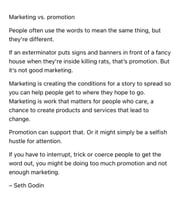
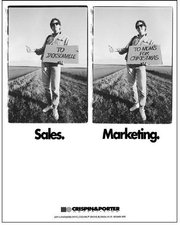
When we sing in the shower, we hardly expect applause. In fact, that would be awfully weird. But online, when just about anyone might be clicking,
Relationships & Dating• 3
Brian Wiesner
Disintermediating your friends: How online dating in the United States displaces other ways of meeting
The right unions will bring together people who through their relationships become more defined and refined individuals. If the end goal of all humani
Love is presented as being selfless, but perhaps it can also be a harmonious union of rational self-interest.