By adding the interaction of completed and noncompleted time into the time-flow equation of the historical process (and thus to its relation to the future), Polak introduces the idea of social change as a push-pull process “in which a society is at once pulled forward by its own magnetic images of an idealized future and pushed from behind by its... See more
A lot of the most important work that public institutions do is the most laborious, it's the most time consuming. It's the first thing that you would optimize away if you were trying to increase the profitability of your VC library, right?
On the other hand, networks with profiles that allow for more anonymity often grow more easily at the beginning because of the lower commitment required. Long term, however, we’ve seen them burn out and produce less value on average.
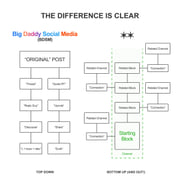
The practice of assembling conflicts with most of the terminology we have in place for responsive design. Our words make it seem that we’re designing how elements break down, but really, we should be focusing on how they build up.
In the digital age, everything from the evening news to the 9 – 5 workday has been freed from the cage of industrial era timekeeping. As long as you have an internet connection, you can march to the beat of your own second hand.
And there was something else to look at what urban planner William White calls triangulation. You don't have to directly engage with other people who are here. You can both be looking at the fire. You're having a nice time. You're warm, you're feeling good. And over the course of sitting for a while, there's opportunity to strike up a conversation... See more
Maria Puig de la Bellacasa argues that caring involves an “ethico-political commitment” to the neglected and oppressed and a concern with the affective dimensions of our material world. We care for things not because they produce value, but because they already have value.