Divya Prabhakar
@divprabh
Divya Prabhakar
@divprabh
What is the most effective UI design documentation within a large organization?
Much of our work today is about agreement in an organization. In fact, when people ask me to define a design system, I often reply with that single word: agreement. The resources we maintain represent those agreements. A design system maintainer doesn’t really care what color a button is. They care about getting the organization to agree on which color it should be.
The complexity of our role lies in managing expectations before these agreements are made: the expectations of users who will one day interact with the products, and the expectations of peers who are building the next version of those products. When marketing says they need a carousel, the challenge isn’t the carousel itself, it’s gathering requirements across humans: our users and our peers. That process produces tokens, components, and guidelines. Abstractly, though, those are just agreements.

I’ve said it before and I’ll say it again: design is deciding.
The best designers are the best deciders.
That’s the paradox that makes design so challenging for even the most experienced designers. What makes a design great is when we apply our judgment, picking a few choice candidates from thousands of typefaces and millions of colors.
AI doesn’t have that problem. It just produces. A frame is filled with an illustration. A canvas is littered with components.
But let’s not conflate that with judgment, or even selection. It’s diffusion. It’s pattern matching. It’s statistical synthesis and averaging. And yes, all of those things are part of a designer’s process too. But designers decide whether to follow patterns or diverge from them. Generative AI doesn’t yet consciously do the latter unless instructed to, and it doesn’t yet know if it made a good or bad choice.
To complicate matters, the design process is a series of decisions. Said differently, it’s a series of plateaus, and you only get to the next one if you make a decision you can build on, i.e. a good decision. Until you do that, you’re stuck for a while.
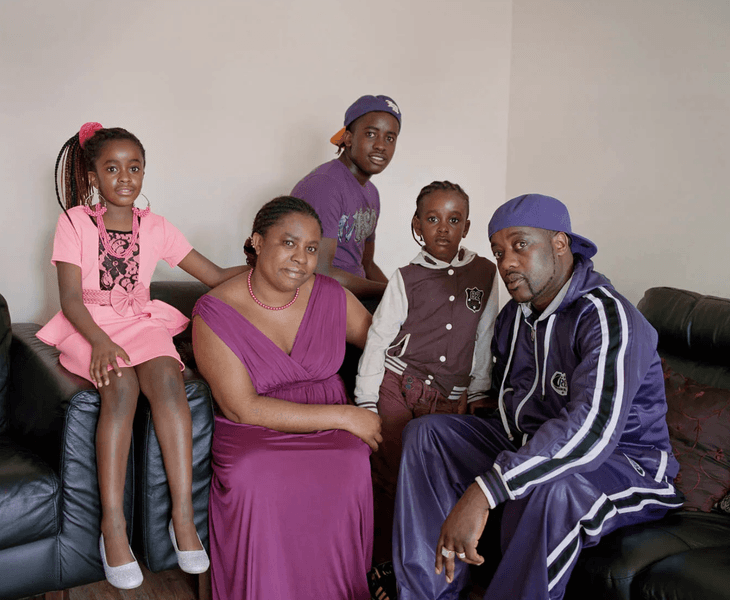
Arpita Shah, Portrait of Home, 2014, photography. Curated by newsletter Kuch Hai: Art from the Indian subcontinent
Many of the planned innovations in AI seem to promise an even speedier generation process with higher quality results. But maybe what we need is a slower generation process, with room to ruminate and let ideas collide on their own. It takes me 2 days to draw 100 logos and 2 minutes for Midjourney. I used to think it was the “100 logos” part that was crucial, but lately I’m entertaining the idea that it might be “2 days” part that’s the secret ingredient instead.
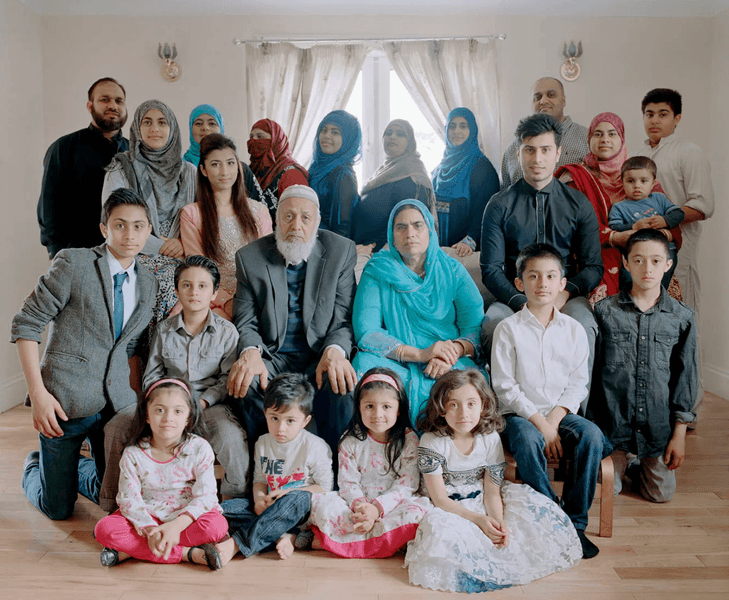
Arpita Shah, Portrait of Home, 2014, photography. Curated by newsletter Kuch Hai: Art from the Indian subcontinent

Kuch Hai: A weekly newsletter of hand-picked artwork from the Indian subcontinent. No analysis, no noise. Just space to follow your curiosity — and maybe find an artist who changes your world.