The tools we use change the way our brains work
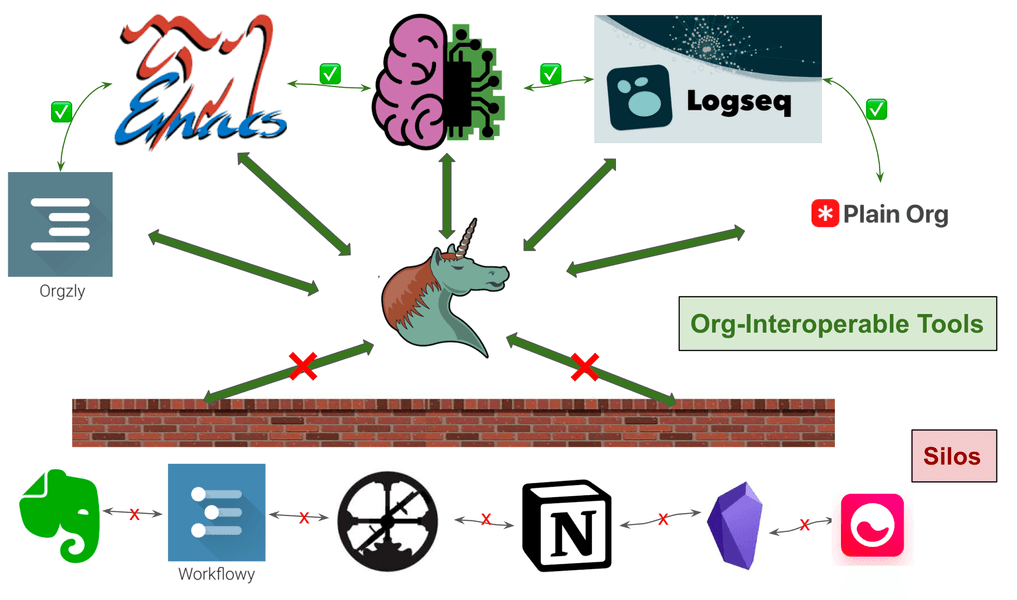
Tools extend our reach, give us new abilities, and help us shape societies in profound ways. When we design a tool, it takes on a life of its own and exerts its will upon us. Example: a car was a way to get from point A to point B, but when we realized we needed roads and parking lots which changed our cities. We shape the car, and then the car
... See moreColin Dunn • - YouTube
Every new tool shapes the way we think, as well as what we think about.
Clive Thompson • Smarter Than You Think
In the parable of the blind men and the elephant, each paid attention to a different aspect of the creature. The brain may do something similar by mapping out the qualities of perceptions, experiences and abstract concepts along various dimensions, with the help of the same system that it uses to map out physical spaces.
Jordana Cepelewicz • The Brain Maps Out Ideas and Memories Like Spaces | Quanta Magazine
Spacial Computing
I think that there are many possible paths that technology can take. And the underlying power of it has nothing to do with the computers or the chips or the lenses. The underlying power of this is the fact that the human brain and body are inherently spacial, right?
We are spacial organisms. And so whatever positive outcomes or
... See moreThe Brain Maps Out Ideas and Memories Like Spaces
Emerging evidence suggests that the brain encodes abstract knowledge in the same way that it represents positions in space, which hints at a more universal theory of cognition.
Emerging evidence suggests that the brain encodes abstract knowledge in the same way that it represents positions in space, which hints at a more universal theory of cognition.
Jordana Cepelewicz • The Brain Maps Out Ideas and Memories Like Spaces | Quanta Magazine
“ Stories are actually a form of technology. They are tools that were designed by our ancestors to alleviate depression, reduce anxiety, kindle creativity, spark courage and meet a variety of other psychological challenges of being human. ”― Angus Fletcher, Wonderworks
Sally Mallam • The Science of Storytelling
received over email:
A personal search engine. A personal digital collection. A social media platform. A knowledge management platform. A digital playground. A second brain. The Pinterest of ideas. A living digital library. A bookmarking tool.
A boutique search engine. Sublime to me is not any of those things, it is not another platform, another
... See more