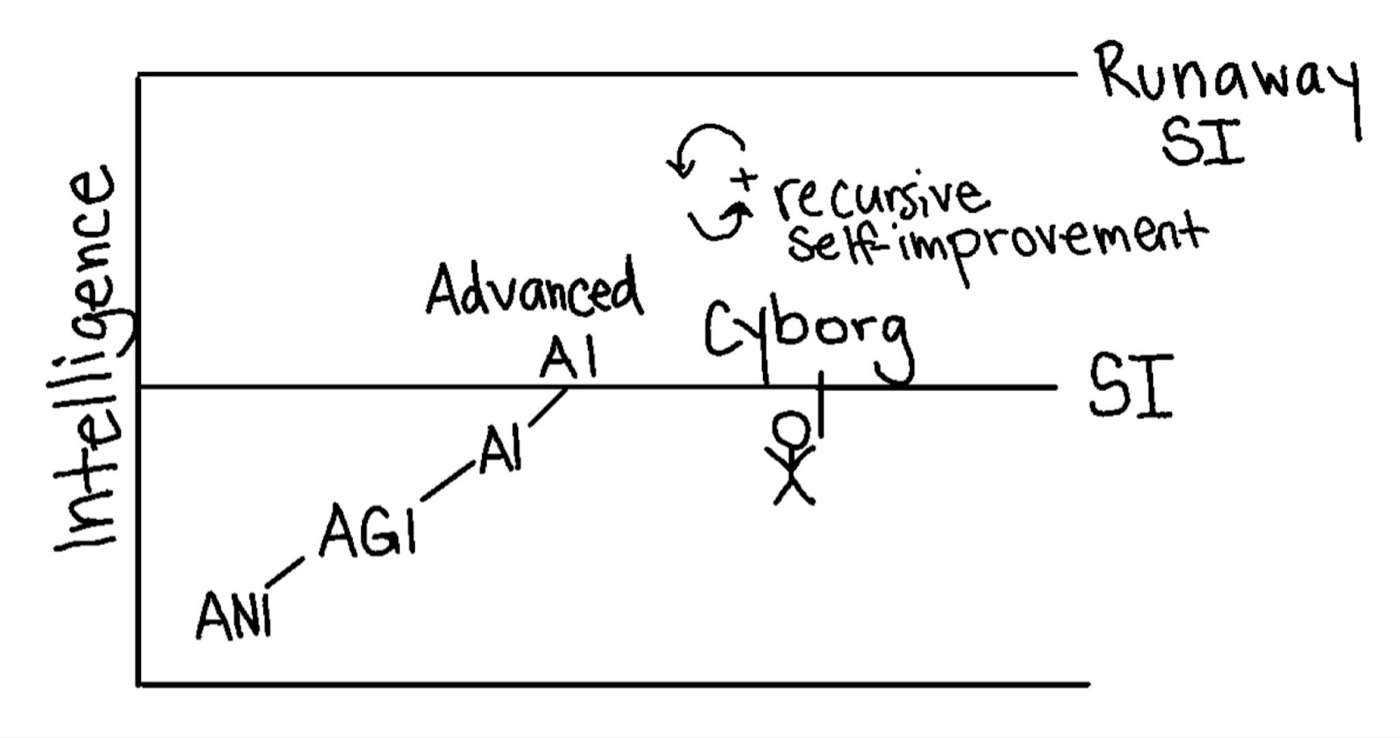
A less cynical way to think about the postmodern tech revolution is that it hasn’t completely subsumed the real, brilliant, chaotic world, but merely emphasized it as vital and precious. Artificial intelligence, in my view, continues this tradition. The only singularity it can truly achieve is one that understands humanity at its most inhuman (and... See more
It means that many startups have to justify their existence not by explaining why they’ll make the world better, but by actively showing they won’t make the world worse.
Artificial intelligence will spur two fundamental changes in our relationship with technology. The first is that voice—already the most natural interface for human interaction—will become a dominant interface. Imagine latency reduced to less than half a second, a stark contrast to the sluggishness of touch-based devices. Even silent voice is on the... See more
No longer will we need to learn to navigate through apps like Uber or complex systems like those of SAP or Oracle. Thus far, we’ve always adapted to software—learning its intricacies, remembering layered menus and so forth to communicate with machines. “Training” to use complex apps is commonplace. Now, AI is enabling software to adapt to humans... See more
It has helped me see that English is not one language. Instead, there are many different, invisible versions of English. They all bear a resemblance to one another—like members of a family—but they are all different. And, like people within families of a certain type, they don’t directly talk to one another.
The borders of being ‘technical’ are expanding by the day
There used to be a well-defined line between who could build things and who couldn’t. Building was reserved for people who could code—people who were “technical.”
Sure, there’ve been waves of milquetoast no-code tools that purported to turn you into a developer for the past decade. But those... See more