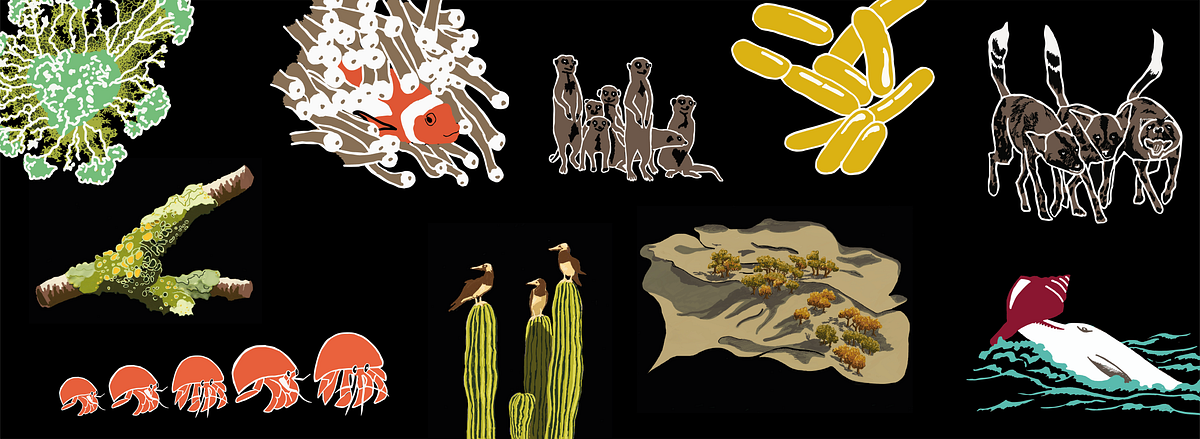
In designing experiences, the cornerstone with which we start is the “who.” Who is this for? Who are they? What do they need? Where are they coming from? Where do we hope to take them? What are they nervous about? How might we care for them? How might we be generous with them, and help them be generous with others?
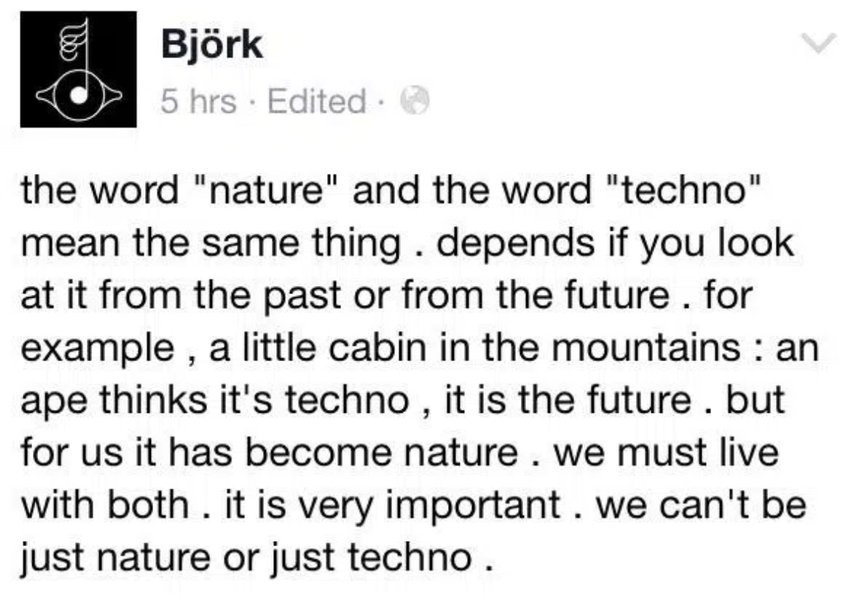
people need many points of contact with the natural world to be happy and AC loses a few of them
which might be OK but all the others have been lost too. In the dead of summer and winter people wear flip flops and travel in space bubble cars to space bubble buildings.
To have fur, to detect fast movements, to be afraid, to breathe underwater, to see in the dark, to carry precious stones, to be aerial, to make silver trails, to drink from the lake, to care for your offspring, to live in song, to play, to create micro crevices on the ground, to know death, to move with the moon, to cure with herbs, to be... See more
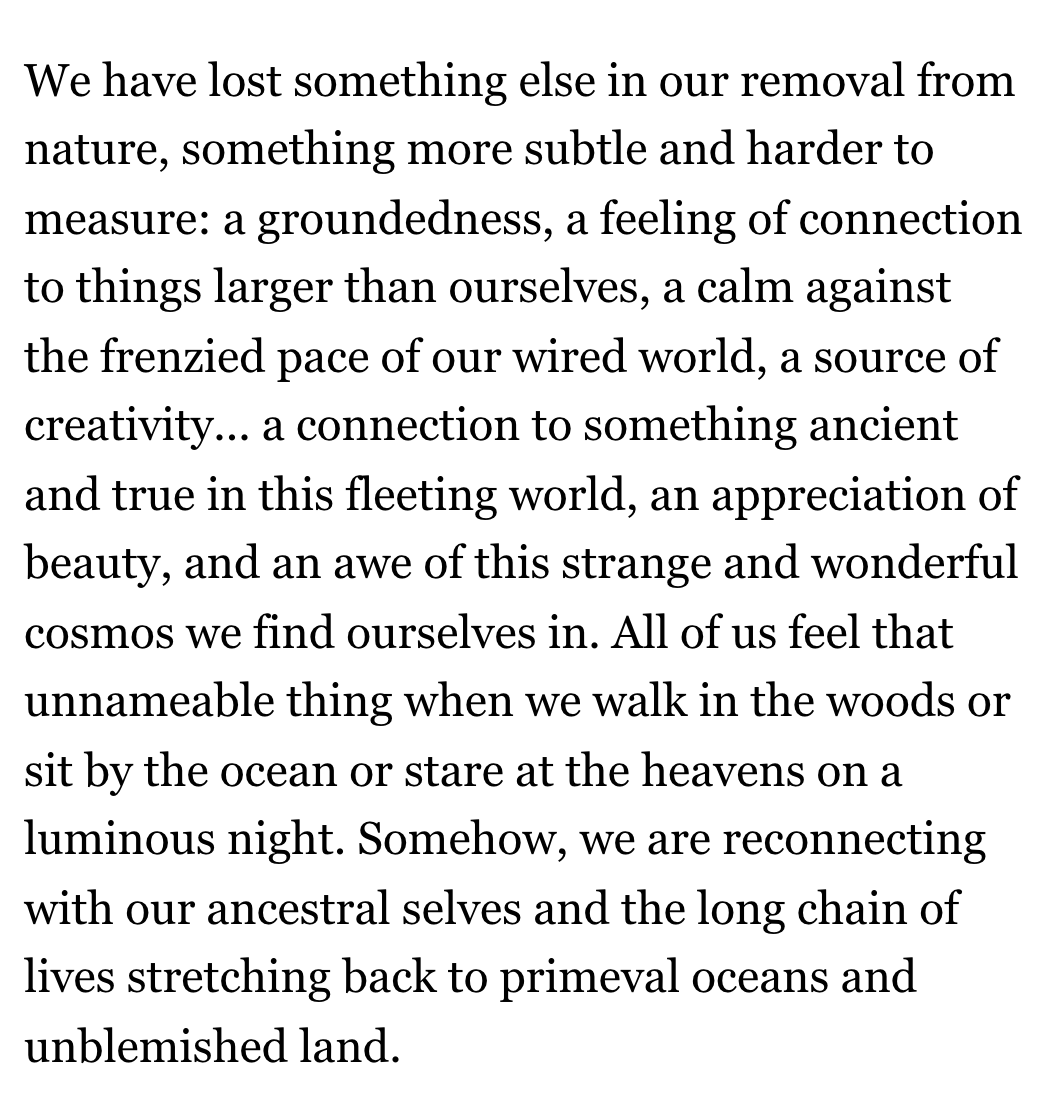
Most important of all, perhaps, during rituals we have the experience, unique in our culture, of neither opposing nature or trying to be in communion with nature; but of finding ourselves within nature, and that is the key to sustainable culture.
There is a stone on top of a stone. There is a stone with a hole in the center, and a drop falling and piercing, slowly, and crossing it from side to side. Algae, fungus, yeast. Rust and lichen. On the rock, hairy and ceramic, the liquid mixes before becoming hard. The drop keeps falling and repeats the fall. The drop falls. One after another... See more