Reading
yeah i can get down with this right here
#bookstagrammer #bookish #books #favoritebooks #bookrecommendations #booksbooksbooks #classicbooks #classicliterature #eastofede
chriskindareadsinstagram.comJessie Buckley’s book rec for Fleabag fans — Jean Rhys, the pint of a woman you were!!!
Listen to the full episode on the Inklings Book Club podcast 📚
jackbenedwardsinstagram.comHighly requested video. Sorry it took me forever🤣♥️Dont forget you can watch this DOUBLE SPEED by holding down the left side of the screen
#theocrew #crna #anesthesia #diy #entertainment #studytok #studyhabits #nursesoftiktok #medicaltiktok #nerds
Olivia Reeves| CRNA| TheO.Crewvt.tiktok.comDebt by David Graeber is taking awhile to read but every page is medicine #books #anticapital this is actually who we are
joshuaturekinstagram.comThese are more accomodation techniques - acoomodate yourself. There will be more to this series so if you have any questions I’ll just tackle them in another video!
Sarah Schauervt.tiktok.com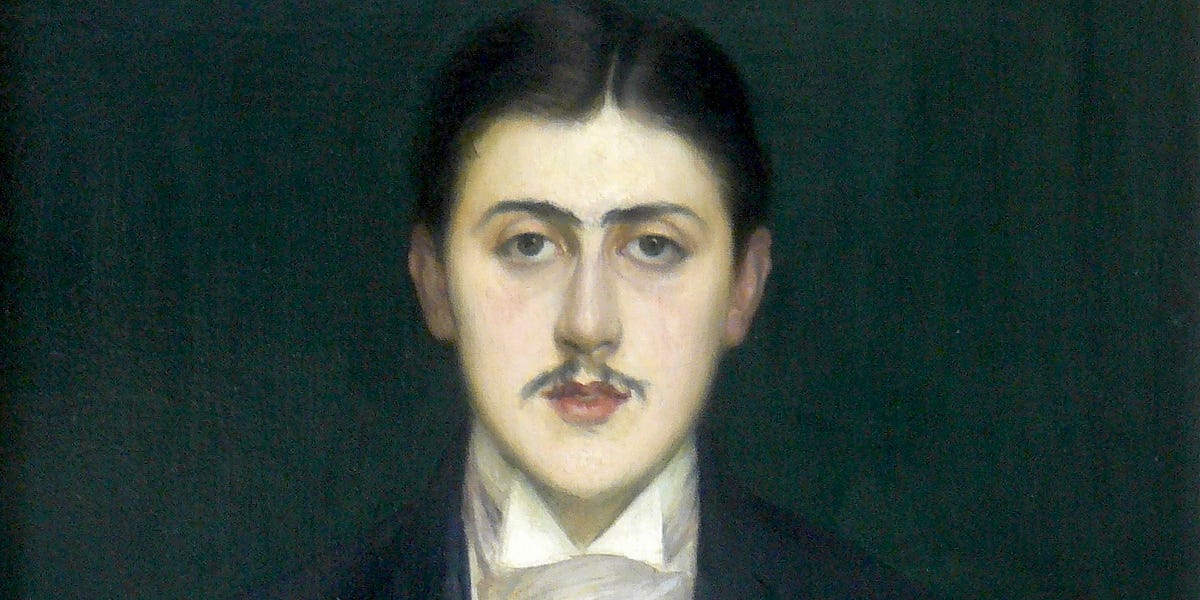
Reading In Search of Lost Time, I realized that Proust described certain experiences—being conscious, perceiving reality, observing the world, encountering other people—with a kind of trembling, vital energy I had never experienced before.
Ottessa Moshfegh once said to Bookforum, “A novel is a literary work of art meant to expand consciousness.” (In that sense, Proust may be more transformative than a psychedelic trip—though the most effective approach, perhaps, might be to combine the two.5)
The function of criticism, for him, wasn’t to prescribe or proscribe; it was to “connect.” To seduce and please, rather than épater la bourgeoisie…While criticism, for Baudelaire, was necessarily “partial, passionate, political,” for Schjeldahl, it was—above all—pleasurable. Art, he claimed, was “about 100 percent” pleasure.You have to do what Schjeldahl did and communicate the experience of looking at paintings. To make people understand why you might invest your time in these experiences…You have to describe the blooming, buzzing experience of coming into awareness with art and why it might be desirable, more desirable and fulfilling than things that are easier.
Taste is more like love than education
What I needed, as a young reader, was for someone to tell me: These are the books that have the capacity to change you—to reprogram your phenomenological and philosophical approach to living—to transform you.Taste is more like love than education
What I needed, as a young reader, was for someone to tell me: These are the books that have the capacity to change you—to reprogram your phenomenological and philosophical approach to living—to transform you.
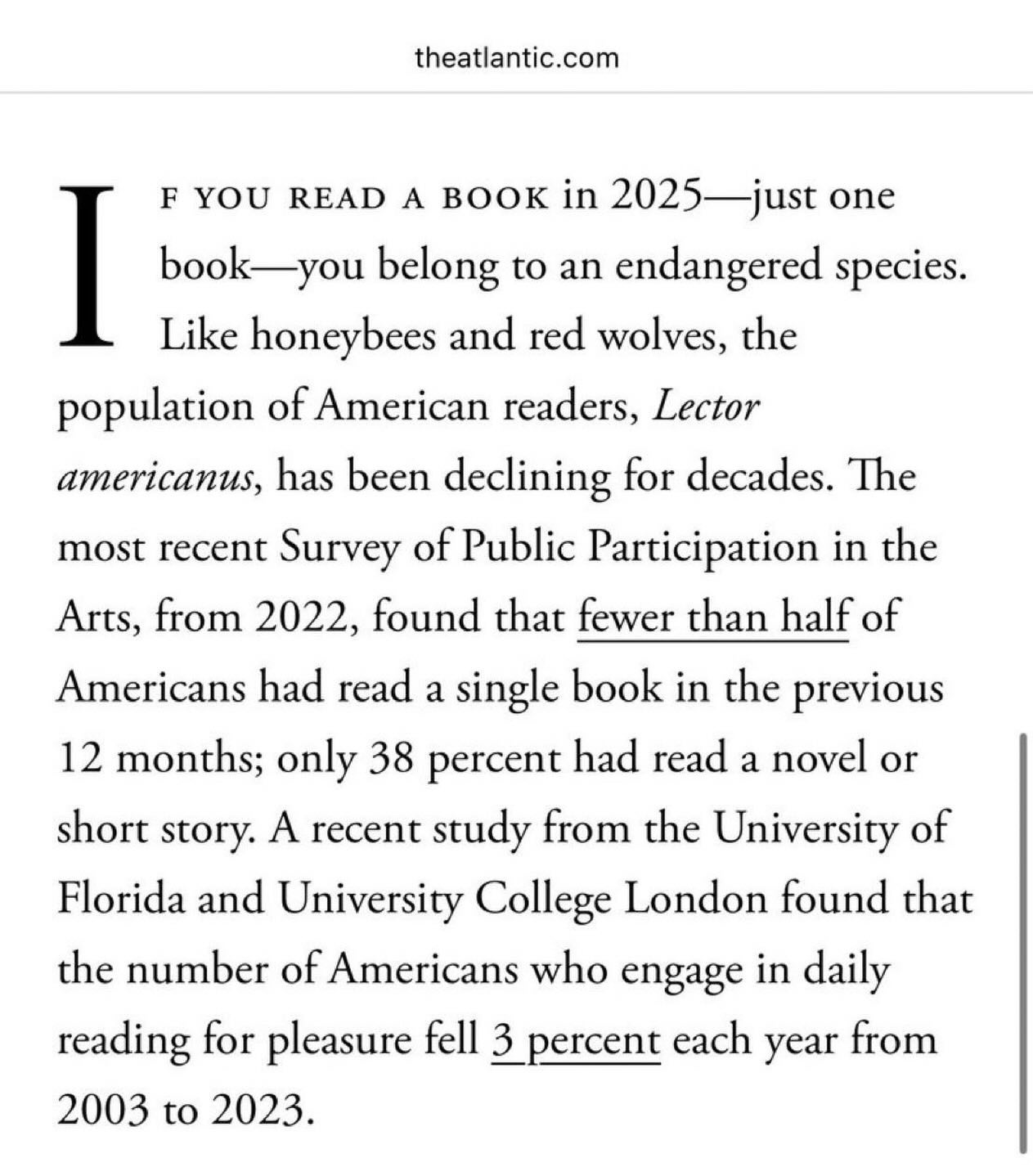
“Algorithms pervert one’s attention,” Broskoski notes, but “an atmosphere that promotes being performative does as well.”
Glad youre here with me reading books. Listen to turek books podcast for guest recommendations
instagram.com
In anxious times, and we are living in one long, vibrating anxiety, culture becomes less adventurous and more consolatory. We look for texts that reduce friction rather than increase it, that name the problem cleanly, that confirm our moral orientation, that don’t ask us to linger in contradiction too long. Books that can be summarised without residue.
This fear shows up most clearly in the cult of “relatability”. We are endlessly told that good writing is writing in which the reader sees themselves. And while recognition can be a point of entry, it has slowly replaced the more dangerous function of literature: dislocation.
To recognise yourself is easy. To be moved out of yourself is harder. Recognition flatters. Dislocation transforms.
and because it’s still women’s history month, i bring you recs inspired by that iconic fleabag’s mental breakdown scene on the very first episode 🐇 what a show
have you watched the show? or read any of these books?
found this in my drafts from long ago inspired by @juslibrary... See more
argopagesinstagram.com