What we eat is what we sow
Bits on food, gardens, nature & human nature
What we eat is what we sow
Bits on food, gardens, nature & human nature
For myself, I am not only convinced that there is no full act of tasting without the participation of the sense of smell, but I am also tempted to believe that smell and taste form a single sense, of which the mouth is the laboratory and the nose is the chimney; or, to speak more exactly, of which one serves for the tasting of actual bodies and the
... See morebut in my thirties I had a period when I thought there was nothing more beautiful in this world than the new green leaves of zelkova trees. It was from that time that I became attracted to plants. Trees are so beautiful. Yet, when I went abroad and thought that some tree was wonderful or beautiful, there was always something different about my
... See moreTaste seems to possess two main functions. (1) It invites us, by arousing our pleasure, to repair the constant losses which we suffer through our physical existence. (2) It helps us to choose from the variety of substances which Nature presents to us those which are best adapted to nourish us.
I have come to believe that food is history of the deepest kind. Everything we eat tells a tale of ingenuity and creation, domination and injustice—and does so more vividly than any other artifact, any other medium.
For the Benedictines, gardening was an equaliser and nobody within the monastery was too grand or too learned to work in the garden for part of the day. This was a culture of care and reverence in which the gardener’s tools were to be treated with the same level of respect as the vessels of the altar. It was a way of life in which the body, mind
... See more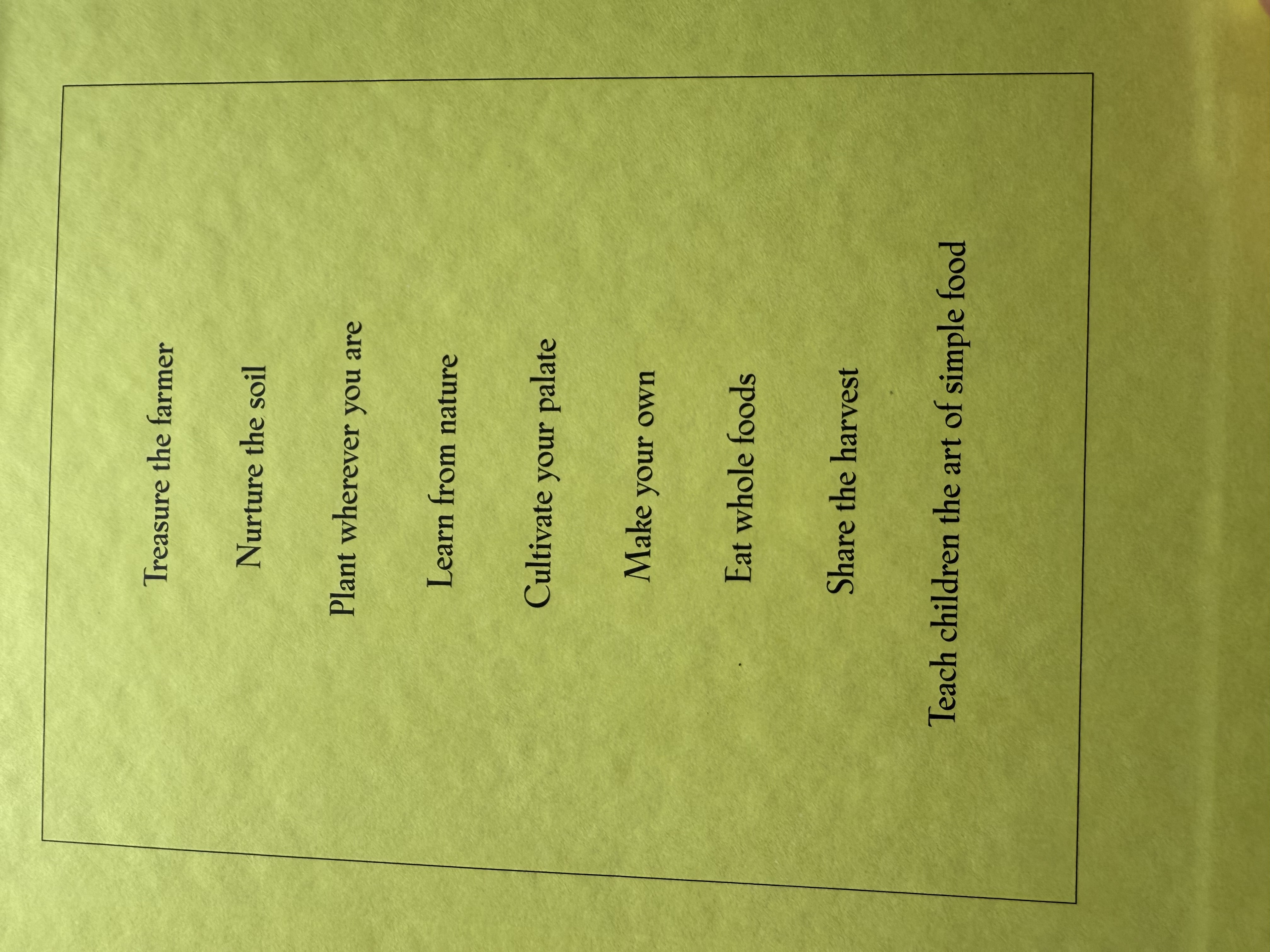
From the inside cover of The Art of Simple Food II by Alice Waters.