Core Intellectual Pursuits: Psychology
Complexly traumatized youth frequently suffer from body dysregulation, meaning they over-respond or under-respond to sensory stimuli. For example, they may be hypersensitive to sounds, smells, touch or light, or they may suffer from anesthesia and analgesia, in which they are unaware of pain, touch, or internal physical sensations. As a result, they may injure themselves without feeling pain, suffer from physical problems without being aware of them, or, the converse – they may complain of chronic pain in various body areas for which no physical cause can be found.
Parental abuse is not the only cause of disorganized attachment: Parents who are preoccupied with their own trauma, such as domestic abuse or rape or the recent death of a parent or sibling, may also be too emotionally unstable and inconsistent to offer much comfort and protection.
Bessel van der Kolk • The Body Keeps the Score: Brain, Mind, and Body in the Healing of Trauma
Insecure attachment is evident in babies (and adults) who, physically, may seem to thrive. Insecurely attached people may marry, have friends, hold jobs, laugh and tell jokes, and, sometimes, even become psychotherapists. The impact of attachment status and attachment dynamics can be very substantial, but it is very largely in the subtleties of
... See morePaul L. Wachtel • Therapeutic Communication: Knowing What to Say When
Jung has demonstrated that myths and fairy tales are symbolic manifestations of the unconscious, just as dreams are. In a sense they are the collective dreams of the human race: They reflect the collective unconscious of a tribe, a people, or a culture rather than the local, personal unconscious of one individual.
Robert A. Johnson • Inner Work: Using Dreams and Active Imagination for Personal Growth
Myths, fairy tales, and archetypal stories give us a sense of cohesion because we recognize the patterns, even unconsciously, as bone-deeply familiar. Stories serve to remind us that whatever difficulties we might be experiencing have been encountered many times before. We are not alone; we are connected to an ancestral storehouse of experience,
... See moreToko-pa Turner • Belonging: Remembering Ourselves home
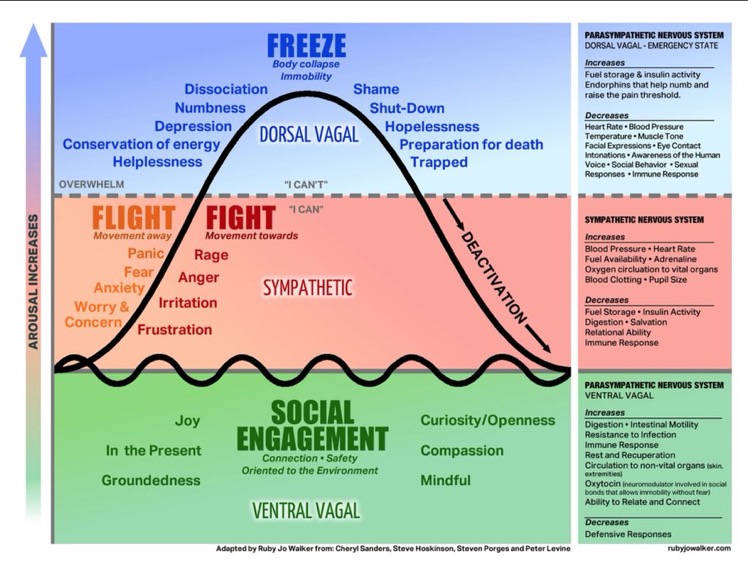
Over the course of evolution, the three pathways of the autonomic nervous system (dorsal, sympathetic, and ventral) emerged and formed the building blocks of the system (hierarchy). Our preferred place, the place where we find experiences of health, growth, and restoration, is anchored in the ventral vagal state of safety and connection. When we
... See moreDeborah A. Dana • Anchored: How to Befriend Your Nervous System Using Polyvagal Theory
The Body Keeps the Score: Brain, Mind, and Body in the Healing of Trauma
Bessel van der Kolk MD • 64 highlights
amazon.com
Currently reading
If we accept Jung’s model of the collective unconscious, we are naturally and irrevocably connected to each other, to all of creation, in a way that transcends time and space. In its timeless nature, the collective unconscious is a remembrance of things past as they anticipate the future.