attachment
no good alone - by rayne fisher-quann - internet princess no good alone
rayne fisher-quanninternetprincess.substack.com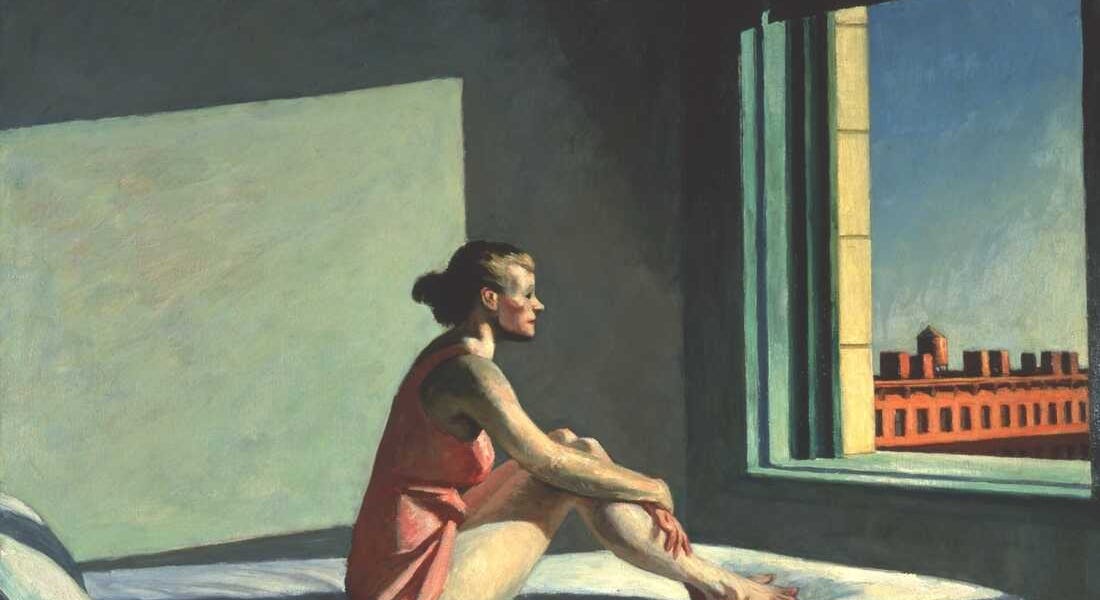
“And here’s the thing about friction: it really does hurt. Isolationists have one very strong argument on their side — when you’re alone, there’s no one there to hurt you, even accidentally. There’s no one there to throw your own flaws into stark relief. There’s no one who you might hurt with bursts of uncontrollable emotion or human carelessness. It’s hard to be hurt, and perhaps even harder to hurt the people you love — why not cut the risk, lock the doors, and live a life of robotic, impersonal, action-oriented optimization? “
It is a cruel and fundamentally inhuman tragedy that the culture has convinced so many of us that we must be healed in isolation, because being surrounded by people — people who love us, or care for us, or are willing to sit in the same room with us while we clean up our messes — is about the only way that I, for one, have ever been able to get better. I am lucky enough to have been changed again and again and again by the people who have loved me or challenged me; I look back at the person I was at eighteen and I hardly recognize her, which feels like a miracle and a tragedy all at once.
When we insist that we could only ever effectively love someone who’s been perfectly “healed” — who will not struggle, accidentally hurt us, trigger us, say the wrong thing, do the wrong thing, or participate in any other uncomfortable display of humanity — we are reinforcing, and perhaps projecting, our own beliefs that we have to be perfect in order to be loved.
There is one way to reject this: make the choice to love someone who is as flawed as you are. One of the most remarkable pleasures that love has to offer, in fact, is the feeling of meeting someone who is scarred and beat-up and bruised, too emotional or not emotional enough or oscillating wildly between the two, and offering to love them enough to help them get better (and, of course, to have them do the same to you). To grow beside a friend or lover, knowing that you will poke and prod at each other as you take shape but unafraid of the resulting scar tissue — this is the good stuff.
The overall tenor of individualism and glorified isolation throughout Dr. LePera’s content is troubling. I understand that there are many, many people for whom going no-contact with family, friends, or ex-partners is a matter of safety and emotional wellbeing. Abuse is no joke, and the harm that can be inflicted between human beings is absolutely real and often devastating. But the frankly overwhelming number of posts about isolating oneself from family and community, considered alongside the persistent messaging that the healing journey fundamentally separates one from others doesn’t sit right with me. There’s something off about an Instagram infographic declaring it’s “valid” to end a lifelong friendship, or not be close to their sibling. While these things are of course “valid,” (at the very least, they’re certainly common) they’re also deeply personal choices that should be carefully considered and regarded with a certain amount of gravity. When we “normalize” something, we are communicating that it no longer needs to be considered. This type of post treats the complex relational dramas that constitute real life as a simple matter, something “valid” and “normal” that we don’t need to think deeply about or truly experience for ourselves.
This push for “normalization,” the need to deem every experience as “valid,” intends to dissolve shame, but instead discourages real human experience and feeling. Once again, we are encouraged to deaden ourselves. I want to work through my complicated feelings about certain friends and family, pursue the question in the books I read and the things I write. I want to talk about it with people. These are real human problems, and it’s not supposed to be simple. I resent the idea that we can deem any such feeling “valid” or “normal” and call it a day. Let me grapple! Let me exist!
Love reawakens us to our true nature as inherently vulnerable beings, because love requires our transformation. Dreams function similarly—finally in a state of radically nonlinear antirational openness, our psyche is able to pour out and express itself to us. Love, dreams, fantasy, meditation and deep prayer all require a vulnerable, trancelike state that enables a break from every day reality and returns us to ourselves. I regard this process of “checking out” from reality as sacred, as it requires one to disregard the fear that accompanies vulnerability in service of a greater purpose, such as connection, truth, spirituality, or self-discovery. When I use my phone to check out, I go into a trancelike state, but unlike the sacred trances I described above, there is no greater purpose being served. I turn off my brain and open myself up, and corporations pour their content into me. They give me their dreams for free.
this show means so much to me and has changed my life maybe forever. PLEASEPLEASE INTREPID HEROES COME TO NEW ENGLAND AND MY LIFE IS YOURSSS
#dimension20 #d20 #d20edit #dimension20edit #edit #dropouttv @dimension20show @brennanleemulligan @zacoyama @allybeardsley @sweetlouzinho @murphaxmurph @eaxford
crunchycubesoundsinstagram.com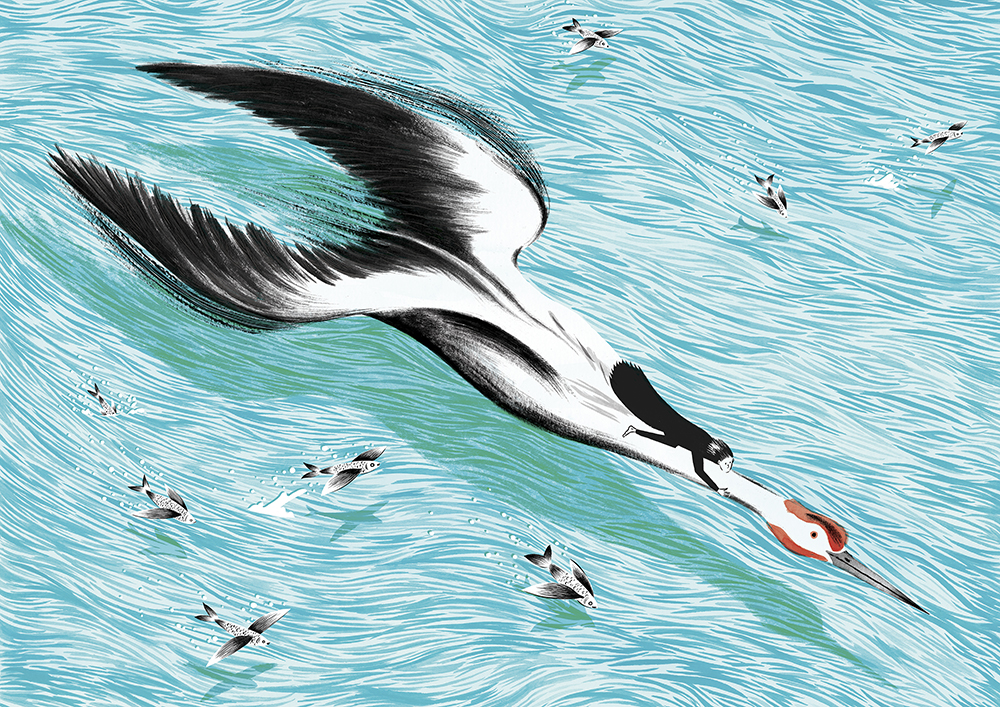
Surely, a person who calls off a wedding is meant to be sitting sadly at home, reflecting on the enormity of what has transpired and not doing whatever it is I am about to be doing that requires a pair of plastic clogs with drainage holes.
I need you to know: I hated that I needed more than this from him. There is nothing more humiliating to me than my own desires. Nothing that makes me hate myself more than being burdensome and less than self-sufficient. I did not want to feel like the kind of nagging woman who might exist in a sit-com.
These were small things, and I told myself it was stupid to feel disappointed by them. I had arrived in my thirties believing that to need things from others made you weak. I think this is true for lots of people but I think it is especially true for women. When men desire things they are “passionate.” When they feel they have not received something they need they are “deprived,” or even “emasculated,” and given permission for all sorts of behavior. But when a woman needs she is needy. She is meant to contain within her own self everything necessary to be happy.
It turns out, if you want to save a species, you don’t spend your time staring at the bird you want to save. You look at the things it relies on to live instead. You ask if there is enough to eat and drink. You ask if there is a safe place to sleep. Is there enough here to survive?
Lindsay said it was brave not to do a thing just because everyone expected you to do it.
Fake Fairness is Killing Our Relationships — and It’s Everywhere
substack.com
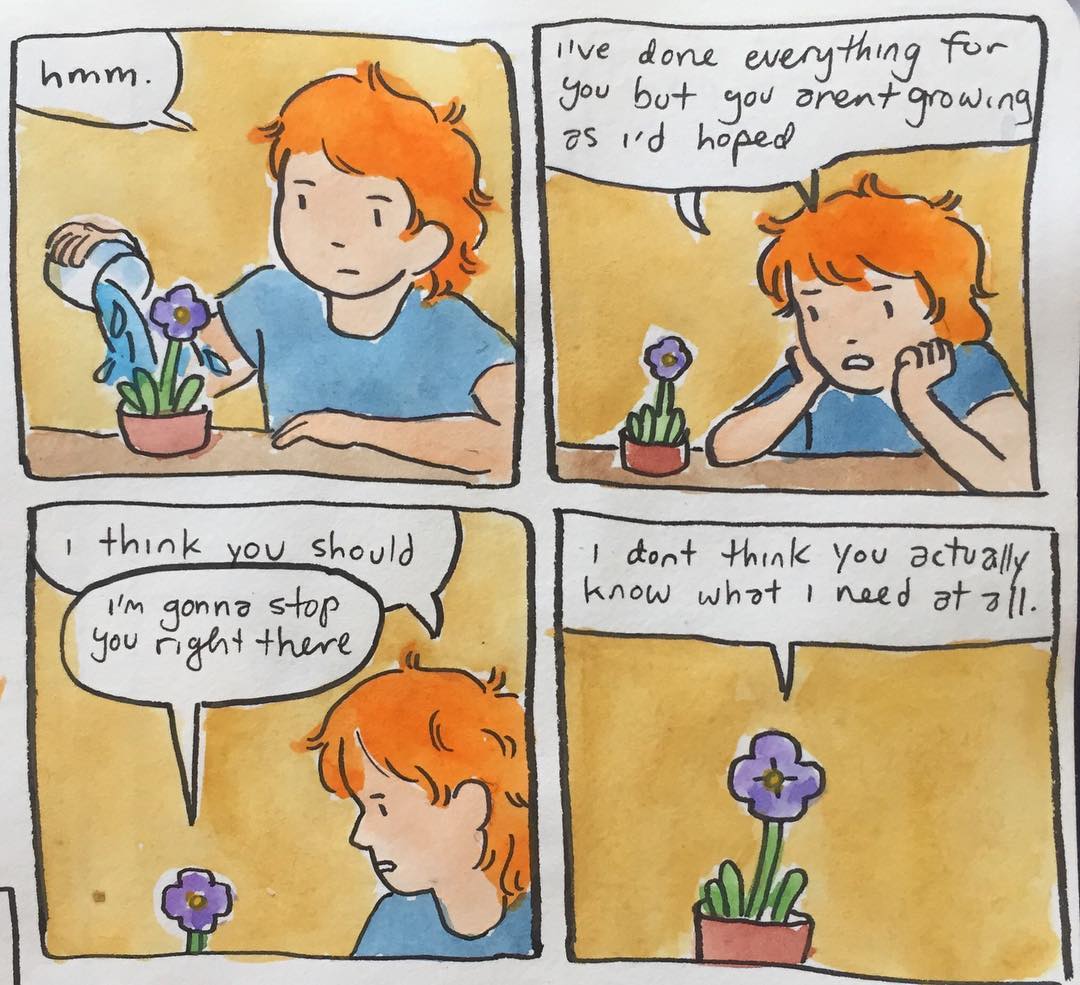
Marriage is often seen as a romantic ideal, but it takes hard work to make it a reality. Despite our limitations, our love for each other, and the circumstances life throws at us, we can still make a marriage work when we put in the effort.
.
DM for a link on “Spiritual Insights for Harmonious... See more
innerlifewith_ashainstagram.com