AI
rest itself becomes an act of rebellion. If AI gives us near-limitless productive capacity, the truly radical act might be to not use it at all. By setting realistic targets for ourselves, and putting up boundaries, we can slow the erosion of our humanity.
Similarly, AI creates nigh-infinite consumption potential. OpenAI 's Sloptok can generate... See more
Tawanda Munongo • Article
This is one of the many reasons why I find the current conversation about so-called generative AI so immensely frustrating: there’s all this hype about making everything easier and faster, about how we can eliminate all the work involved in the making of words and images. But no one arguing for this seems to have asked what’s left when the work is... See more
Mandy Brown • Coming Home
Choosing to walk
substack.com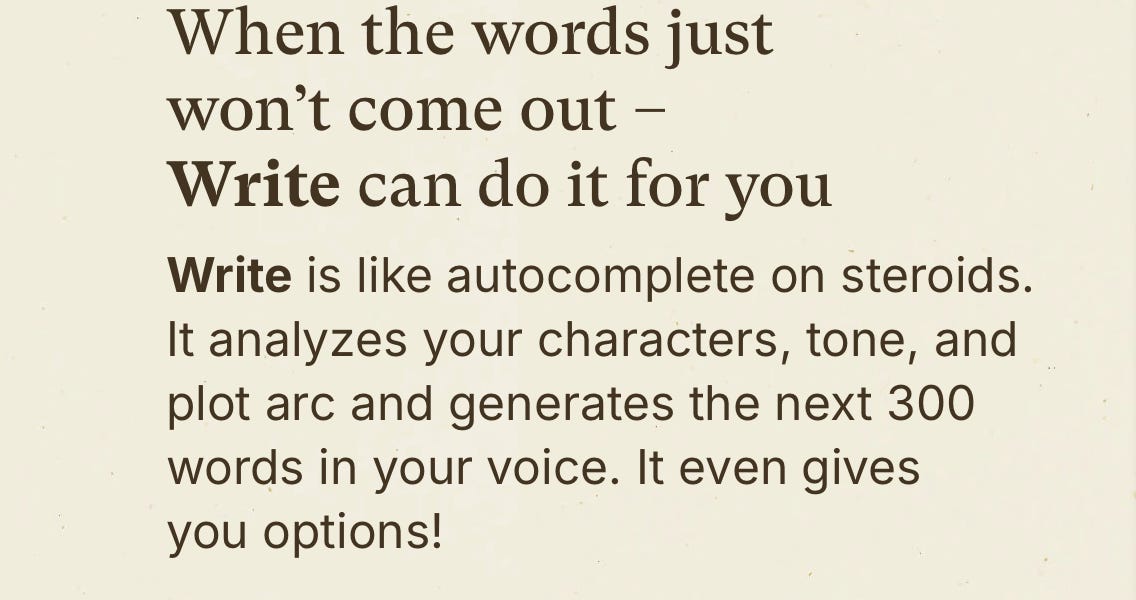
notes from article:
“is writing a product, or an art?”
“when you choose to walk, you choose not to pursue immediate gratification or even comfort but simply to expand the number of things that might happen to you”
ai attempts to seperate the mythology of writing from the work of writing, as though the quotidian labour of expression is something that keeps you from your ideas rather than the exact process by which you discover them.
my thoughts:
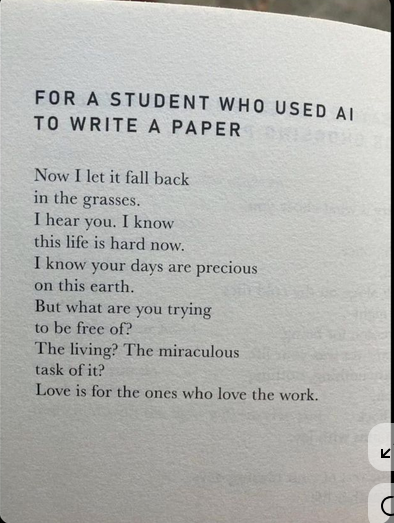
what do we separate ourselves from when we use AI to write for us? we eliminate the process, which is how we uncover our voice, perfect our practice, and develop ourselves. ai promises to take care of the “boring” or “tedious” parts, but those parts are integral to our development. this ties into a video i watched by anna howard on how convenince culture is stealing our creativity. when we fail to “walk” and instead take the quickest/easiest method to traveling, we often miss out on all the things that could’ve happened to us.
i like how this author uses walking as a catalyst to get this message across. walking is boring, often mind numbing, and is hardly the quickest way to get somewhere- but by walking we increase the number of things that could happen to us. its the same with writing- by reworking a paragraph a dozen times i learn, i become.
Notes from video:
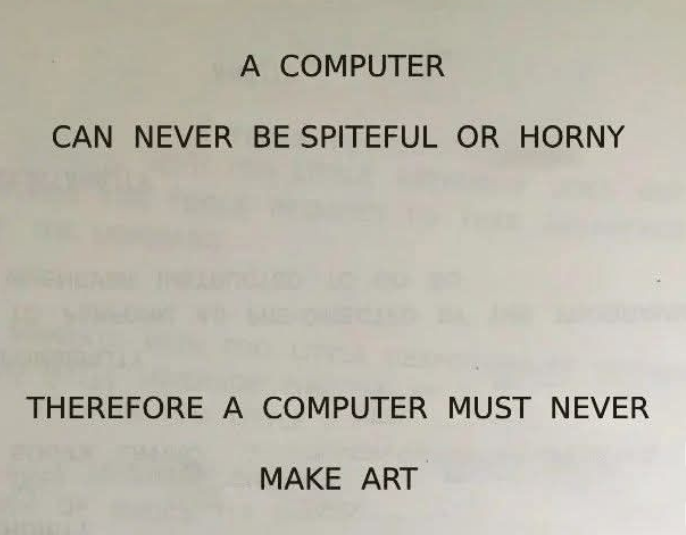
an addiction to convenience is killing our creativity. if we opened a page and expected the answer on the first page, would we buy/open a book again? the process of creating art is often coming up against things that don’t resonate, and how do we respond to it?
going through the hard/boring parts make us stronger, creative, etc
you
... See moreCreating in the Age of Distraction & A.I Slop
youtu.beOur sense of reality will be warped online, because of deep fakes and AIs.
This is an interesting reason to try to create some distance between yourself and online. I wonder if we will find ourselves more apt to fall for deep fakes and AI when we spend less time online, but I dont think that is a point to advocate for being online.
I do think when online starts to feel even less authentic, it will drive me away. I find myself unfollowing accounts that dont feel genuine, or seem to always want to be selling some new process, good, or insecurity to me. How will I feel when content online illicits a response in me, and I later learn it was AI. Will I start to doubt my empathy responses? Will I make judgements on my intelligence or discrening capabilities?
Already my empathy is pulled tight, fraying at the edges when I am subjected to brutal images. What happens when that empathy is pulled harder, to only learn the image was fake. Will it snap? Will I become apathtic how my sister describes becoming having access to the wild west of the internet as a teenager?