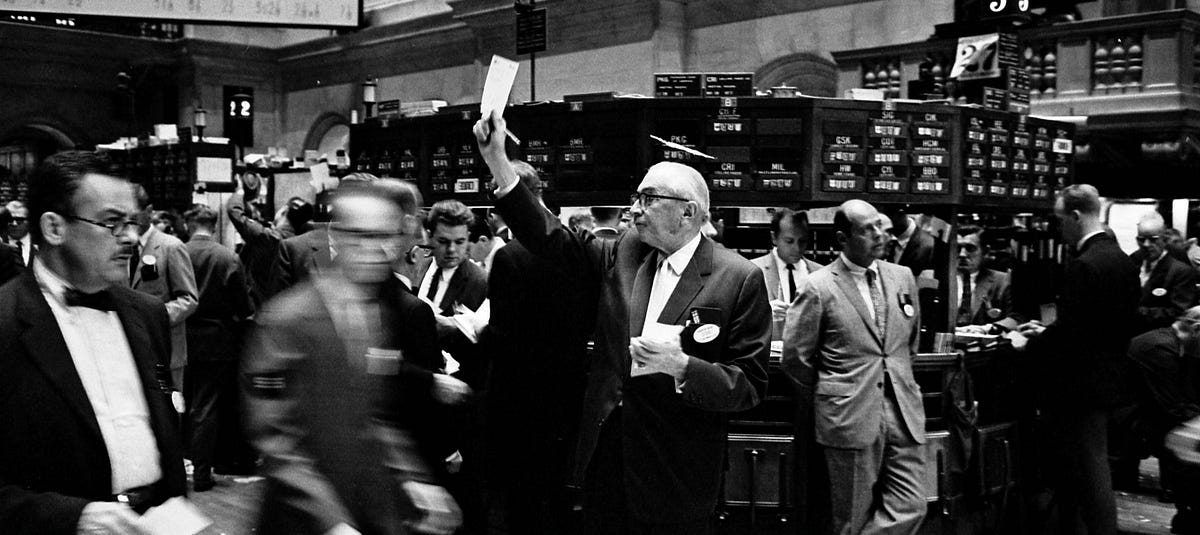
“A man with a watch knows what time it is. A man with 2 watches is never sure.”
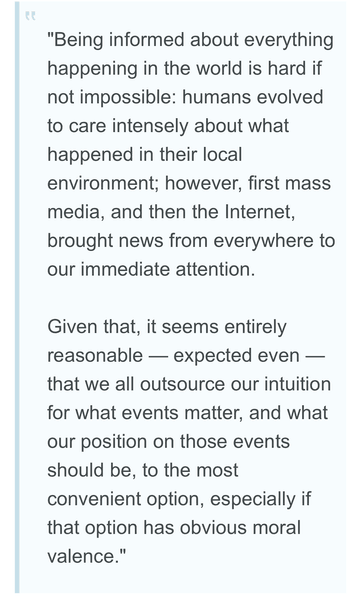
Ancient societies followed a single narrative. Modern societies are cacophonies of competing narratives. Without trust, more data doesn’t make us more informed but more confused.
“A man with a watch knows what time it is. A man with 2 watches is never sure.”
Ancient societies followed a single narrative. Modern societies are cacophonies of competing narratives. Without trust, more data doesn’t make us more informed but more confused.
What happens when something remarkable becomes abundant? When our favorite restaurant or coffee house becomes a chain, or a new social product becomes ubiquitous, we tend to crave something new...something more scarce. Why? It’s a natural desire to immerse ourselves in stories that move us and express identity through uniqueness. When something... See more
For the past year or more, I haven’t been able to stop thinking about how the primary challenge we face, as people living in a modern western society, is not surviving in a resource scarce environment, but is instead managing to not gorge ourselves to death, literally/physically or figuratively/spiritually.
Second, I’m reflecting on a point former Netscape CEO Jim Barksdale famously made in 1995: “There are only two ways to make money in business: bundling and unbundling.” I think we’re burnt out by the fragmentation that the D2C era brought to everything. After subscribing to tons of hyper-niche content over the years, the idea of a couple brands we... See more
It’s all very paradoxical: that the ability to constantly communicate has made us bad communicators, that instant access to all forms of entertainment would leave us with so few touchstones, that surveilling kids doesn’t necessarily make them safer, that the absence of limitations also often means the absence of creativity — and that the particular... See more