One of the questions I ask startups is how long it's been possible to do what they're doing. Ideally it has only been possible for a few years. A couple days ago I asked this during office hours, and the founders said "since December." What's possible now changes in months.
Paul Grahamx.comOne of the questions I ask startups is how long it's been possible to do what they're doing. Ideally it has only been possible for a few years. A couple days ago I asked this during office hours, and the founders said "since December." What's possible now changes in months.
the internet tailwinds that propelled meteoric growth in Silicon Valley are stalling. what next? zero-sum games between web startups, the operationalization of SV, new financial infra, VCs investing in visions over numbers, and R&D beyond the internet. https://t.co/Eufs87s5qS
John Luttigx.comA mini-essay on this moment in history:
We're living through something our grandkids will study in history class, and we're experiencing it as just ANOTHER Thursday.
You don't really feel paradigm shifts while you're in them. They feel like normal life with slightly better... See more
GREG ISENBERGx.comThe future of building startups:
- MVP speed (1x per month)
- AI-accelerated
- Superniche is the new niche
- Community 1st, software 2nd
- No-code 1st, some code 2nd
- 10x more automated
- Global teams, localized products
-... See more
GREG ISENBERGx.com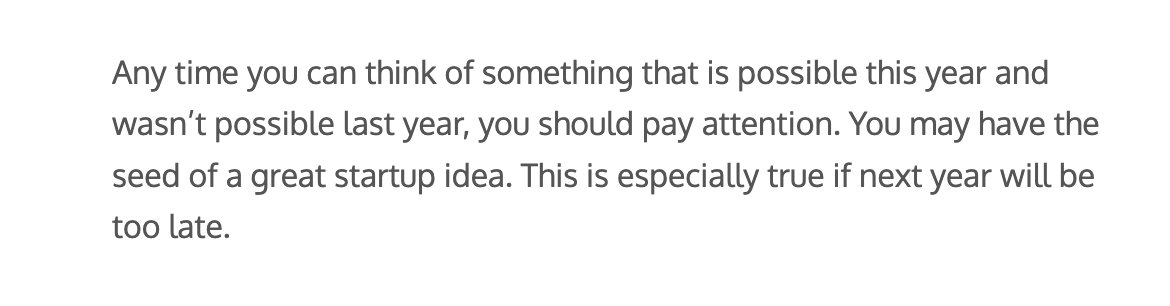
from @sama's blog
this has never felt more relevant
https://t.co/S3DVyCikcl https://t.co/8ZH97sKUUC
Now that a significant number of YC startups are old enough to have grown big (e.g. 15 are now public) I'm able to see a whole new set of patterns. Having known them from very early on, when the company was just the founders, I can see patterns in how companies evolve.
Paul Grahamx.com