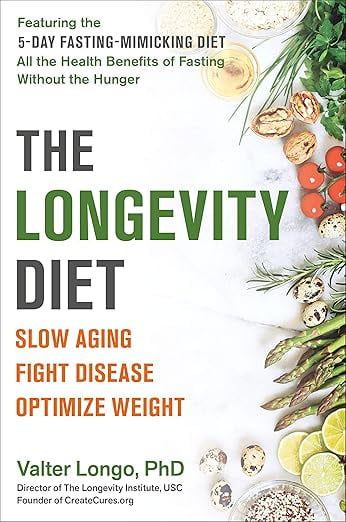
The Longevity Diet

Eat mostly vegan, plus a little fish, limiting meals with fish to a maximum of two or three times per week. Choose fish, crustaceans, and mollusks with a high omega-3, omega-6, and vitamin B12 content (salmon, anchovies, sardines, cod, sea bream, trout, clams, shrimp; see appendix B). Pay attention to the quality of the fish, choosing those with
... See moreValter Longo • The Longevity Diet
Eat a variety of foods from your ancestry. To take in all the required nutrients, you need to eat a wide variety of foods, and it’s best to choose from foods that were common on your parents’, grandparents’, and great-grandparents’ table.
Valter Longo • The Longevity Diet
People who live longer would need more energy to perform more maintenance (DNA repair, cellular regeneration, etc.). People who live longer would need to get better at utilizing energy to increase protection against aging and maintaining normal function for longer.
Valter Longo • The Longevity Diet
Practice periodic prolonged fasting: People under age sixty-five who are neither frail nor malnourished and are free of major diseases should undergo two periods of five days a year in which they consume a relatively high-calorie fasting-mimicking diet, or FMD. Most
Valter Longo • The Longevity Diet
Consume low but sufficient proteins:
Valter Longo • The Longevity Diet
(Do not skip breakfast, as this has been associated with increased risk for age-related diseases in multiple studies.)
Valter Longo • The Longevity Diet
healthier diets can be superior in taste, since vegetables, legumes, nuts, olive oil, and other plant-based foods provide a much wider variety of ingredients and flavors, compared with unhealthy food rich in saturated fats and sugars that obscure natural flavor.
Valter Longo • The Longevity Diet
cheeses (preferably feta or pecorino) and yogurt made from goat’s milk, all of which are commonly consumed in high-longevity areas.
Valter Longo • The Longevity Diet
The Longevity Diet in Summary