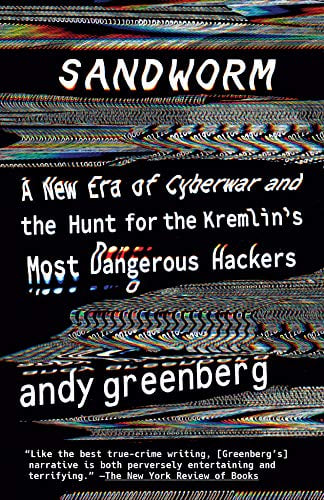
Sandworm

This is what cyberwar looks like: an invisible force capable of striking out from an unknown origin to sabotage, on a massive scale, the technologies that underpin civilization.
Andy Greenberg • Sandworm
“We had the biggest issues in the big cities. In the smaller cities, some employees still remember how to work on paper,” Smelyansky told me. “In Kyiv, we had employees who didn’t remember a time before computers. We had to tell them to find someone older to teach them.”
Andy Greenberg • Sandworm
The historian Anne Applebaum’s book on the Holodomor, Red Famine, documents stories of desperate peasants resorting to eating leather and rodents, grass, and, in states of starvation-induced mania, even their own children. All of this occurred in one of the most fertile grain-production regions in the world.
Andy Greenberg • Sandworm
When Hitler did invade two years later, in a surprise attack that shattered the two countries’ pact, the Soviets hurriedly massacred the Ukrainian prisoners they hadn’t yet deported before fleeing to the east.
Andy Greenberg • Sandworm
Lee saw that ICS-CERT statement as practically a cover-up. By questioning BlackEnergy’s role in the attack, or even its existence on the utilities’ network, the DHS was obscuring a key fact: that the hackers who’d planted that malware had used the same tool to target American utilities just a year earlier—that Americans, too, were at risk. “The
... See moreAndy Greenberg • Sandworm
The Nazis rounded up 2.8 million Soviet citizens, more than 2 million of whom where Ukrainian, and shipped them to Germany to work in factories for slave wages.
Andy Greenberg • Sandworm
the Nazis continued to kill en masse, starving 2 million captured Soviet prisoners as they death-marched them westward. In all, 1 in 6 Ukrainians died in the war, and about 1 in 8 Russians, with a staggering total of 26.6 million deaths across the U.S.S.R., a number unparalleled in the history of war.