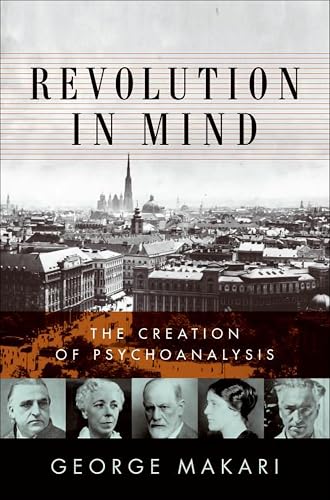
Revolution in Mind: The Creation of Psychoanalysis
However, most of these ancestors would be increasingly diminished, forgotten, or dismissed. Instead, a ghostly presence would carry all that had been inherited and destroyed, all the possibility and all the loss. The culture that had given birth to psychoanalysis had become a graveyard. It was no more. Exiled survivors and followers in new lands
... See moreGeorge Makari • Revolution in Mind: The Creation of Psychoanalysis
Psychoanalysis emerged from the rubble of postwar Europe as the leading modern theory of the mind. Its model of unconscious passions, its notions of defense and inner conflict, and its methods of unraveling self-deception, encroached upon traditional sources of self-understanding like religion.
George Makari • Revolution in Mind: The Creation of Psychoanalysis
“I” psychology with its connection to lived experience mutated into an abstract, impersonal ego psychology in Hartmann’s hands.
George Makari • Revolution in Mind: The Creation of Psychoanalysis
Hartmann set the theoretical agenda for American ego psychology for the following three decades. His notions of adaptation cohered nicely with American values of self-reliance, and his hope to link psychoanalysis to academic psychology would be taken up by allies, such as David Rapaport. He could also count on the support of the heir to the Freud
... See moreGeorge Makari • Revolution in Mind: The Creation of Psychoanalysis
After 1945, the stage was set. The Viennese émigrés became “orthodox Freudians” opposed to the former Berliners and Americans, who came to be known as “neo-Freudians.” That the latter were called neo-Freudian was in itself a defeat. Horney, Radó, and Kardiner wanted to be part of a psychoanalytic science and did not want to be forever shadowed by
... See moreGeorge Makari • Revolution in Mind: The Creation of Psychoanalysis
In 1937, she published The Neurotic Personality of Our Time, in which she argued that cultural forces gave the form of a neurosis. She knew that some would ask whether this cultural emphasis was still psychoanalysis: If one believes that it [psychoanalysis] is constituted entirely by the sum total of theories propounded by Freud, then what is
... See moreGeorge Makari • Revolution in Mind: The Creation of Psychoanalysis
Of the many difficult choices that Freud’s English translators faced, the ones that proved most fateful were little words. Freud had used everyday words to usher in his “I” psychology. He had used the German Es and Ich, which were simply “It” and “I.” And he had explicitly defended this choice: You will probably protest at our having chosen simple
... See moreGeorge Makari • Revolution in Mind: The Creation of Psychoanalysis
it was as if some modern-day Noah had tried to herd every psychoanalyst onto an ark in preparation for the Flood.
George Makari • Revolution in Mind: The Creation of Psychoanalysis
Intellectualization could act as a defense against instinctual dangers and be a force for maintaining the status quo, but it was also an essential requirement for comprehending reality. Similarly, a defensive retreat into fantasy could not be reduced to a denial of reality alone; it might also hold the seeds of imagining new possibilities and serve
... See more