Saved by Rajesh Kasturirangan
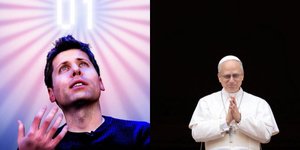
‘Only God Can Save Us’
But to be human is not to have answers. It is to have questions—and to live with them. The machines can’t do that for us. Not now, not ever.
And so, at last, we can return—seriously, earnestly—to the reinvention of the humanities, and of humanistic education itself. We can return to what was always the heart of the matter—the lived experience of... See more
D. Graham Burnett • Will the Humanities Survive Artificial Intelligence? | the New Yorker
Every builder's first duty is philosophical: to decide what they should build for.
AI is beginning to decide what ideas reach your mind—your next action, your next job, your next relationship. It will tempt you to outsource your thinking in ways you’ve never been tempted before.
Left... See more
Brendan McCord 🏛️ x 🤖x.comHeidegger believed that modern technology uprooted and dislodged man from his time and place and thus his spiritual grounding. When he said “only a god can save us,” he feared that something the pre-Socratic Greeks grasped was being lost or forgotten through the general triumph of technology. He called this “Seinsvergessenheit,” or the
... See morenoemamag.com • Co-Immunism in the Age of Pandemics and Climate Change - NOEMA
Long before AI, philosopher Martin Heidegger anticipated this transformation.
In The Question Concerning Technology, Martin Heidegger warned that technology is not just a collection of tools, but a way of seeing the world, a revealing that both illuminates and conceals. Heidegger’s “enframing” (Gestell) describes technology’s insidious power to... See more