Saved by Russ and
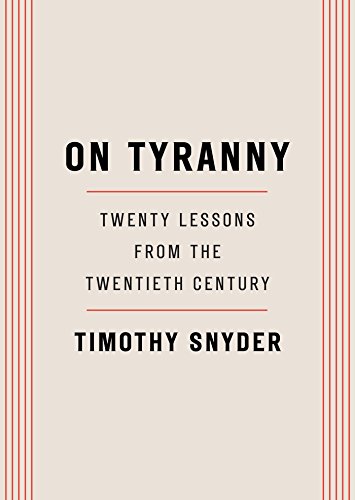
On Tyranny: Twenty Lessons from the Twentieth Century
Saved by Russ and
It is your ability to discern facts that makes you an individual, and our collective trust in common knowledge that makes us a society. The individual who investigates is also the citizen who builds. The leader who dislikes the investigators is a potential tyrant.
Fascists despised the small truths of daily existence, loved slogans that resonated like a new religion, and preferred creative myths to history or journalism. They used new media, which at the time was radio, to create a drumbeat of propaganda that aroused feelings before people had time to ascertain facts. And now, as then, many people confused
... See moreThe first mode is the open hostility to verifiable reality, which takes the form of presenting inventions and lies as if they were facts.
So support the multi-party system and defend the rules of democratic elections. Vote in local and state elections while you can. Consider running for office.
Americans today are no wiser than the Europeans who saw democracy yield to fascism, Nazism, or communism in the twentieth century.
Both fascism and communism were responses to globalization: to the real and perceived inequalities it created, and the apparent helplessness of the democracies in addressing them. Fascists rejected reason in the name of will, denying objective truth in favor of a glorious myth articulated by leaders who claimed to give voice to the people. They put
... See moreOne thing is certain: If young people do not begin to make history, politicians of eternity and inevitability will destroy it. And to make history, young Americans will have to know some. This is not the end, but a beginning.
these positions, inevitability and eternity, are antihistorical. The only thing that stands between them is history itself. History allows us to see patterns and make judgments. It sketches for us the structures within which we can seek freedom. It reveals moments, each one of them different, none entirely unique. To understand one moment is to see
... See moreIf the politics of inevitability is like a coma, the politics of eternity is like hypnosis: We stare at the spinning vortex of cyclical myth until we fall into a trance—and then we do something shocking at someone else’s orders.