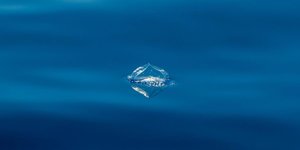
Meet the By-the-Wind Sailor
Queer Ecology, a type of resistance ecology that has emerged to flip the script on mainstream ecological concepts by examining the relationships between living organisms and their environments through the lens of queer, feminist, and decolonial theory. Just as the indigenous perspective encourages wild imagination, so too does the Institute of... See more
Our Centaur Future - A RADAR Report
But goats are generalists: the world is their meadow. Leave them on an island—they will not spend all their energy on refusal and regret but will experiment until they find something new to eat, life sufficient condiment for the scraggliest fare. Put them in a barn with frocks and cigars and political pamphlets and toy blocks and banjos and yo-yos
... See moreAmy Leach • Things That Are: Essays
In late July, almost 100 long-finned pilot whales left the deep, usually cold waters where they live—so deep, so cold that scientists have barely been able to study them. Together they came to the coast of western Australia and huddled into a massive heart shape (if your heart were shaped like 100 black whales, like mine is). Then, collectively,... See more
Heat Is Not a Metaphor
A Note From Hyunhye Seo
Every year, the eels arrive in Sargasso. The eels that sprang to life when the sun god Atum warmed the Nile, the eels generated within the entrails of the earth, from the rubbing of the rocks and dew drops on riverbanks, they travel thousands of kilometres to Sargasso to breed.
Their larvae, eels of glass, move to freshwater... See more
Every year, the eels arrive in Sargasso. The eels that sprang to life when the sun god Atum warmed the Nile, the eels generated within the entrails of the earth, from the rubbing of the rocks and dew drops on riverbanks, they travel thousands of kilometres to Sargasso to breed.
Their larvae, eels of glass, move to freshwater... See more
Eel, by Hyunhye Seo
If left unchecked, the methane bubbling from California’s seafloor could have dramatic consequences for the planet. The sea spiders’ bacteria-based diet places them as unexpected allies in regulating these emissions. They function almost like gatekeepers, blocking some of that gas before it escapes into the ocean-atmosphere system.