Saved by Bianca Aguilar
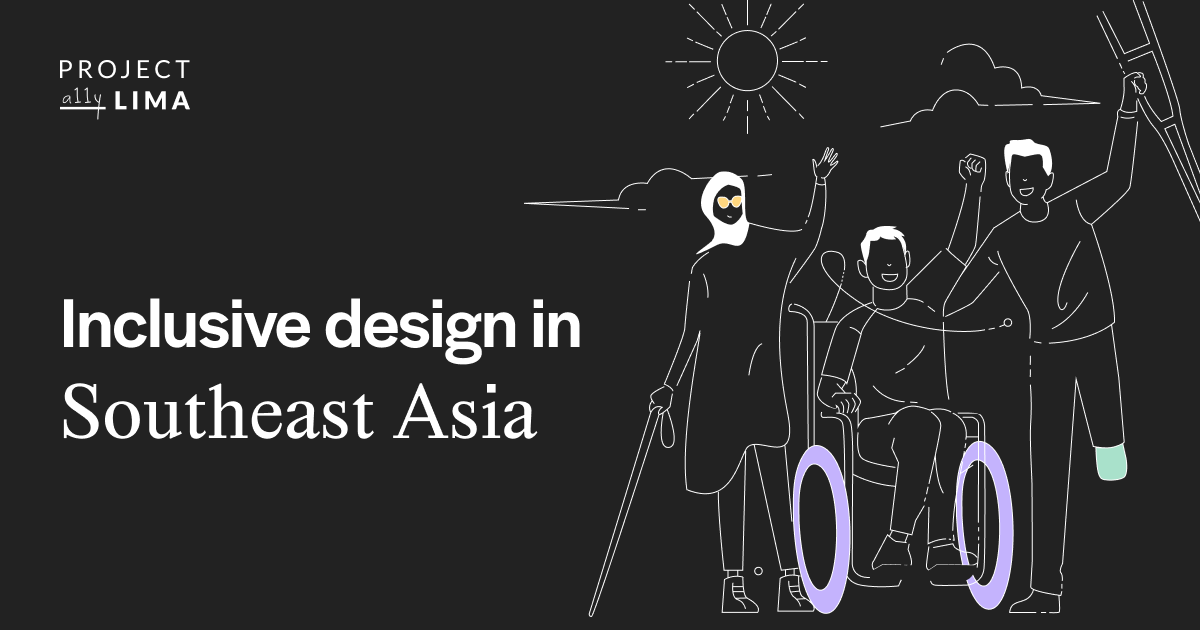
Inclusive design in Southeast Asia

Saved by Bianca Aguilar
The Southeast Asian countries might be at the last ripple of the digitalization wave that makes them get the latest awareness on digital solutions.
M
ost Southeast Asian are still struggling to afford and get access to full product experiences due to cost of ownership limitations.
Religious practices or norms could be a barrier or opportunity if implemented correctly, for digital products. It is unwise to simply replicate and expand services or products to countries with strong religious beliefs without considering the values.
Southeast Asia is one of the most challenging markets and designing for inclusivity is even more difficult due to the unique and diverse demographic, culture and behaviour .
It is important to consider the reliability of our digital products due to the majority of people who still only have limited internet connection and low-end smartphones.
There needs to be a mindful approach in treating languages. In addition to translating word by word, there is a need to understand the local nuance of the words in a specific context.
North American vs Southeast Asian e-commerce
Most e-commerces in Southeast Asia are super ecosystems that offer more categories and services. To help users recognize all of those easily these e-commerce utilize much of visual cues and extensive description.
If we're looking to distribute digital products outside of our home region, we need to
... See moreTechnology is already making waves in many parts of rural Southeast Asia where the majority of the unbanked reside. Much of the change there is driven by cheaper mobile phones and affordable data plans.
According to Britannica, language patterns in Southeast Asia are highly complex and are rooted in four major language families: Sino-Tibetan, Tai, Austro-Asiatic, and Austronesian (Malayo-Polynesian). Also it must be noted that there are countless languages as well as dialects are used in the region.