Saved by James Walton-Fuentes and
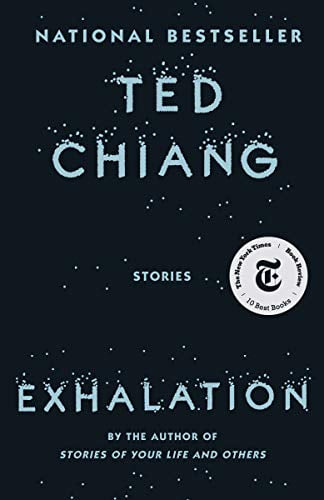
Exhalation: Stories
writing was not just a way to record what someone said; it could help you decide what you would say before you said it. And words were not just the pieces of speaking; they were the pieces of thinking. When you wrote them down, you could grasp your thoughts like bricks in your hands and push them into different arrangements. Writing let you look at
... See moreTed Chiang • Exhalation: Stories
People used to speculate about a thought that destroys the thinker, some unspeakable Lovecraftian horror, or a Gödel sentence that crashes the human logical system. It turns out that the disabling thought is one that we’ve all encountered: the idea that free will doesn’t exist. It just wasn’t harmful until you believed it.
Ted Chiang • Exhalation: Stories
men of experience say, “Four things do not come back: the spoken word, the sped arrow, the past life, and the neglected opportunity,”
Ted Chiang • Exhalation: Stories
“Coincidence and intention are two sides of a tapestry, my lord. You may find one more agreeable to look at, but you cannot say one is true and the other is false.”
Ted Chiang • Exhalation: Stories
All the while I thought on the truth of Bashaarat’s words: past and future are the same, and we cannot change either, only know them more fully. My journey to the past had changed nothing, but what I had learned had changed everything, and I understood that it could not have been otherwise. If our lives are tales that Allah tells, then we are the
... See moreTed Chiang • Exhalation: Stories
We don’t normally think of it as such, but writing is a technology, which means that a literate person is someone whose thought processes are technologically mediated. We became cognitive cyborgs as soon as we became fluent readers, and the consequences of that were profound.
Ted Chiang • Exhalation: Stories
“It is an art that we Europeans know. When a man speaks, we make marks on the paper. When another man looks at the paper later, he sees the marks and knows what sounds the first man made. In that way the second man can hear what the first man said.”
Ted Chiang • Exhalation: Stories
But the moment of creation is where all causal chains end; inference can lead us back to this moment and no further. That is why the creation of the universe is a miracle: because what happened in that moment was not a necessary consequence of what preceded it.
Ted Chiang • Exhalation: Stories
incredulous.