Saved by sari and
Digital Economies, Gaming, and IP Legos
The fundamental idea is revolutionary: communities have always created the best stuff; now, they can finally capture the value, which will crowd in more creation.
Rex Woodbury • Digital Economies, Gaming, and IP Legos
Corporations have been fastidious when it comes to their intellectual property; after all, their IP is the lifeblood of the business. What’s fascinating about many of the crypto projects popping up is that they sacrifice copyright rights, granting everyone the opportunity to build with IP.
Rex Woodbury • Digital Economies, Gaming, and IP Legos
Many blockchain games have advanced economies and weak gameplay, or go crypto ➡️ gameplay rather than in the other direction. What’s unique about Faraway is that it focuses as much on its gameplay as on its economy.
Rex Woodbury • Digital Economies, Gaming, and IP Legos
Axie’s economy has an inflation problem (much like our real-world economy!), as more players are cashing out than are putting money into the game. With such nuanced economies, it’s easy for things to quickly fall out of whack.
Rex Woodbury • Digital Economies, Gaming, and IP Legos
One of the coolest aspects of Genopets is that it’s designed to be accessible to everyone: you don’t need knowledge of blockchain or wallets or fungibility to participate. Anyone can enjoy the game. Abstracting complexity is how crypto goes mainstream.
Rex Woodbury • Digital Economies, Gaming, and IP Legos
Genopets is pioneering what’s called “move-to-earn” gaming, essentially integrating how active you are in the real world with play-to-earn economics so you can earn crypto in the game. Your activity—captured through a wearable device like a Fitbit or Oura—earns you QI, the in-game currency. You can then use QI to buy food and clothes for your... See more
Rex Woodbury • Digital Economies, Gaming, and IP Legos
As gaming becomes the on-ramp to digital worlds and crypto economies, this stigma will fade. We’ll stop thinking of gaming as games with an overt objective, and start thinking of gaming companies as 1) social networks, and 2) economies.
Rex Woodbury • Digital Economies, Gaming, and IP Legos
Even though 3.4 billion people play video games—and even though the industry is larger than the music, box office, and sports industries combined—gaming still gets a lot of eye-rolls. For many people, gaming conjures the image of a teenage boy isolated in his mom’s basement. The reality is that the average age of a U.S. gamer is 35; that close to... See more
Rex Woodbury • Digital Economies, Gaming, and IP Legos
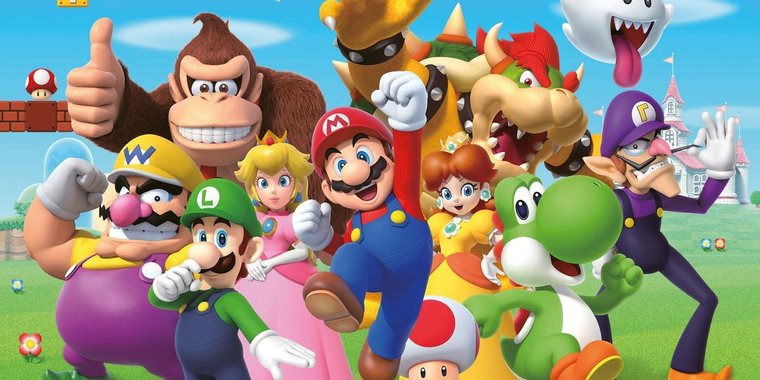
An interesting question to ask is: what does the 21st-century Nintendo look like? And how does the next era of iconic IP take shape?