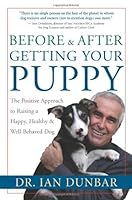
Before and After Getting Your Puppy
The above exercise is essential for toy survival and one of the best ways to teach your puppy to be gentle with its jaws. Remember, stuffed animals and squeaky toys are not chewtoys: their destruction and consumption is extremely dangerous for your dog!
Ian Dunbar • Before and After Getting Your Puppy
#1 Importance Rating: Bite inhibition is of crucial importance, by far the single most important quality of any dog, or any animal. Living with a dog who does not have reliable bite inhibition is unpleasant and dangerous. And bite inhibition must be acquired during puppyhood. You must fully understand how to teach your puppy.
Ian Dunbar • Before and After Getting Your Puppy
Bite inhibition is one of the most misunderstood aspects of behavioral development in dogs (and other animals). Many owners make the catastrophic mistake of stopping their puppy from mouthing altogether. If a puppy is not allowed to play-bite, she cannot develop reliable bite inhibition. Pups are born virtual biting machines with needle sharp teeth
... See moreIan Dunbar • Before and After Getting Your Puppy
Every time you interrupt an enjoyable activity by instructing your dog to sit, for example, and then allow him to resume the activity, you are reinforcing the dog’s prompt sit with a powerful reward. The more you interrupt your dog’s play, the more you may reward him for sitting promptly.
Ian Dunbar • Before and After Getting Your Puppy
always have kibble on hand to give to your dog whenever dogs or people approach. Also, give kibble to strangers to train your dog how to greet them — that is, to sit for a food reward.
Ian Dunbar • Before and After Getting Your Puppy
Keep most training interludes shorter than five seconds, so as to reinforce quick sits and downs or short sequences of body-position changes, such as sit-down-sit-stand-down-stand.
Ian Dunbar • Before and After Getting Your Puppy
Don’t prompt your dog to sit. Don’t give him any clues. Let your dog work it out for himself. Your dog is learning even when he presents a series of unwanted behaviors. He is learning what you don’t want him to do. The longer you wait for your dog to sit, the better he learns which behaviors are unwanted. When your dog sits and receives praise and
... See moreIan Dunbar • Before and After Getting Your Puppy
If your dog explodes with energy after you take only one step, just think how you must be fueling him with energy if you continue walking when he is pulling on-leash.
Ian Dunbar • Before and After Getting Your Puppy
DON’T allow your dog to decide when to pull on-leash. Employ red light/green light training. When your dog tightens the leash, immediately stop, stand still, and wait. Once he slackens the leash, or better yet, once he sits, proceed with the walk.