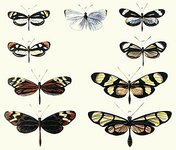
Batesian mimicry
for the last 60~ years, a team of Russian scientists located at the Institute of Cytology and Genetics in Novosibirsk, Siberia have been running an experiment to domesticate foxes, specifically the wild red fox. at each generation of foxes, they picked the top 10% calmest, most pro-social ones to breed, the rest were discarded. over dozens of... See more
owlx.comMüllerian mimicry is a natural phenomenon in which two or more well-defended species, often foul-tasting and sharing common predators, have come to mimic each other's honest warning signals, to their mutual benefit. The benefit to Müllerian mimics is that predators only need one unpleasant encounter with one member of a set of Müllerian mimics, and... See more
Fritz Müller • Müllerian mimicry
Aposematism is the advertising by an animal, whether terrestrial or marine, to potential predators that it is not worth attacking or eating.[1] This unprofitability may consist of any defenses which make the prey difficult to kill and eat, such as toxicity, venom, foul taste or smell, sharp spines, or aggressive nature. These advertising signals... See more