Sublime
An inspiration engine for ideas
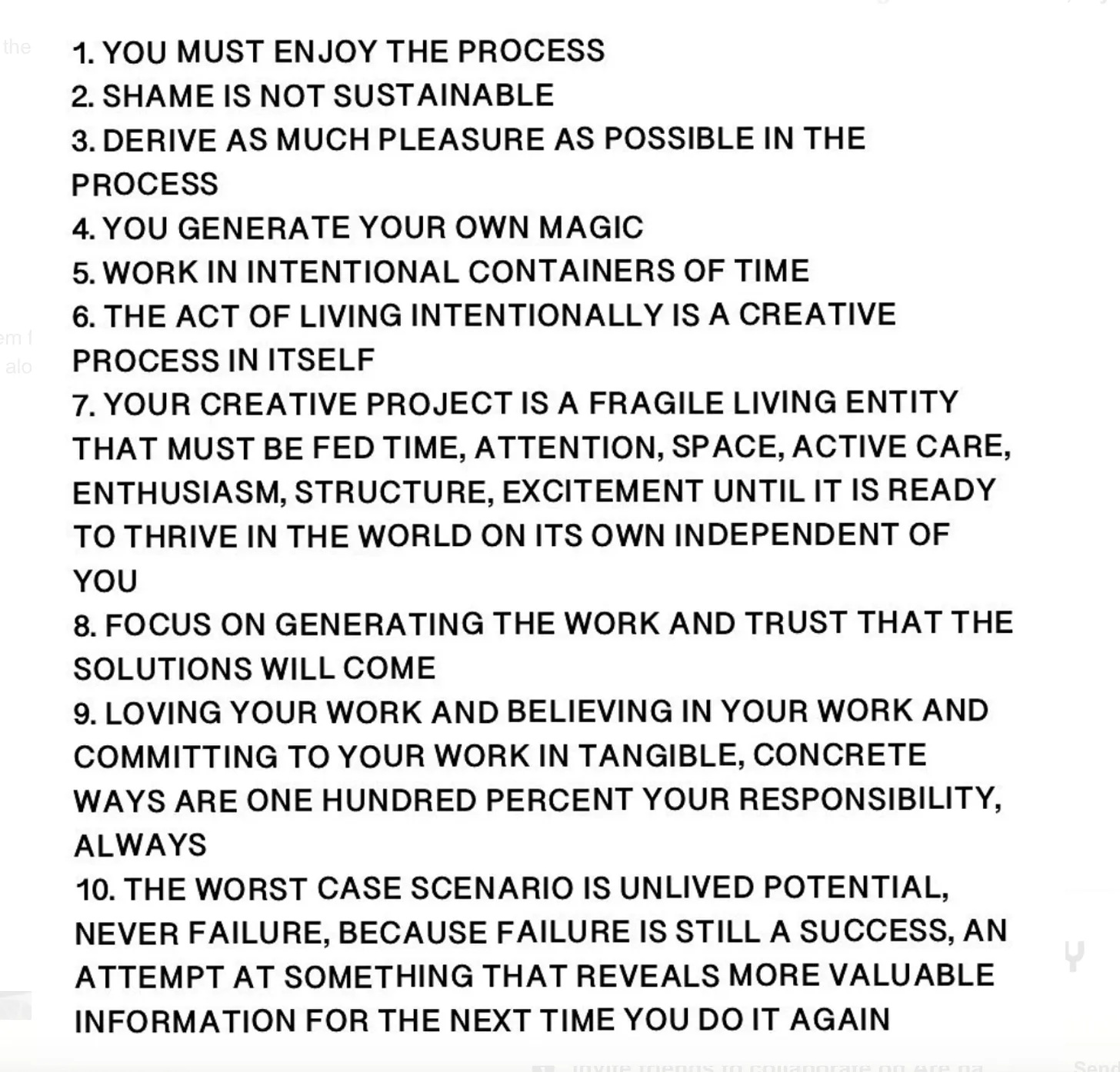
"Don't ignore the problem, but keep it light. Take action with a smile. Adding tension won't solve your troubles faster.
Even when the problem is hard, it doesn't need to harden you. Unknot yourself. Body loose, head clear, and then take the first step.
Be happy in the doing."
Even when the problem is hard, it doesn't need to harden you. Unknot yourself. Body loose, head clear, and then take the first step.
Be happy in the doing."

A sailboat always moves forward.
This remarkable fact is due to its asymmetrical shape: it is pointy at the front and flat in the back. This creates resistance to moving backwards, but a natural ease in moving forward. Even when the water is randomly undulating, “backward” forces are muted, while “forward” forces are allowed, so the boat glides... See more
This remarkable fact is due to its asymmetrical shape: it is pointy at the front and flat in the back. This creates resistance to moving backwards, but a natural ease in moving forward. Even when the water is randomly undulating, “backward” forces are muted, while “forward” forces are allowed, so the boat glides... See more
Jason Cohen • A Smart Bear » What makes a strategy great

Balancing efficiency with genuine relationship-building by slowing down, dropping agendas, and prioritizing brief but real connection moments.
TRANSCRIPT
At work, it's probably saying, hey, tell me a little about your long weekend and not kind of counting down the seconds for them to finish so you can tell them what to start on this week, but kind of giving yourself permission to say, can I actually just kind of drop down into that moment? Right?
And so I think it's the mindset And then it's
... See moreThe status signal is circular: you can afford to be selectively online because you have capital, and being selectively online signals you have capital. The rest of us are still grinding for algorithmic visibility because we don’t have another choice.
Eugene Healey • Post-Luxury Status Symbol #1: Connected Privacy