Sarah Drinkwater
@sarahdrinkwater
Sarah Drinkwater
@sarahdrinkwater
late stage capitalism and shifting culture
In America, our culture has become anticipation.
At some point, there was a switch, in which we became an edging culture. One rooted in “pre-”.
With AI, I suspect we’ll be able to play with the compression of anticipation with software objects well. Teasing an idea on Twitter, seeing it’s response, putting that prompt in AI to generate just enough code for the resemblance of the thing → and that reaching consumer hands much faster.
Perhaps anticipation culture is the wedded partner of instant-gratification culture. It’s the only thing that allows us to microdose the gratification of the object before we actually have it. Constantly watching trailers, or runway shows, sneak peaks, etc
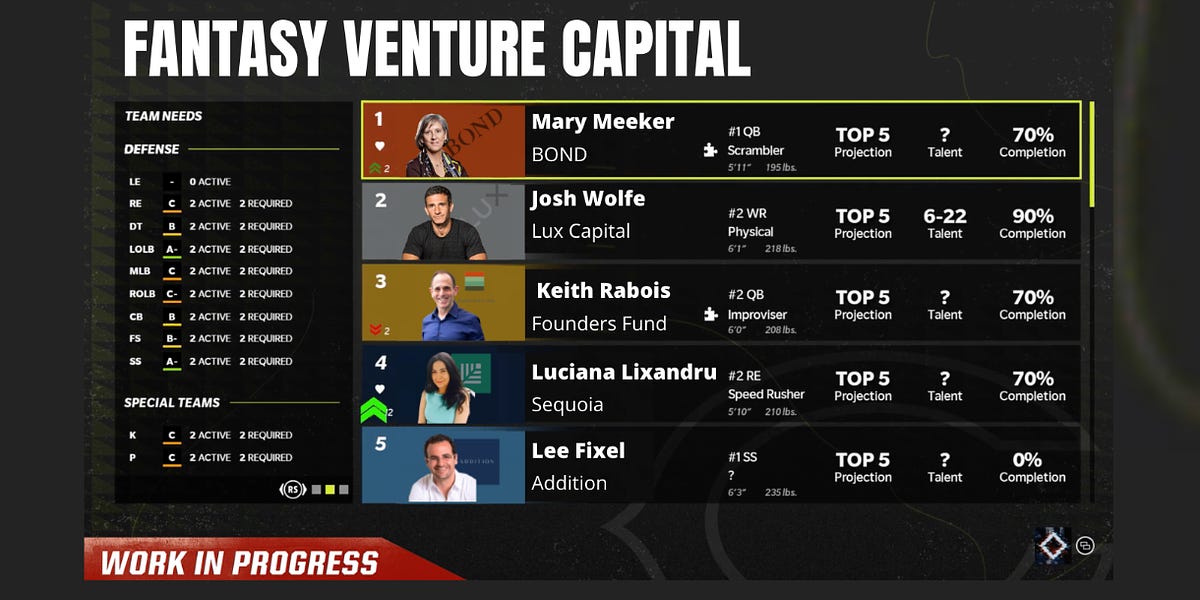
I find this all lines up incredibly well to VC culture. The discussion is 90% weighted on the raise
The anticipation is lost as its material reality fails to hold any long term attention. Even if it was the exact promise. We simply love the build up. The image of the thing.
The “pre-”, other than consuming behind the scenes content of an artist’s process, is all mental. As I participate as a dancer in the audience, I can only (if I care to) construct fiction of the worked anticipation of the overall performance. But 90%+ of the audience only cares about the anticipation of the next drop or track. The loop is built in.
To bring it all the way back to the tweet that launched this post. Anticipation is exhausting. It is built around uncertainty, and the quelling of said uncertainty by the fragments of the objects chosen to be presented.
Open Source Software and Collective ownership, Coops, and User Owned Platforms
I would argue that this is roughly the state of "open source" today. It is the modern software developer’s marmelade, with the OSI as our Konfitürenverordnung, continuing to aggressively enforce a phrase that has since evolved in the popular vernacular.
"open source" is not the logical negation of "closed source"
Open source is a development methodology; free software is a social movement.
Now that Open Source is heavily depended on by nearly every commercial company, we’re running into sustainability and maintainability problems. These are problems that really didn’t exist at scale before. A very famous recent example of this is the XZ Utils backdoor exploit, where an open source maintainer accepted a subtle but significant compromise from a bad actor, partially due to burnout and harassment of the maintainer.
However, I see this in nearly every maintainer that I talk to. It’s almost impossible to make money by writing and maintaining Open Source software, due to several factors. Everyone wants and expects free shit, and nobody feels that they need to support the people making this all possible.
The strange new truth is that most open source developers and maintainers are now patronized by large corporations.
What would be more ideal is to have not one company paying each developer, which is subject to the whims of corporate KPIs and management changes, but instead to have thousands of companies pay a very small amount to professional maintainers.
The main problem is that there is no good way to do this currently. There is little to no incentive for companies to do this and there are few ways to aggregate and disperse such funding.
The second growing problem in the Open Source ecosystem is the problem of the new generation of Commercial Open Source.
Developers have now been growing up for decades loving Open Source and open communities, and when they start companies and projects, by default they want them to be open. However, there are corporate sustainability issues with Open Source, just as there are with individual maintainer. Somewhat ironically, The Man is now using Open Source licenses to stick it to the developer!
A person’s choice of a spouse—or if they aren’t married, their closest lifelong partner—is much more revealing than anything they say or do in public.This choice tells you about their own innermost longings, expectations, and needs. It tells you what they think of themselves, and what they think
... See moreFuture of Work and