women artists
The political point of feminist art history must be to change the present by means of how we re-represent the past. That means we must refuse the art historian’s permitted ignorance of living artists and contribute to the present-day struggles of living producers.
... See moreFeminist thought has never meant limiting women to the study of women's issues. Thus feminist work in and on art history is not just about the restitution of women artists to official histories (…). It must mean broadening the entire field of intellectual endeavour to acknowledge the significance of sexual and other differences amidst the play of
... See more(…) it is not useful to aim merely to correct the oversights and ignorance that led art history to ignore the art of almost all women who have participated in creative cultural activity. Such a short-sighted, if always necessary objective swings the issue of gender over onto the artists who are women having to make their case for re-incorporation
... See moreIt was Rozsika Parker' s and my opening salvo, Old Misttesses: Women, Art and ldeology, in 1981, that /irst tracked what we could now call, pace Fredric ]ameson, 'the political unconscious' of art history as a discursive formation institutionalized in museum and academy in the twentieth century. We argued that despite art's deceptive marginality in
... See moreIn the end, all our histories will be just that: stories we tell ourselves, narratives of retrospective self-affirmation, fictions of and for resistance that are, nonetheless, answerable to a sense of the real processes of lived and suffered histories. Thus to enter critically into the problematic of narrative, representation, history and the
... See moreThe pluralization of the histories of art is especially significant since it opens out the field of historical interpretation beyond a selective tradition, The Story of Art, a canonical version masquerading as the only history of art. Whose stories are told, in whose interests? Whose stories will we need to find? How can we read differently?
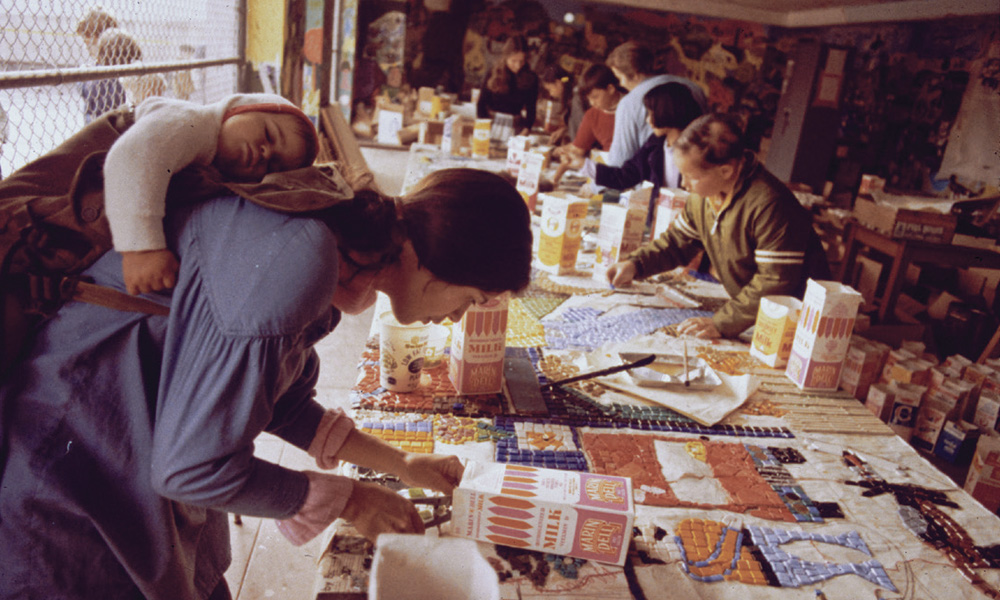
The Women Who Refused to Choose Between Mothering and Artmaking
Jordan Troellerthereader.mitpress.mit.edu