thiel cinematic universe
Of Cults and Consultants
In the most intense kind of organization, members hang out only with other members. They ignore their families and abandon the outside world. In exchange, they experience strong feelings of belonging, and maybe get access to esoteric “truths” denied to ordinary people. We have a word for such organizations: cults. Cultures... See more
In the most intense kind of organization, members hang out only with other members. They ignore their families and abandon the outside world. In exchange, they experience strong feelings of belonging, and maybe get access to esoteric “truths” denied to ordinary people. We have a word for such organizations: cults. Cultures... See more
The Mechanics of Mafia by Peter Thiel
“Company culture” doesn’t exist apart from the company itself: no company has a culture; every company is a culture. A startup is a team of people on a mission, and a good culture is just what that looks like on the inside.
The Mechanics of Mafia by Peter Thiel
The Mechanics of Mafia by Peter Thiel
founderstribune.org
The path from 0 to 1 might start with asking and answering three questions. First, what is valuable? Second, what can I do? And third, what is nobody else doing?
The questions themselves are straightforward. Question one illustrates the difference between business and academia; in academia, the number one sin is plagiarism, not triviality. So much... See more
The questions themselves are straightforward. Question one illustrates the difference between business and academia; in academia, the number one sin is plagiarism, not triviality. So much... See more
Peter Thiel • Peter Thiel’s CS183: Startup - Class 1 Notes Essay
The easiest answer to “why startups?” is negative: because you can’t develop new technology in existing entities. There’s something wrong with big companies, governments, and non-profits. Perhaps they can’t recognize financial needs; the federal government, hamstrung by its own bureaucracy, obviously overcompensates some while grossly... See more
Peter Thiel • Peter Thiel’s CS183: Startup - Class 1 Notes Essay
We tend to think very statistically about the future. And statistics tells us that it’s random. We can’t predict the future; we can only think probabilistically. If the market follows a random walk, there’s no sense trying to out-calculate it.
But there’s an alternative math metaphor we might use: calculus. The calculus metaphor asks whether and how... See more
But there’s an alternative math metaphor we might use: calculus. The calculus metaphor asks whether and how... See more
blakemasters • Peter Thiel’s CS183: Startup - Class 1 Notes Essay
Consider a 2 x 2 matrix. On one axis you have good, high trust people and then you have low trust people. On the other axis you have low alignment structure with poorly set rules, and then a high alignment structure where the rules are well set.
Good, high trust people with low alignment structure is basically anarchy. The closest to this that... See more
Good, high trust people with low alignment structure is basically anarchy. The closest to this that... See more
Peter Thiel’s CS183: Startup - Class 6 Notes Essay
Zero to One
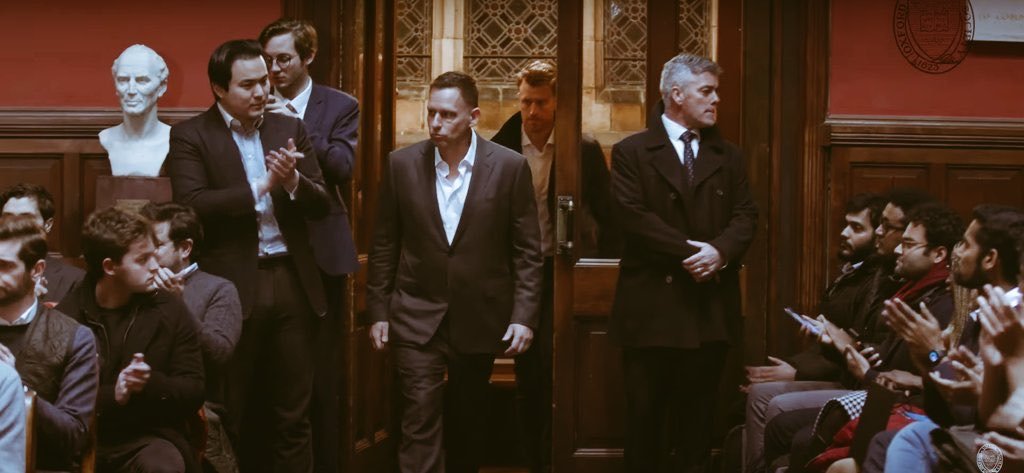
“The most contrarian thing of all is not to oppose the crowd but to think for yourself” - Peter Thiel https://t.co/cfptu887pH
Thiel's philosophical worldview is woven from threads of Christian eschatology , René Girard's mimetic theory , and a profound skepticism towards modern political and technological narratives. At its core lies a Manichean vision, where the world is a battleground between order and chaos, good and evil, with humanity teetering on the brink of... See more