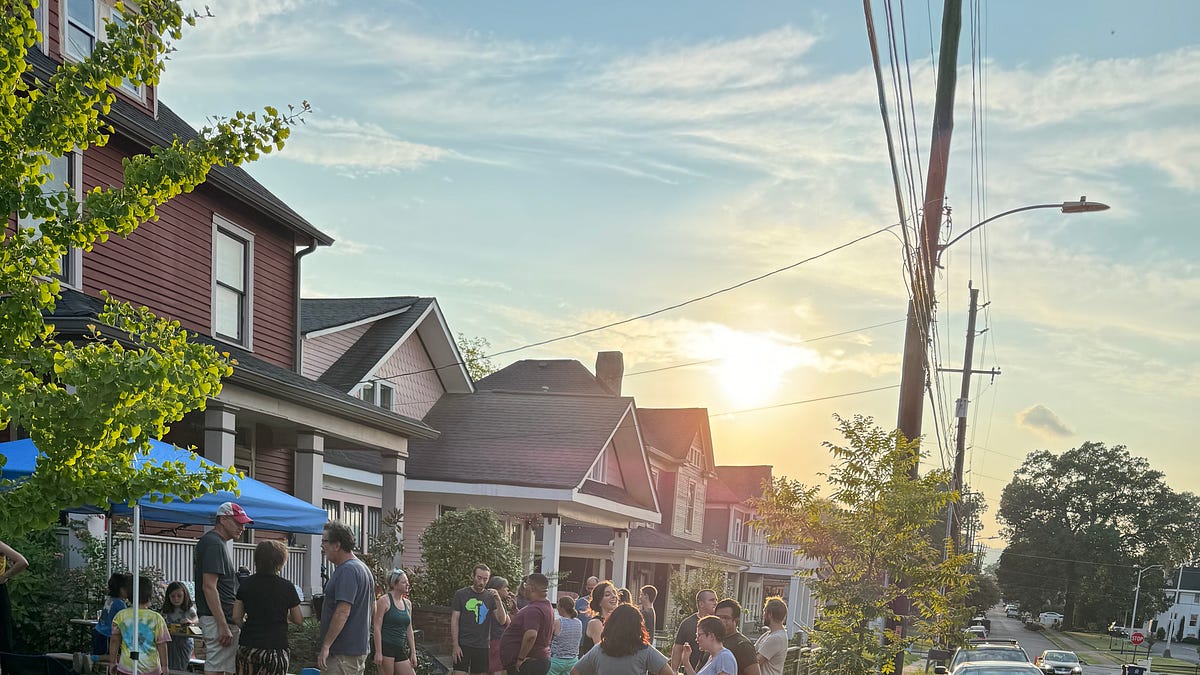
To me, the vision is a civic life that invites all people to have the experience of collective life that we've been talking about. This civic life would involve a set of civic institutions that are accessible to all different kinds of people and offer them the opportunity to participate in the transformative work of engaging with their neighbors.... See more
Strong ties like family, close friends, and churches are where ideas are nurtured and meaning is deepened. They are necessary, but limited. Weak ties are how information travels, how opportunities surface, how culture spreads. It is part of why social platforms are powerful. They dramatically increase our number of weak ties.
Strong ties create... See more
My own contribution to this has been to say that yes there is genuine and widespread despair in the US1, but the primary reason isn’t economic2, rather it is because human fulfillment requires more than material wealth, which in our quest for more stuff, we have forgotten. People need physical communities, and while the US excels at material... See more
It was only because I showed up and I paid attention," he said. "I looked for places to go. I looked for communities to join. I looked for ways to become visible and consistent, really committing to certain spots and certain groups, and then looking for opportunities to be useful and helpful.
Tony B
The first thing is shrinking the service area. We serve four neighborhoods — about 8,000 to 12,000 people. If you have too big of a service area, you can't cover it effectively. We ensure that everybody gets access. Access is a big deal. We're aggressively pursuing clients, versus waiting for them to come to us. Some people don't know how to ask... See more
Donnelly and Schrantz are arguing for a major shift: “a long-overdue scaled investment in community organizing around the country.” I agree 100%, especially because I concur with them that how we do politics now, as a purely transactional process of extracting votes from people, has contributed to the crisis of democracy and the allure of... See more