Community
Mo Shafieeha and
Community
Mo Shafieeha and
It's interesting to think about if you're playing the game of spectacle, there's only sort of one path forward, which is more or bigger. Yeah. And mischief trapped ourselves in that own game. Like we've, we built the game, we designed a game. We want it because we're a player of one. And then we essentially are trapped by the game unless we
... See moreChoice quote:
“I think you can only really get staying power if you focus on a relationship with a small group for as long as you can possibly hold on and then a little bit more, and then maybe, maybe you have a chance of something with like really significant staying power.”
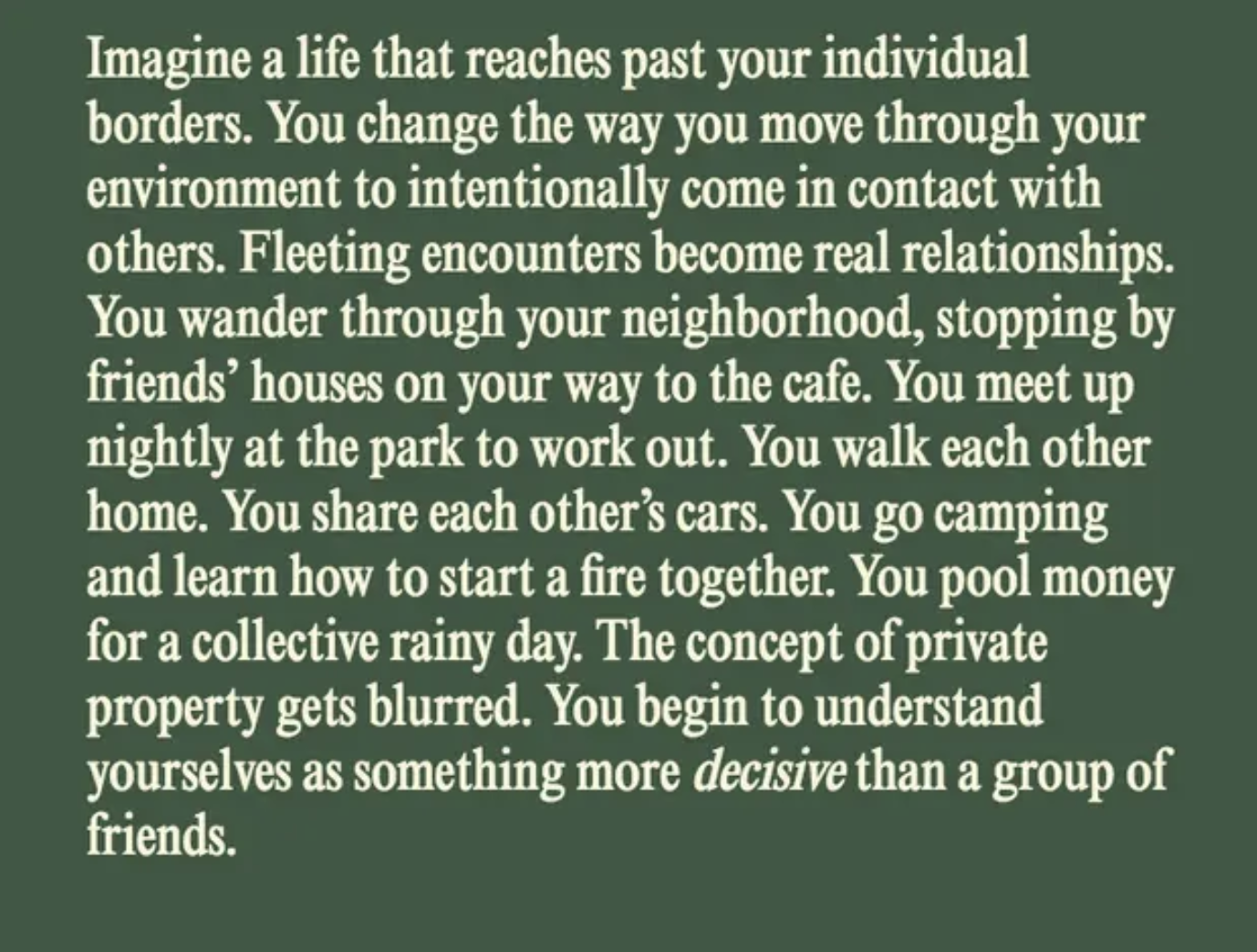
I post this quote from Peter Block's book "Community" every year. It doesn't get much attention because it's not built for social media: it's thick.
But there really isn't a better explanation of the "why" behind the work I do, and its encouragement for communities to move away from blame, apathy, and entitlement and towards possibility,
... See more