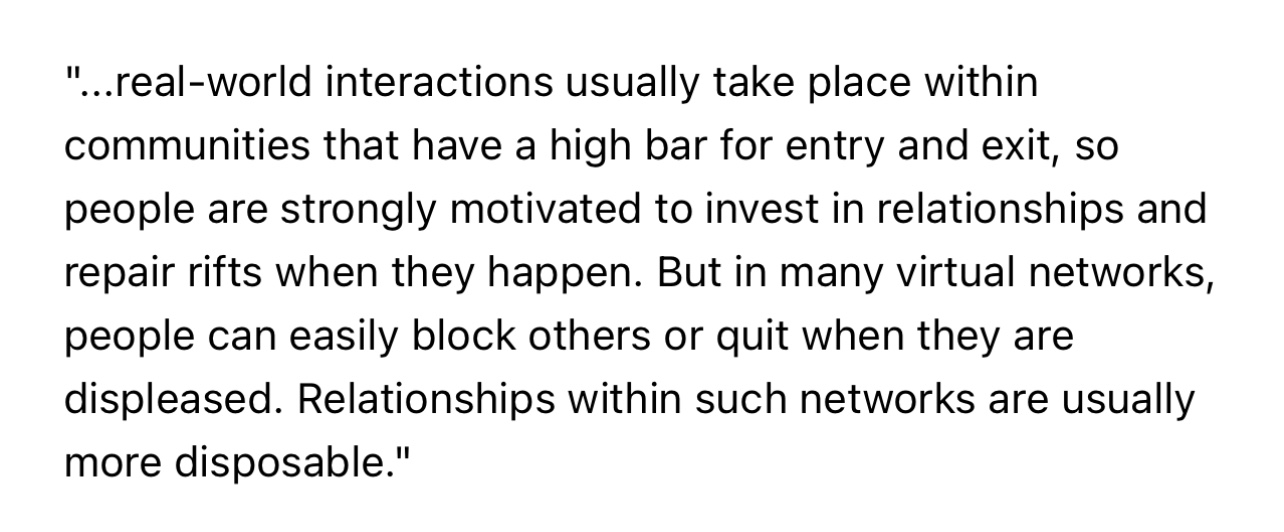
But we’re human beings, we do not want to be replaceable. We desperately want to be valued for who we are. Becoming disentangled from your web of mutual commitments, shared history, and collective responsibility is to be rendered into a transaction, a slave.2
We want to be loved, to be secure in the knowledge that no matter how much we’ve torn apart... See more
The next wave of big consumer companies will be community-based products:
- Niche, not everything to everyone
- Unique aesthetic
- Built-in community
- More memorable than big platforms
- Rewarding loyalty
- Unbundling large platforms
-... See more
Ultimately, Agreements are a collective wish we make about how we might be in the same space together. That space could be a classroom, a sports team, a club, a conference, committees or boards, an organizing group. They reflect what we need to participate while feeling joyful, trusted, and brave.
In the design industry, I genuinely believe we need more communities, not tools. There are so many tools for designers but so few communities. Tools make our job easier. Communities make us better designers. And with the recent AI drama over Figma’s Config, this realization only becomes clearer.
InVision has fostered a strong community, not just... See more
Human lives in communities. We join them, we sometimes leave them. Social networks should only be an underlying infrastructure to support our communities. Social networks are not our communities. Social network dies. Communities migrate and flock to different destinations.
But these activities are all separate from the feelings needed to fully and sustainably participate: the courage, optimism, trust, love, intimacy, curiosity. The resilience to push through the inevitable feelings of fear, overwhelm, frustration, and hurt. The stamina to go through cycles of all of these feelings and more, again and again, and... See more
The difference with a concrete community of moral calling is that it, at the very least, forces us out of our own individuality in order to learn how to reckon with others. At its best, it calls us to be better than we are.
Understanding this distinction helps us recognize that self-acceptance, self-worth, and the common good depend not on indulging our proclivities or tastes but on growing together with our neighbours into better people.