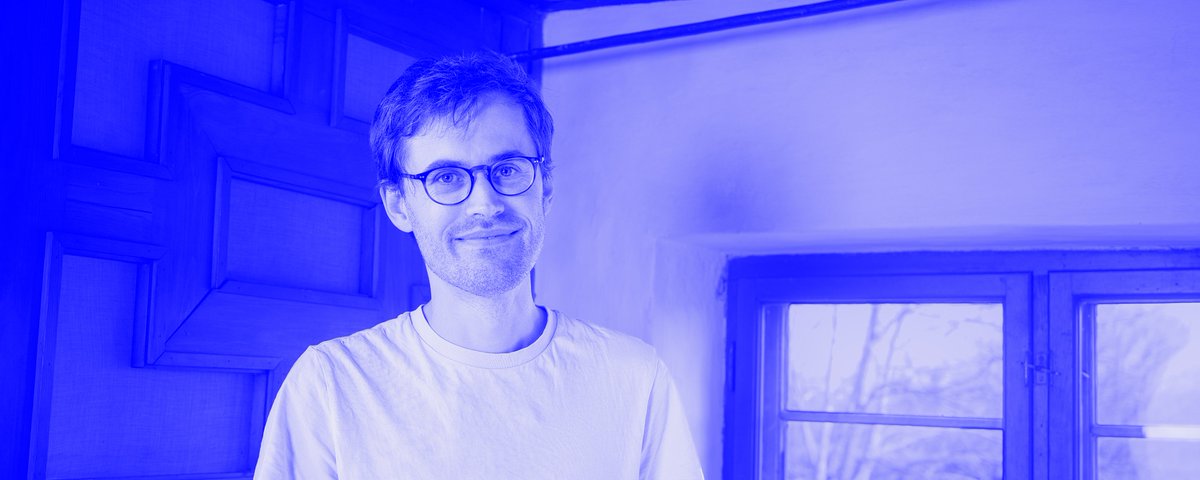
Some of my favorite lessons from @DialecticPod 41 with @phokarlsson:
Understimulate yourself. Remove the feeds, the rewards, and the noise. When you strip away what's pulling at you from the outside, your curiosity has space to grow. Henrik lives on a small island farm in Denmark with his wife and daughters. Give yourself space to be surprised.
The tourist map has no back alleys. Henrik took his kids on a walk (or dérive) in Málaga with one rule: pick the most exciting direction and keep going. They ended up galloping through back alleys and construction sites, more alive than any planned itinerary could have made them.
Break your tiles. Every mental model you carry is shaped for a problem you've already solved. If a new situation is round, your square tiles won't fit. You have to shatter them into shards and sit with the debris before you can build anything new.
Your brain defends its bad ideas. Once a belief is useful enough, the mind protects it, quietly disposing of anything that threatens it. These are called knowledge shields. Darwin's fix: write down every disconfirming fact immediately, before the mind buries it. We have a tendency to protect our squares.
The sprawl is the progress. Michael Nielsen told Henrik that if his essay is sprawling, he's halfway there. The frustration of incoherence is not the wrong direction. It's the only way through the woods.
It’s okay to be lost in the woods. He spent three months white-knuckled over an essay, needing it to cohere. Then he realized: it's like being lost in the woods. If you're clenching and demanding to get out, it's agony. But if you can manage to think, these woods are kind of beautiful, you start to stroll and notice things. Everything opens up.
Watch yourself in the mirror. For years Henrik filled journals he never reopened. Then he started revisiting them. He could spot his poses, notice his growth, and find whole essays hiding in wanderings he’d forgotten. The notebook became a mirror and fixed his posture.
Look out to see in. Introspection with yourself as the object is a trap. You’re incompressible anyway. Make yourself the subject. Nick Cave and Rick Rubin don’t ask "Who am I?" They just notice. Ask what this song wants to be, right here. Attend to the world outside and you discover the person paying attention inside.
Live in the room a little longer. Each essay Henrik writes is a room he gets to inhabit. While writing about his kids, he's a more present father. The project works on him as much as he works on it. Publishing is throwing away the key to that room forever. Don't rush to leave.
Trust the embarrassing idea. The real creative signal isn't intellectual excitement. It's bodily. Henrik sometimes catches himself wanting to write essays that would impress his friends, and the telltale sign is that the idea lives entirely in his head. The things worth chasing feel light, open, playful. Often a little ridiculous.
Try banning your best trick. Lars Von Trier's early films are gorgeous, perfectly choreographed, classically excellent. So he tied his hands behind his back: no tripods, no artificial lighting, no polished framing. What he found inside those constraints was rawer and more powerful than anything his talent could produce on autopilot.
Great art is a Jenga tower. Shakespeare took history and deleted the motivations. Hemingway wrote simple sentences that hold great depth. The skill of a great writer isn't in what they put on the page, but in what they pull out while the structure still stands. Propaganda fills every gap. Art leaves them for you to fill with yourself.
Your self-image is a lagging indicator. Henrik went from isolated writer on a Swedish island to a full-time essayist with real income in three years. He’s still tempted to make decisions like his 2023 self. The situation has changed, but his internal model hasn't caught up yet. If you're not constantly assessing your life with fresh eyes, you might be throttling yourself.
Bring your heroes to the kitchen table. Henrik and Johanna refer to the poet Tranströmer as "Tomas" — a mutual friend they gossip about. When he's stuck, Henrik reads Eno's diaries not as a fan but as someone seeking advice from a peer. Dostoevsky was just a guy. Befriend your inspirations.
Conviction is surrender, not courage. Before his daughter Maud, Henrik held his opinions loosely. Pushback came and he folded. Parenthood made folding unforgivable. Agency didn't arrive as bravery, but as stakes he refused to betray for his kids.
Hard eyes, soft steps. You need stoic clarity to face reality: where you're failing as a parent, a partner, or a creator. But hardness alone turns you rigid and closed. Softness is what tells you where to walk: the playful hunches, the felt senses, the galloping. One shows you the map. The other moves your legs.
Love is context no one else has. When Henrik met his wife Johanna, plenty of people fell for her in easy-to-read ways. The parts he loves most deeply now, they didn't see at all. Real love is an acquired taste that comes from inhabiting someone else’s world.
Remember to join in the music. Henrik believes your uniqueness puts you in front of things only you will ever be positioned to care for. Like a cosmic jam session against entropy: aspire to leave the stage having evolved the music. Ten thousand years ago, hunter-gatherers blew pigment around their hands on cave walls. A handprint and a declaration: We were here. We felt this.
Full episode available on all platforms at dialectic.fm/henrik-2 and below: