
When Your Parents Deny Neurodivergence, But You Inherited the Mask
When an Autistic person is not given resources or access to self-knowledge, and when they’re told their stigmatized traits are just signs that they’re a disruptive, overly sensitive, or annoying kid, they have no choice but to develop a neurotypical façade. Maintaining that neurotypical mask feels deeply inauthentic and it’s extremely exhausting to
... See more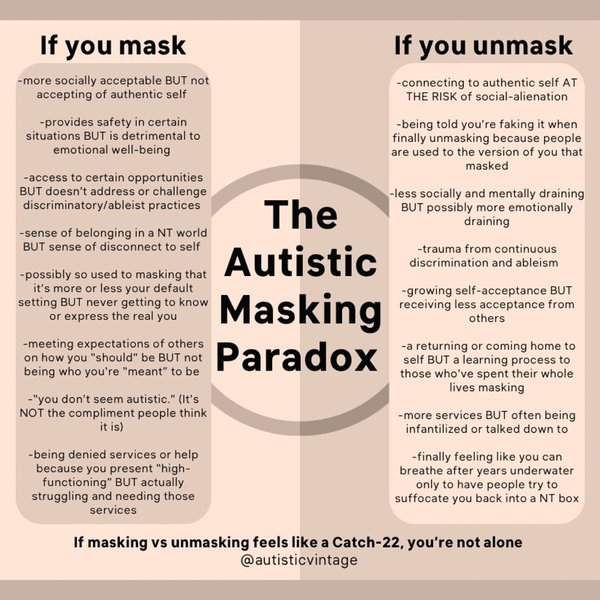
The catch-22 or paradox of autistic masking. It often feels like a lose-lose situation. There’s a level of privilege in being able to mask successfully but that doesn’t mean it doesn’t come at one’s own detriment as well.
It can be so hard to gage when it’s safe or unsafe to unmask, and equally as hard to balance the... See more
instagram.comThe Complexity Edge
12 Hidden Signs You’re Still Carrying Internalized Ableism
The subtle habits that shrink late-identified autistic and ADHD adults—and how to reclaim your inner space.
Lindsey Mackereth
Sep 30, 2025
∙ Paid
12 Hidden Signs You’re Still Carrying Internalized Ableism
The subtle habits that shrink late-identified autistic and ADHD adults—and how to reclaim your inner space.
Lindsey Mackereth
Sep 30, 2025
∙ Paid
12 Hidden Signs You’re Still Carrying Internalized Ableism
The 4 Types of Autistic Masking
youtube.comPlus, it’s worth noting that both autism and ADHD are highly genetic, and our parents may have experienced childhood emotional neglect as well in response to their own neurodivergence and see it as the norm, and go on to treat us the same way.