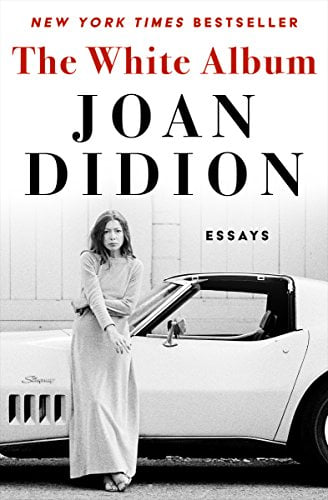
The White Album: Essays

We look for the sermon in the suicide, for the social or moral lesson in the murder of five. We interpret what we see, select the most workable of the multiple choices. We live entirely, especially if we are writers, by the imposition of a narrative
Joan Didion • The White Album: Essays
To have seen one bike movie is to have seen them all, so meticulously observed are the rituals of getting the bikers out of town and onto the highway, of “making a run,” of terrorizing the innocent “citizens” and fencing with the Highway Patrol and, finally, meeting death in a blaze, usually quite a literal blaze, of romantic fatalism.
Joan Didion • The White Album: Essays
We tell ourselves stories in order to live.
Joan Didion • The White Album: Essays
We tell ourselves stories in order to live.
Joan Didion • The White Album: Essays
To die violently is “righteous,” a flash. To keep on living, as Peter Fonda points out in The Wild Angels, is just to keep on paying rent. A successful bike movie is a perfect Rorschach of its audience.
Joan Didion • The White Album: Essays
We were silent because the exhilaration of social action seemed to many of us just one more way of escaping the personal, of masking for a while that dread of the meaningless which was man’s fate.
Joan Didion • The White Album: Essays
the public life of liberal Hollywood comprises a kind of dictatorship of good intentions, a social contract in which actual and irreconcilable disagreement is as taboo as failure or bad teeth, a climate devoid of irony.
Joan Didion • The White Album: Essays
All such images were personal, and the personal was all that most of us expected to find. We would make a separate peace. We would do graduate work in Middle English, we would go abroad. We would make some money and live on a ranch. We would survive outside history, in a kind of idée fixe referred to always, during the years I spent at Berkeley, as
... See moreJoan Didion • The White Album: Essays
It is hard to see one of these places claimed by fiction without a sudden blurring, a slippage, a certain vertiginous occlusion of the imagined and the real,