The Language of Climate Politics: Fossil-Fuel Propaganda and How to Fight It
amazon.com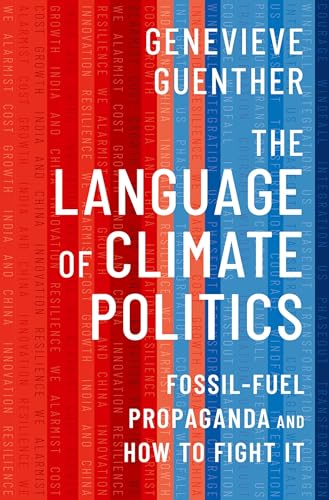
The Language of Climate Politics: Fossil-Fuel Propaganda and How to Fight It
Heritage Foundation, which has spread fossil-fuel propaganda since at least the 1990s, argues that “economic growth” is “one of the most important factors for maintaining a cleaner environment,” since as a country’s economy grows, “the financial ability of its citizens to take care of the environment grows, too.”
all: “When we use up something that is irreplaceable, whether it is minerals or a fish species or an environmental amenity, then we should be thinking about providing a substitute of equal value.”
The natural scientists, the actual experts on the effects of global warming, gave estimates that were twenty to thirty times higher than those of the economists, who had much greater faith than the scientists in the salvific power of money. Yet
“an unequivocal finding in the natural sciences,” Rockström says, “that a 3°C warming is a disastrous outcome for humanity.”17 Yet Nordhaus sets this aside, arguing that we should delay full decarbonization and continue to use fossil
Political ground is gained not when you successfully inhabit the middle ground, but when you successfully impose your framing as the “common-sense” position.
It is hard to overstate how influential Nordhaus’ account of climate economics has been. In an extraordinary academic career—during which he has, to date, authored or edited some twenty books and scores of papers
“To Slow or Not to Slow: The Economics of the Greenhouse Effect,”
One respondent said the word made him inwardly lament “I don’t have enough money!”
Specifically, Nordhaus recommends that policymakers time the implementation and increase of carbon taxes so that the world heats up not 1.5 or 2° Celsius, but 3° Celsius around 2100. As he told the Nobel audience: “in the DICE model . . . the cost-benefit optimum rises to over 3°C in 2100—much higher than international policy targets.”15