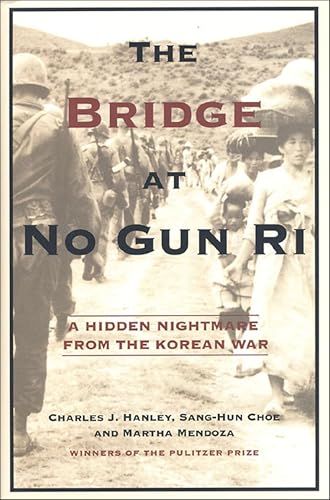
The Bridge at No Gun Ri: A Hidden Nightmare from the Korean War
When pink azaleas covered the mountain meadows, the children would eat the flowers.
Charles J. Hanley • The Bridge at No Gun Ri: A Hidden Nightmare from the Korean War
Some were nearing retirement, like Nist, who would soon turn fifty.
Charles J. Hanley • The Bridge at No Gun Ri: A Hidden Nightmare from the Korean War
Bursts of gunfire suddenly rattled through the tight, 200-foot-long passage.
Charles J. Hanley • The Bridge at No Gun Ri: A Hidden Nightmare from the Korean War
That’s what American troops did, both veterans and Korean witnesses said. Air Force P-51s, propeller-driven fighters, flew routine missions up and down the river “interdicting” refugees, stitching the west bank with lines of .50-caliber machine-gun fire. Men of the Garryowens’ 2nd Battalion even began shooting refugees who did not try to cross, but
... See moreCharles J. Hanley • The Bridge at No Gun Ri: A Hidden Nightmare from the Korean War
These were not the same GIs who had led them from their homes. One had a radio pack on his back and a second used the handset to talk to someone, villagers remembered. An Asian-looking soldier trailed them, Chung Koo-hun said, and the teenaged villager appealed to him. “I said in Japanese, ‘Please help us.’ He seemed to sympathize. He said, ‘I’m
... See moreCharles J. Hanley • The Bridge at No Gun Ri: A Hidden Nightmare from the Korean War
One civilian trying to hide in the culvert
Charles J. Hanley • The Bridge at No Gun Ri: A Hidden Nightmare from the Korean War
On the front line at No Gun Ri, men remembered fellow soldiers recoiling in their foxholes, revolted,
Charles J. Hanley • The Bridge at No Gun Ri: A Hidden Nightmare from the Korean War
Back in the village, however, life for these midcentury Koreans remained a daily struggle, one that led each year to a climb up “the hill of barley,” the grim season of late winter and early spring when the autumn harvest’s reserves of rice and other food ran out, and families survived day to day, hand to mouth, until they could bring in the winter
... See more